Handle after-hours questions with self-service answers, lead capture and human follow-up
OceSha AI helps businesses turn existing knowledge into public content, courses and audience pathways so customers can find answers or leave their details when the team is unavailable.

Small businesses do not need to answer every night or weekend message immediately. A practical model is to publish answers drawn from existing business knowledge, direct visitors to useful content, collect messages and leads, and reserve complex or sensitive questions for human follow-up. OceSha AI supports this model by turning documents, websites, text, audio and video into content, courses and a professional public presence.
- Turn recurring customer questions into public content instead of answering each one privately.
- Use an Authority Page and distributed content to give visitors a useful destination when staff are unavailable.
- Collect messages and leads so questions that need a person enter a manageable follow-up process.
- Keep public information current, and avoid putting passwords or unnecessary sensitive credentials into support messages.
- Use AI for established information and navigation; route exceptions, judgment calls and unresolved issues to a human.
The strongest after-hours system starts before the message arrives
When customer questions arrive at night or on weekends, the goal is not to make a small team behave like a permanently staffed contact center. The better approach is to reduce how many questions require a live reply. Publish clear information, make it easy to find, collect unanswered inquiries and create an explicit path to human assistance. This approach fits the broader work of helping audiences discover and contact your business without requiring someone to monitor every channel continuously.
OceSha AI is the self-service creation platform of OceSha Ventures. A user can bring in knowledge from documents, websites, text, audio, video and other existing material. The platform uses those sources to help create courses and content, publish and distribute material, educate learners, build a professional presence, engage an audience and measure resulting activity. In after-hours service, that means recurring explanations can become durable resources rather than remaining trapped in individual messages.
After-hours question handling is a structured way to help visitors when staff are unavailable: provide useful published information first, capture the question and contact details when needed, and send issues requiring judgment or intervention to a person for follow-up.
Start with the questions customers repeatedly ask. A polished library of rarely requested information is less useful than direct answers to the few issues that regularly generate messages.
Turn repeated explanations into material customers can find
Begin with knowledge the business already maintains. Suitable sources include documents, website pages, written text, audio, video and other existing material. Through the OceSha AI creation platform, that knowledge can contribute to courses and content that explain products, services, processes or other topics the business chooses to publish. This makes the answer reusable across multiple customer interactions.
- Collect the recurring questions that arrive outside business hours.
- Identify the documents, web pages, recordings or written explanations that contain the approved answers.
- Bring those sources into OceSha AI and use them to create suitable courses or content.
- Review the resulting material and move approved work through publication or distribution.
- Send audiences to the public resource, then use analytics to understand the activity it generates.
Existing media can also be extended rather than recreated. A long-form video can become an episode and produce short clips, while other content can be turned into social material and published. Businesses developing that workflow can explore how to reuse source material as social posts and how to move generated content into publication. The operational advantage is consistency: one body of source knowledge can support several discoverable formats.
Self-service information is only as useful as the material behind it. Review published answers whenever products, services, policies, plans or workflows change, rather than allowing an old explanation to remain the default response.
Give visitors a useful destination instead of a dead end
Published material can attract visitors to a user’s Authority Page, where the visitor can continue engaging with the user’s public OceSha presence. Users can copy and distribute the applicable link to customers, learners, professional contacts and other audiences. That link can be placed wherever people already encounter the business, giving after-hours visitors somewhere more useful to go than an unmonitored inbox.
The Authority Page should represent the person or business accurately. Supported profile information, biography and other public details need to stay current so visitors know whose information they are reading and how it relates to their question. Use the profile guidance when deciding where to update supported public details.
For a more structured educational destination, OceSha Academy courses and branded academies show how real learning experiences can be built on OceSha. The right choice depends on the depth of the question: a concise public explanation may handle a simple inquiry, while a course is better suited to connected concepts that require instruction.
Capture the questions that still need a person
Self-service content should not become a barrier between the customer and the business. Some visitors will have questions that are specific, sensitive or simply not covered by published material. The operating model therefore needs a second path: capture the message or lead, preserve enough context for follow-up and let the team respond during its working hours.
OceSha AI includes lead-capture preferences and areas for messages and leads. Public material can bring visitors to an Authority Page, and those visitors can become leads, learners or customers. Businesses setting up this part of the process should decide how messages and leads will be managed before distributing their public link widely. Ownership matters: every captured inquiry should have a clear destination inside the business, even when an immediate response is not promised.
A visitor encounters a published social item after the business has closed. The item leads to the user’s Authority Page, where the visitor reviews relevant public material. If that information resolves the question, no immediate staff reply is needed. If the visitor still needs help, the message or lead can be captured for later attention. Analytics then help the user understand the resulting activity. This scenario uses the platform’s stated content, public-presence, lead and analytics capabilities without assuming that every inquiry can be resolved automatically.
Reserve human review for unanswered questions, account-specific situations, transactions, disputes, exceptions and anything requiring judgment. Automation should make the queue smaller and clearer, not conceal the route to a person.
Use Lumi for the information it is equipped to explain
Lumi is OceSha AI’s AI Concierge. On OceSha’s public pages, Lumi is trained on OceSha’s public information and answers questions from the information available there. Visitors and prospective customers can ask about OceSha, its products, capabilities, services, plans, use cases and other publicly available information without searching through multiple pages.
After sign-in, Lumi also understands the application’s pages, navigation, features, workflows, course capabilities, content tools, publishing processes, integrations, analytics, settings and subscriptions. It can provide informational and how-to guidance for activities such as course creation, publishing, finding leads, viewing analytics, updating profiles, managing subscriptions, and connecting Stripe and Shopline. This is guidance about using the platform; Lumi does not perform those actions merely because it explains them.
Inside a course, Lumi can use the course’s content and knowledge supplied by its creator to support instruction, explain concepts and answer learner questions. That is distinct from claiming that a general public concierge automatically knows every business’s private policies, fees or customer circumstances. Buyers deciding what information to supply should review documented security and data controls and provide only the knowledge appropriate to the intended experience.
- Published content
- Best for recurring questions with stable, approved answers.
- Course-based Lumi
- Best for questions tied to the instructional content and creator-supplied knowledge within a course.
- Authenticated Lumi
- Best for guidance about OceSha AI features, navigation, workflows, settings and subscriptions.
- Human follow-up
- Best for unresolved issues, exceptions, sensitive situations and decisions requiring judgment.
Build an after-hours process the team can sustain
A sustainable system separates information work from service work. Information work identifies repeated questions and turns the answers into maintained resources. Service work handles the remaining messages that require context, judgment or action. Combining both in one inbox creates avoidable repetition; separating them allows published content to handle routine education while staff concentrate on meaningful exceptions.
- Review recent messages and identify questions that recur.
- Decide which answers are appropriate for public content and which must remain a human conversation.
- Create or update the relevant content from approved source material.
- Distribute the public link through the channels where the questions originate.
- Review messages, leads and analytics to see what audiences still need.
- Update the source material and published answer when the underlying information changes.
Private user information remains private merely because it is used for personalization or generation; uploaded knowledge, messages, leads, account information, billing information and unpublished content do not become public for that reason. Even so, use sound data discipline. Do not include passwords or unnecessary sensitive credentials in a support message, and avoid publishing account-specific or confidential information as a general answer.
OceSha AI is the self-service platform of OceSha Ventures and its AI-first solutions. When the question concerns the platform, an OceSha AI subscription or the OceSha side of an integration, Lumi can explain available information and Contact Us provides a route to the support team. If human assistance is needed, contact the OceSha team with the relevant context but without passwords or unnecessary sensitive credentials.
OceSha AI lists external integrations, payments and monetization, account and subscription management, and partner or white-label capabilities as platform areas, but the available facts do not describe every specific integration or white-label function. If a particular connection is essential to the after-hours workflow, confirm that exact requirement first.
Turn recurring questions into useful content, direct visitors to a clear public destination and capture the inquiries that still need your team.
Create a better after-hours pathFrequently asked questions
Does using uploaded knowledge automatically make private information public?
No. Uploaded knowledge, messages, leads, account information, billing information, unpublished content and other user-specific information do not become public merely because they are used for personalization or generation.
Can Lumi answer questions about how to use OceSha AI?
Yes. Authenticated Lumi understands application pages, navigation, features, workflows, courses, content tools, publishing, integrations, analytics, settings and subscriptions. It provides informational and how-to guidance based on OceSha AI knowledge.
Can Lumi answer learner questions inside a course?
Yes. Within a course, Lumi can use that course’s content and knowledge supplied by its creator to support instruction, explain concepts and answer learner questions.
What source formats can be brought into OceSha AI?
Sources can include documents, websites, text, audio, video and other existing material. The platform can use that information to help create courses and content, publish and distribute material, educate learners and engage an audience.
What should be left for human follow-up?
Use human follow-up for questions that published material does not answer, sensitive or account-specific situations, exceptions, disputes and decisions that require judgment or action.
Can analytics show whether the after-hours content is attracting activity?
OceSha AI analytics can help users understand activity resulting from published material, including the journey in which content attracts visitors who may become leads, learners or customers.
Small businesses should not solve night and weekend inquiries by expecting someone to remain continuously available. The stronger model is to convert repeated explanations into maintained public content, give visitors a clear destination, capture questions that remain unresolved and reserve human attention for situations that genuinely need it. OceSha AI supports that approach through source-based content creation, courses, Authority Pages, lead capture and analytics. Use Lumi within its defined context, keep source material current and make the human route obvious. The aim is not to automate every conversation; it is to make every after-hours visit useful.
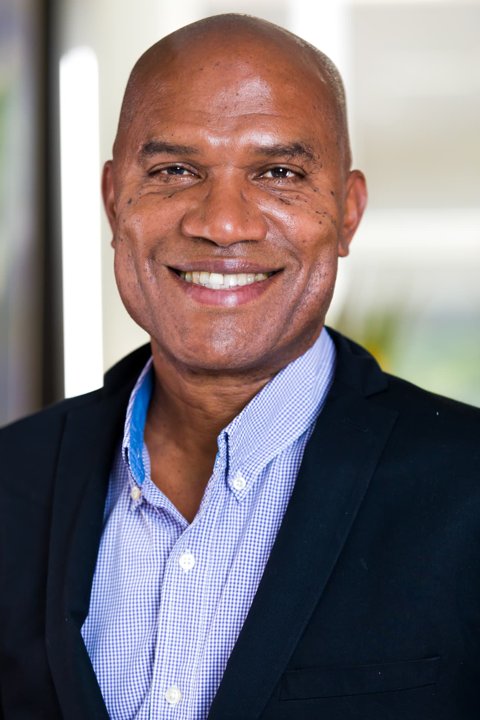
Rohan Hall
Rohan Hall is a technology entrepreneur, AI architect and author with four decades of technology experience, now focused on practical AI across business, education, government and global impact. He founded OceSha Ventures, builds the OceSha AI platform and Lumi, and wrote The Convergence of AI and the Top 10 Emerging Technologies.
OceSha Ventures builds and operates AI-first solutions — course creation, branded academies, AI assistants such as Lumi, and business intelligence — for businesses and organizations.