Keep growing with the same team by redesigning the work, not increasing the workload
Sustainable growth comes from removing avoidable demand, standardizing repeatable work and giving customers useful ways to help themselves before adding more tasks or tools.

To keep growing without exhausting your team, stop treating every new customer as a new unit of manual work. Identify recurring requests, remove unnecessary steps, document the best response and turn reusable expertise into self-service resources. Automate predictable work while preserving human attention for judgment, exceptions and relationships. Measure whether each change reduces workload as volume rises; if it merely helps people complete an overloaded process faster, it has not solved the underlying capacity problem.
- Start with recurring work that increases directly with customer volume; that is where growth creates the most pressure.
- Remove unnecessary work before automating anything. Automation makes a bad process run faster, not better.
- Turn repeated explanations into reusable education, guidance and self-service resources.
- Keep people responsible for judgment, sensitive situations and valuable customer relationships.
- Measure workload per customer, interruptions and unresolved demand—not output alone.
Why growth overwhelms a capable team
Team burnout is usually described as a staffing problem, but it is often a work-design problem. Revenue, customers and inquiries increase while the operating model remains unchanged. Every sale creates another explanation, follow-up, status request, handoff or support conversation. The business grows, yet each additional customer still requires nearly the same amount of employee attention.
The most dangerous pressure is not always the largest project. It is the accumulation of small, recurring requests: answering the same question, locating information, explaining a process, correcting an avoidable misunderstanding or waiting for one person to approve routine work. These tasks fragment attention and make focused work harder. If the owner or a specialist is involved in every decision, growth amplifies that dependency. The practical next question is often how to stop being the bottleneck in your own business.
Sustainable operating leverage means serving more demand without requiring employee effort to rise at the same rate. It comes from eliminating low-value work, making knowledge reusable, standardizing predictable decisions and reserving human attention for work that genuinely needs it.
Do not begin by asking how the team can work faster. Ask why the work exists, whether it must happen, and whether it must be performed by a person every time. That distinction separates meaningful capacity gains from short-lived productivity pushes. For a smaller operation, how to do more with a team of three is fundamentally a question of focus and system design—not personal endurance.
Find the work that scales badly before choosing a solution
Start with a short demand audit. For one representative period, record the requests, tasks and decisions that interrupt the team. Group them by cause rather than department: missing information, repeated explanation, unclear ownership, preventable errors, approval delays, manual transfer between systems and genuine exceptions. You are looking for work whose volume rises whenever customer activity rises.
- List recurring customer and internal requests in plain language.
- Estimate how often each request occurs and how many people it touches.
- Mark which requests require judgment and which follow a predictable answer or process.
- Identify the source of the demand: missing guidance, confusing processes, poor access to knowledge or a genuine need for personal help.
- Choose one high-frequency, low-judgment category to redesign first.
- Track whether the change reduces total effort, interruptions and repeat contact.
This audit prevents a common mistake: optimizing work that should be eliminated. A faster approval still creates delay if no approval is necessary. A polished template still consumes time if customers could receive the information at the moment they need it. If priorities are competing, use the same evidence to decide what to fix first when you want the business to grow.
A useful improvement should perform better as demand rises. If doubling customer activity would still double the team’s effort, you have improved execution but not changed the growth constraint.
Pay particular attention to work owned by a single person. Knowledge trapped in someone’s inbox or memory is both a capacity limit and an operational risk. A resilient system should make routine work understandable and executable without requiring that person’s constant presence. That is also the foundation for making the business run smoothly when you are not there.
Remove, standardize and delegate before you automate
The correct sequence is removal, simplification, standardization, delegation and then automation. Skipping directly to software often preserves unnecessary steps and makes the resulting process harder to inspect. First remove work that produces no meaningful customer or business value. Then simplify the remaining path so that responsibilities, inputs and outcomes are clear.
- Remove
- Stop reports, approvals, meetings or handoffs that no longer influence an important decision.
- Simplify
- Reduce steps, clarify ownership and make required information available at the point of use.
- Standardize
- Create a repeatable answer, checklist, template or decision rule for predictable work.
- Delegate
- Move defined work away from scarce specialists once another person has the knowledge and authority to complete it.
- Automate
- Use technology when the trigger, inputs, rules and expected outcome are stable.
- Keep human
- Preserve personal involvement where empathy, negotiation, accountability or nuanced judgment determines the quality of the outcome.
Standardization does not mean making every interaction impersonal. It means ensuring that people do not repeatedly reconstruct the same basic answer. A consistent foundation gives employees more time to listen, adapt and solve the unusual part of a customer’s situation. This is especially important when deciding how to scale customer service without losing the personal touch.
Do not automate a process merely because it happens frequently. High frequency makes a task important, but it does not make it predictable. Escalations, complaints, sensitive decisions and unusual customer circumstances need clear human ownership even when technology supports the surrounding workflow.
Small organizations should resist copying the service structures of much larger companies. Their advantage is often speed, context and direct access to knowledgeable people. The goal is to protect those strengths by removing repetitive work around them. That is a more useful approach to competing with big brands on customer service than trying to imitate the size of their service operation.
Turn repeated expertise into customer self-service
When employees answer the same question repeatedly, the answer should become a reusable asset. Depending on the problem, that asset may be a concise article, a structured guide, a course, an onboarding sequence, a decision aid or an AI assistant grounded in the business’s knowledge. The format matters less than whether customers can find, understand and act on the information without waiting for an employee.
- Start with questions customers already ask rather than topics the business merely wants to publish.
- Answer the question directly before adding background or promotion.
- Use the same language customers use when describing the problem.
- Place guidance where the question arises, not in a distant content archive.
- Define an obvious route to a person when the guidance does not fit the situation.
- Review unresolved questions and use them to improve the resource.
Education is particularly valuable when a business must explain expertise, products, services or its industry before a customer can make progress. A useful resource can answer foundational questions once while helping people arrive at later conversations better prepared. That improves capacity without removing access to the team. If demand is already stretching operations, the relevant design question is how to serve twice as many customers with the same staff, not how to make every employee absorb twice the interruption.
Suppose visitors repeatedly need the same background information before deciding whether to proceed. The business can organize that expertise into educational material, make it available before a conversation and provide a clear path for questions that need personal attention. The team then spends less time repeating the foundation and more time handling specific needs. The content also supports the broader goal of turning more existing visitors into paying customers without requiring every visitor to begin with a staff conversation.
Self-service should expand access, not become a wall. A resource is failing if customers cannot find an answer, cannot tell whether it applies to them or cannot reach a person when the situation falls outside the standard path. Measure repeat contacts and unresolved questions as carefully as content views.
Where OceSha AI fits into a capacity strategy
Once the business has identified knowledge worth reusing, the OceSha AI self-service creation platform provides a place to create courses, academies and AI-assistant experiences. OceSha AI is the self-service creation platform of OceSha Ventures, and Lumi is its AI Concierge. A business might use the platform to create education around its expertise, products, services or industry.
The practical value is not producing content for its own sake. It is converting expertise that would otherwise be repeated manually into material customers can use. Blogs can serve both an educational and business-development role, while supported lead or communication data can be exported for appropriate business use. Businesses that want to see the course and academy model in practice can explore courses and branded academies built on OceSha.
Across these experiences, users interact with the same AI Concierge. Within the authenticated platform, Lumi provides informational and how-to guidance about feature navigation, course creation, publishing, connecting Stripe and Shopline, finding leads, viewing analytics, updating profiles and managing subscriptions. This is guidance based on OceSha AI knowledge; the user remains responsible for carrying out those actions.
OceSha AI includes areas for external integrations, payments and monetization, account and subscription management, and partner or white-label capabilities, but the available specifics are not described here. If a particular integration or white-label function is essential to your workflow, confirm that requirement before designing the process around it.
Manage growth as a system, not a sprint
A sustainable capacity plan needs an operating rhythm. Review demand, choose one recurring burden, redesign it, observe the result and then move to the next constraint. Avoid launching a large collection of tools and content at once. A small number of well-placed resources and clear workflows will teach you more than a broad transformation that makes cause and effect difficult to see.
Technology should support this operating model rather than define it. OceSha Ventures builds and operates AI-first solutions spanning course creation, branded academies, AI assistants such as Lumi and business intelligence for businesses and organizations. Its role in a capacity strategy is to help make knowledge and guidance reusable; leadership still has to decide which work matters, where personal attention creates value and which demands should disappear entirely.
Set explicit boundaries as volume grows. Decide which situations always reach a person, who owns exceptions and how outdated guidance is corrected. Give the team permission to challenge recurring work rather than quietly absorb it. Growth becomes manageable when each new wave of demand improves the system instead of simply adding another layer of effort.
If you have identified repeatable knowledge that should become a course, academy or AI-assistant experience, contact the OceSha team about your use case. Bring the recurring questions, existing material and desired customer journey—not just a request for more automation.
Turn repeatable expertise into educational content, branded academy experiences and AI-assisted guidance.
Explore OceSha AIFrequently asked questions
Which process should I redesign first?
Choose a process that occurs frequently, interrupts valuable work and follows a largely predictable path. Repeated questions, routine explanations and unnecessary handoffs are stronger starting points than rare, complex exceptions.
How do I know whether automation is actually helping?
Measure total employee effort, repeat contacts, interruptions and unresolved demand. Completing the same overloaded process faster is not enough; the improvement should reduce the amount of human work required as volume increases.
Should every recurring customer question become self-service content?
No. Turn stable, broadly applicable answers into reusable guidance. Keep a clear route to a person for sensitive issues, unusual circumstances, complaints and questions requiring judgment.
Can OceSha AI use information I have already provided when suggesting content?
Yes. Recommendations can use information provided to OceSha AI so suggested content is relevant to the user’s knowledge, expertise, business, interests and existing material. The user does not have to provide the same expertise again at the start of every creation workflow.
Does using private information for personalization make it public?
No. Using uploaded knowledge or other user-specific information for personalization or generation does not make that private information public.
What kinds of education can a business create with OceSha AI?
A business might create education around its expertise, products, services or industry. The purpose should be to make useful knowledge easier to access and reduce avoidable repetition for the team.
Do not ask a fixed team to carry growth through greater effort alone. Redesign the operating model so recurring demand produces reusable knowledge, clearer processes and better self-service. Remove unnecessary tasks first, standardize predictable work next and automate only when the rules are stable. Keep people focused on judgment, empathy, exceptions and relationships. OceSha AI fits when expertise should become courses, academies, articles or AI-assisted guidance, but the decisive work comes first: identify the recurring burden and build a system that prevents it from consuming the team again.
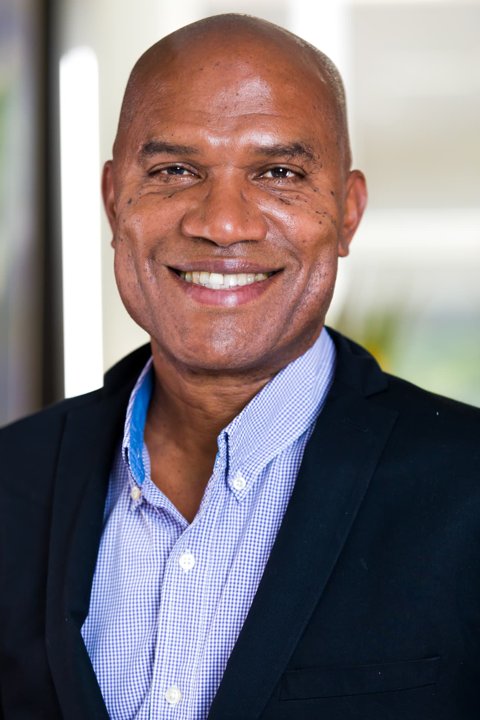
Rohan Hall
Rohan Hall is a technology entrepreneur, AI architect and author with four decades of technology experience, now focused on practical AI across business, education, government and global impact. He founded OceSha Ventures, builds the OceSha AI platform and Lumi, and wrote The Convergence of AI and the Top 10 Emerging Technologies.
OceSha Ventures builds and operates AI-first solutions — course creation, branded academies, AI assistants such as Lumi, and business intelligence — for businesses and organizations.