Keep your brand voice consistent in every language with one source of truth and a controlled review process
Define the qualities that make your voice recognizable, document how they should travel across cultures, and give translators and AI systems approved knowledge rather than isolated text.

To keep your brand voice consistent in every language, create one multilingual source of truth covering tone, terminology, audience, examples and prohibited phrasing. Translate meaning and intent rather than copying English sentence structures. Use qualified reviewers for customer-facing material, preserve approved terms in a glossary, and record corrections so they apply to future work. Technology can accelerate the process, but ownership, context and regular quality checks keep the voice coherent.
- Define your voice in observable terms such as sentence length, formality, vocabulary and attitude—not vague adjectives alone.
- Maintain an approved glossary for product names, technical language, recurring phrases and terms that should remain untranslated.
- Translate the intended customer experience rather than reproducing the grammar, idioms or humor of the source language.
- Use native-language review for prominent, sensitive or frequently reused customer communications.
- Treat every correction as reusable knowledge so the same language decision does not have to be made repeatedly.
Why a brand voice changes when the language changes
Brand voice consistency means that customers encounter the same recognizable character, priorities and level of care in every language, even when the exact words and sentence structures differ. Consistency is not literal sameness. A direct phrase in one culture may sound rude in another, while humor, idioms and degrees of formality rarely travel intact. The goal is equivalent intent and experience: the translated message should feel as though your organization created it naturally for that audience.
Voice usually drifts because translators receive text without sufficient context. They may know what a sentence says but not whether it should sound authoritative, warm, concise, technical or reassuring. Separate teams then solve the same ambiguity differently. Machine translation can multiply those inconsistencies when it processes individual strings without knowing your preferred terminology, audience or communication purpose. If you are deciding whether machine translation is good enough for customer service, judge it by the quality controls surrounding it rather than by speed alone.
Country differences add another layer. Customers who share a language may use different vocabulary, expectations and levels of formality. Legal, policy and commercial statements can also require country-specific handling. That is why language and country should be treated as related but separate dimensions. When local rules affect an answer, establish an escalation path instead of expecting a general translation workflow to resolve the issue. A separate process for handling questions from countries with different rules helps protect both clarity and accuracy.
Build a source of truth translators and AI systems can follow
Start with a compact voice guide that converts brand principles into decisions a writer can apply. Describe the audience, desired relationship, level of formality, point of view, sentence style and preferred vocabulary. For each quality, include a positive example and an example that misses the mark. “Clear” becomes useful only when you explain whether it means short sentences, plain-language definitions, direct instructions or limited technical terminology.
Do not force every market to work from a writing guide that exists only in English. Translate the guide itself, then ask reviewers to identify instructions that become ambiguous in their language. Keep global voice principles stable while allowing documented local adaptations. The same source material can also inform broader decisions about making a website work for visitors who do not speak English and whether translating your website is worthwhile.
Use a repeatable multilingual workflow
A reliable process separates meaning, translation, review and approval. This prevents a single translator or tool from silently becoming the final authority on product terminology, policy statements and customer tone. Assign an owner for the global voice and an accountable reviewer for each language or market.
- Prioritize the material. Start with content customers repeatedly rely on: core website pages, product explanations, policies, support answers and transactional messages.
- Clarify the source. Remove avoidable idioms and ambiguity, identify the audience, and state what the message should help the reader understand or do.
- Prepare context. Attach the voice guide, glossary, relevant approved source material and any country-specific requirements.
- Translate for intent. Preserve meaning, emotional effect and required terminology rather than copying the original syntax.
- Review in context. Check the words where customers will encounter them, including page headings, interface labels, conversations and longer explanations.
- Approve and record. Save accepted terminology, local adaptations and corrections in the shared source of truth.
- Monitor real questions. Look for confusion, repeated clarification requests and language choices that cause customers to abandon or escalate an interaction.
Urgent one-to-one communication needs a shorter path, but it should still use approved terminology and a clear escalation rule. A practical guide to replying when a customer writes in an unfamiliar language can help teams respond without pretending to understand nuances they cannot verify. When volume grows beyond occasional messages, establish a broader method for answering questions in languages your team does not speak.
Choose the right level of human review
- Human-led translation
- Best for prominent brand messaging, sensitive subjects, policies and material where nuance carries substantial reputational or commercial weight.
- Machine translation with human review
- Useful for recurring or higher-volume material when approved terminology, context and accountable reviewers are available.
- Machine translation without review
- Reserve for low-risk comprehension where the reader understands that the wording may not reflect polished brand expression.
- Original local writing
- Strong for campaigns or culturally specific communication because the writer can preserve the brand’s intent without being constrained by source-language phrasing.
Review quality should be proportional to consequence, visibility and reuse. A homepage headline deserves more scrutiny than a low-risk internal note. A support answer reused thousands of times deserves more investment than a one-off operational message. Evaluate meaning, voice, terminology and local appropriateness separately; a translation can be factually correct while sounding unlike your brand.
Ask a native speaker who knows your voice whether the translated message sounds like the same organization—not whether it follows the English wording closely. Back-translation can reveal major meaning errors, but it cannot prove that the target-language text feels natural or on-brand.
Coverage also involves availability. Translation does not solve delayed responses, and round-the-clock staffing does not solve inconsistent terminology. Plan language quality alongside supporting customers across different time zones. If international demand is still developing, examine ways to sell abroad without immediately hiring local staff while keeping clear ownership of escalations and approvals.
How OceSha AI fits into a multilingual knowledge system
OceSha AI is the self-service creation platform of OceSha Ventures, and Lumi is its AI Concierge. Users can bring in documents, websites, text, audio, video and other existing material. OceSha AI can use that information as context for creating courses and content, publishing and distribution, learner education, audience engagement, professional presence and analytics. This makes the OceSha AI self-service creation platform relevant when your voice guidance and approved expertise need to support several creation workflows rather than remain in a disconnected document.
The important principle is contextual reuse. OceSha AI can use a creator’s information as context, so the creator does not have to provide the same expertise again at the start of every creation workflow. Documents, websites and URLs, text, audio or video, voice, a profile photo and other supported knowledge can be added or managed. Course creation also connects with knowledge, payments, publishing, learner engagement and analytics. Examples of published learning experiences can be explored through courses and branded academies built on OceSha.
Lumi provides a conversational way to interact with OceSha without requiring people to understand every feature, menu or workflow in advance. Users can interact with Lumi in languages such as English, Spanish, French, German, Portuguese, Arabic, Hindi, Chinese and Japanese, as well as other modern languages. Public-facing Lumi helps visitors and prospective customers understand OceSha before signing in, while authenticated Lumi understands application pages, navigation, workflows, course capabilities, content tools, publishing, integrations, analytics, settings and subscriptions.
Multilingual interaction does not remove the need for a brand-owned voice guide, approved terminology or local review. Supply high-quality source material, test important conversations in each priority language, and route sensitive or country-specific questions to an appropriate person. OceSha AI supports the knowledge and creation workflow; your organization remains responsible for defining its voice and approving what customers should receive.
OceSha AI is the self-service platform of OceSha Ventures, which builds and operates AI-first solutions across course creation, branded academies, AI assistants such as Lumi and business intelligence. If you want to discuss how your source material could support multilingual creation or customer interactions, contact the OceSha team.
Measure consistency and improve it over time
A multilingual voice system is never finished after the first translation. Review it whenever products, policies, audiences or recurring customer questions change. Sample live material from every priority language and score it against the same dimensions: factual meaning, approved terminology, tone, naturalness, local appropriateness and clarity of the next step. Do not reduce quality to grammar alone.
Suppose reviewers repeatedly change a translated support phrase because it sounds overly formal and distant. The useful response is not merely to correct each occurrence. Add the preferred phrase to the glossary, explain the desired level of formality in the voice guide, include an approved example, update reusable source material and test the phrase in its real context. One local correction then becomes a durable rule for future content and conversations.
Track patterns rather than isolated preferences. Repeated terminology changes signal a glossary problem. Repeated tone changes signal that the voice guide is too abstract. Frequent factual escalations suggest missing or outdated source knowledge. Confusion concentrated in one market may point to a local adaptation issue rather than a translation issue. The goal is a learning system in which every resolved problem makes the next message more consistent.
Bring your existing documents, websites, text, audio and video into OceSha AI so your creation workflows can work from reusable context.
Build from approved knowledgeFrequently asked questions
Should every language use exactly the same tone?
The underlying character and customer promise should remain recognizable, but their expression can change. Formality, humor, directness and idioms need local adaptation. Consistent intent matters more than identical phrasing.
What should we translate first?
Prioritize the customer material with the greatest reach, consequence or reuse: core website pages, product explanations, policies, support answers and transactional communications. Start where inconsistency creates the most confusion or risk.
Who should own multilingual brand voice?
Assign one owner for global voice standards and an accountable reviewer for each priority language or market. Translators can recommend adaptations, but terminology and policy decisions need clear approval ownership.
How often should a multilingual glossary be updated?
Update it whenever products, policies, repeated customer questions or accepted local phrasing change. Reviewers should add settled corrections promptly rather than waiting for a scheduled rewrite.
Can back-translation confirm that content is on-brand?
No. Back-translation can expose missing or distorted meaning, but it cannot reliably show whether the target text sounds natural, culturally appropriate or consistent with your voice. Native-language review in context is the stronger test.
How do we handle regional versions of the same language?
Keep shared global principles and core terminology, then document regional vocabulary, spelling, formality and regulatory differences. Create separate variants only where customer expectations or required statements genuinely differ.
Brand voice survives translation when you standardize intent, not English wording. Establish one approved source of truth, give every translator or AI system the same terminology and audience context, and require review proportional to the risk and visibility of the message. Let local experts adapt phrasing where culture demands it, but record those decisions so adaptations remain controlled. Use technology to reuse knowledge and increase coverage—not to eliminate accountability. If customers should recognize the same organization in every language, someone must own the voice, the glossary and the final approval process.
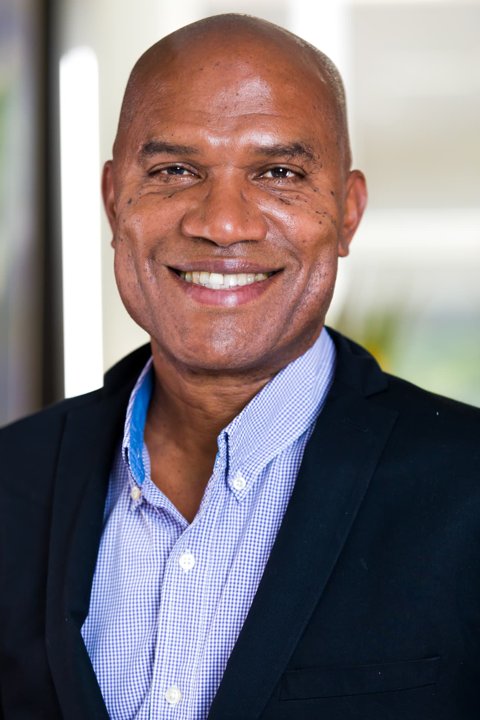
Rohan Hall
Rohan Hall is a technology entrepreneur, AI architect and author with four decades of technology experience, now focused on practical AI across business, education, government and global impact. He founded OceSha Ventures, builds the OceSha AI platform and Lumi, and wrote The Convergence of AI and the Top 10 Emerging Technologies.
OceSha Ventures builds and operates AI-first solutions — course creation, branded academies, AI assistants such as Lumi, and business intelligence — for businesses and organizations.