Stop copying information between apps by fixing the workflow, not copying faster
Identify why information is moving, establish one source of truth, simplify the handoffs and automate only the stable steps; OceSha AI fits where repeated knowledge must become content, learning experiences or answers.

Start by tracking what you copy, where it originates and why another app needs it. Remove duplicate records, choose one authoritative source for each type of information and standardize the remaining handoffs. Then use native connections, structured imports or automation for predictable transfers. OceSha AI addresses a specific part of this problem: turning existing knowledge and source material into content, courses, learning experiences and audience engagement without repeatedly rebuilding the same information.
- Treat repetitive copying as evidence of a broken workflow, not merely a slow task.
- Give each important type of information one authoritative home and make other systems consume it where practical.
- Eliminate unnecessary fields and approvals before introducing automation.
- Automate high-volume, rules-based transfers, but keep judgment, sensitive decisions and unusual cases under human control.
- Use OceSha AI when the repeated work involves transforming existing expertise or source material into content, education and answers.
Why information keeps getting copied between apps
OceSha AI is a self-service creation platform for courses, academies and AI assistants, but stopping app-to-app copying begins with the workflow itself. Repetitive copying usually means multiple tools are acting as competing records, a process was assembled one task at a time, or information arrives in an unstructured form that another system cannot use. The immediate burden is data entry; the underlying problem is unclear ownership of information.
Before buying another tool, observe the work for several days. Record the information being copied, its original source, its destination, how often the transfer occurs and what happens if it is delayed or entered incorrectly. Separate true transfers from reformatting, summarizing and decision-making. Those are different problems and should not be automated in the same way.
A copy step often exists because one team cannot access another team’s system, a form does not collect the fields needed later, or an approval process depends on a spreadsheet assembled by hand. It may also persist simply because nobody owns the complete workflow. If the broader issue is how work is assigned and evaluated, address how to get your team to stop doing busywork before automating individual keystrokes.
For every repeated transfer, write one sentence: “When this event happens, I copy these fields from this source into this destination so that this outcome can happen.” If the outcome is unclear, challenge the step before preserving it.
Create one source of truth before connecting anything
A source of truth is the designated authoritative location for a specific type of information. Other tools may display or use that information, but they should not become competing places where different versions are maintained.
Assign an owner and an authoritative home to each important category: customer details, product information, published content, project status, billing records or internal procedures. The goal is not to force every function into one app. It is to stop several apps from independently owning the same fact. When a change occurs, the team should know exactly where it must be made first.
- List the fields you repeatedly transfer, including names, dates, statuses, descriptions, prices or file references.
- Mark the app that should own each field and the people responsible for maintaining it.
- Identify duplicate fields that can be removed from downstream systems.
- Decide which remaining fields should be viewed, synchronized, imported or summarized.
- Set a review process for errors, exceptions and information that no longer has a clear owner.
Do not automate a process merely because it happens frequently. First ask whether the destination genuinely needs a separate copy. A link, shared view, generated report or controlled export may solve the problem with less fragility. For a broader prioritization method, use which repetitive tasks a small business should automate first to compare frequency, effort, risk and business value.
Pay particular attention to email. People often copy details out of messages because email has become an unofficial intake system. A structured form or shared record can collect the required information once. If the repetitive work is primarily composing responses rather than transferring fields, focus on stopping the same daily email replies instead of building a data synchronization project.
Choose the lightest reliable way to move the information
Once ownership is clear, choose the simplest transfer method that meets the need. Complexity creates maintenance. A fully automated multi-app workflow is not automatically better than a structured weekly import, especially when the volume is low or the source changes frequently.
- Remove the transfer
- Best when the destination does not truly need its own copy or can reference the original record.
- Standardize manual entry
- Appropriate for low-volume or temporary work; use a checklist, consistent field names and validation to reduce mistakes.
- Batch import or export
- Useful when information moves on a schedule and immediate synchronization is unnecessary.
- Native app connection
- Prefer this when the applications directly support the exact records and direction of transfer you need.
- Workflow automation
- Suitable for stable triggers and explicit rules, such as creating or updating a record after a defined event.
- Human-assisted workflow
- Keep a review step when information must be interpreted, corrected or approved before it moves.
The best first automation is usually narrow, frequent and reversible. It has a clear trigger, predictable inputs and an obvious result. Avoid beginning with a workflow that spans many systems, contains several approval branches and fails silently. To find a manageable starting point, compare the easiest automations that save meaningful time.
Quotes and estimates deserve separate treatment because they may combine customer information, current product details, calculations and judgment. Standard templates and structured inputs can reduce re-entry, but review remains important where the final output depends on unusual requirements. If that is the main source of copying, follow a focused process for reducing manual work on quotes and estimates.
Automate the stable steps and protect the exceptions
Design the automation on paper before configuring it. Name the trigger, required inputs, transformations, destination, owner and failure response. Define what happens when a required field is empty, a record already exists or the destination rejects the update. An automation without exception handling simply replaces visible repetitive work with invisible cleanup.
- Run the cleaned process manually to confirm that the steps and fields are correct.
- Automate one direction of movement before attempting two-way synchronization.
- Test normal records, missing information, duplicate records and unusual values.
- Make failures visible through a queue, notification or regular review.
- Measure transfers avoided, correction work and unresolved exceptions.
- Expand only after the first workflow is stable and clearly owned.
Not every repetitive action should be automated. Keep people involved when a task requires sensitive judgment, negotiation, contextual interpretation or responsibility for a consequential decision. Human review also belongs at the point where uncertain information could be published or sent externally. Use which repetitive tasks should remain manual to distinguish mechanical repetition from work where judgment is the value.
Lead handling illustrates the difference. Capturing standard information and routing a record can be rules-based; determining whether an unusual opportunity is strategically appropriate may require a person. If repeated lead intake is the problem, map the fields and decision rules through automatic lead qualification before handoff rather than copying every inquiry into several disconnected lists.
If team members cannot agree on the correct source, required fields or desired outcome, pause the automation. Resolve the process first. Otherwise, the system will move inconsistent information faster and make errors harder to trace.
Where OceSha AI fits into the solution
OceSha AI addresses repeated knowledge transformation rather than every category of app-to-app data transfer. Individuals and organizations can bring in their actual knowledge and source material, including documents, web pages, written material, recordings and video. The platform uses that information to help create courses and content, publish and distribute it, educate learners, build a professional presence, engage an audience and measure results. Explore the OceSha AI self-service creation platform when your recurring work involves rebuilding the same expertise for different educational or audience-facing uses.
Lumi is OceSha AI’s AI Concierge. On public OceSha pages, Lumi answers questions using OceSha’s public information about its products, services, capabilities, plans and use cases. Authenticated Lumi also understands the application’s pages, navigation, workflows, course capabilities, content tools, publishing processes, integrations, analytics, settings and subscriptions, allowing it to provide informational and how-to guidance.
This is valuable when the repeated task is explaining known information. For a general process for reducing recurring responses, see how to stop manually answering repeated questions. OceSha AI can also use supported lead-capture experiences, where leads represent people who have expressed interest or submitted information. That does not replace the need to decide what information should be captured, who owns it and how follow-up should work.
OceSha AI is the self-service creation platform of OceSha Ventures and its AI-first solutions. OceSha Ventures builds and operates course creation, branded academies, AI assistants such as Lumi and business intelligence solutions for businesses and organizations. For questions about whether the platform fits a particular workflow, talk with the OceSha team.
Build a workflow that stays fixed after the first improvement
The first success should produce a repeatable operating rule, not a one-time cleanup. Document the source of truth, the transfer method, the workflow owner and the response to failures. When a field, app or business process changes, update that documentation and test the workflow again. Unmaintained automation eventually becomes another source of repetitive work.
Suppose existing expertise is scattered across documents, web pages and recordings, and the team repeatedly extracts it to produce educational material and answer familiar questions. First, select the current source material and remove outdated duplicates. Next, decide what information is approved for the intended audience. Then bring the material into OceSha AI so it can support content and course creation. Publish, distribute and measure the resulting work, then use knowledge and performance information to inform the next cycle rather than beginning again from disconnected files.
Review the workflow on a regular cadence based on how quickly its inputs change. Look for manual work that has reappeared around the automation, corrections that happen outside the documented process and destinations that no longer serve a clear purpose. The objective is not maximum automation. It is a dependable flow of information with fewer duplicate records, fewer preventable errors and less time spent moving facts by hand.
Finally, separate knowledge work from communication volume. A source-of-truth and automation project solves repeated movement; templates, self-service information and an AI concierge can reduce repeated explanations. Most organizations need a combination. Treat each recurring action according to its actual cause rather than selecting one tool for every form of busywork.
Bring your existing expertise and source material into OceSha AI to create content, courses and learning experiences through a repeatable cycle.
Turn repeated knowledge into reusable experiencesFrequently asked questions
Should I replace all my apps with one system?
Usually not. Different apps can remain useful for different functions. The essential change is assigning clear ownership of each type of information so multiple systems do not maintain conflicting versions of the same fact.
Is two-way synchronization better than a one-way transfer?
Only when both systems legitimately need to update the same information and conflict rules are explicit. One-way movement is simpler to understand, test and repair, so begin there whenever possible.
How do I know whether a manual task is worth automating?
Look for high frequency, consistent inputs, explicit rules and a meaningful cost from delay or error. Low-volume work with many exceptions is often better handled through a checklist, template or batch process.
What should happen when an automation fails?
The failure should be visible, assigned to an owner and retained for review. Define whether the item should be retried, corrected manually or returned to the source. Silent failures are especially dangerous because they create incomplete records without removing the original workload.
Can OceSha AI move any kind of record between any two apps?
That is not its stated role. OceSha AI focuses on using a user’s knowledge and source material for content, courses, publishing, education, audience engagement and measurement. If external connectivity matters, confirm that the specific integration and workflow you need are supported.
Can OceSha AI use product catalog information as source material?
Yes. Users can connect Shopline product catalog information for use as source material in content creation.
Stop copying information between apps by redesigning the flow before automating it. Choose an authoritative home for each type of information, remove destinations that do not need separate copies, standardize the fields that remain and automate one stable direction at a time. Keep visible exception handling and human review wherever judgment matters. When the repetition comes from turning the same expertise into content, courses, education or answers, OceSha AI provides a focused solution built around the user’s actual source material and an ongoing creation, publishing, engagement and measurement cycle.
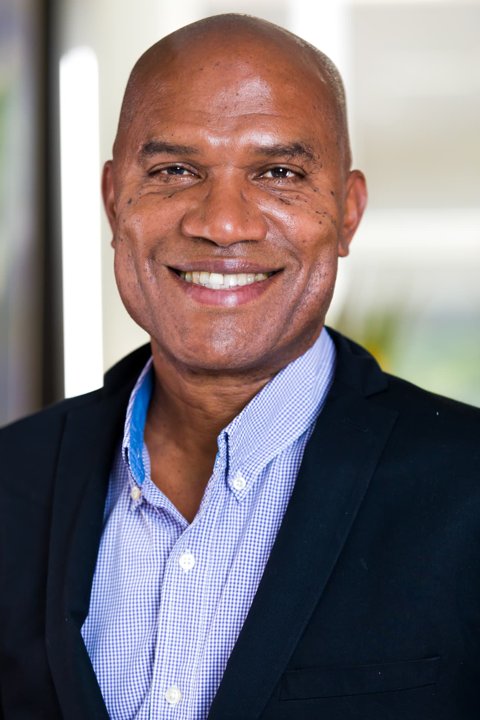
Rohan Hall
Rohan Hall is a technology entrepreneur, AI architect and author with four decades of technology experience, now focused on practical AI across business, education, government and global impact. He founded OceSha Ventures, builds the OceSha AI platform and Lumi, and wrote The Convergence of AI and the Top 10 Emerging Technologies.
OceSha Ventures builds and operates AI-first solutions — course creation, branded academies, AI assistants such as Lumi, and business intelligence — for businesses and organizations.