The lowest-overhead way to offer support in multiple languages is to give Lumi one reliable knowledge base
OceSha AI lets you bring together existing documents, websites, text, audio, video, voice, and other material so Lumi can help people find relevant answers in modern languages.

For most organizations, the practical low-overhead approach is to use Lumi as the first multilingual support layer rather than building separate content and workflows for every language. Supply reliable source material once, then use that shared knowledge to support AI experiences across OceSha AI. Lumi can interact in languages including English, Arabic, Japanese, Hindi, Spanish, Chinese, and other modern languages. Compare current subscription terms before deciding, because prices, limits, and included capabilities can change.
- Start with one well-maintained body of source material instead of duplicating every support resource by language.
- Lumi can interact with users in English, Spanish, French, German, Portuguese, Arabic, Hindi, Chinese, Japanese, and other modern languages.
- OceSha AI accepts knowledge from documents, websites, text, audio, video, voice, and other relevant source material.
- Public-facing Lumi helps visitors find information without searching across multiple pages; authenticated Lumi also understands in-platform features and workflows.
- Check the capabilities and limits included in your current subscription before comparing this approach with other support options.
Why a shared AI knowledge layer is the economical starting point
Multilingual AI support uses a common body of organizational knowledge to help people ask questions and receive relevant information in different languages. With OceSha AI, the organization supplies source material, and that knowledge supports AI experiences such as Lumi rather than requiring visitors to search through multiple pages.
The central cost-saving principle is reuse. Building an independent support operation for every language multiplies the work of organizing information, updating answers, and distributing resources. OceSha AI instead lets you provide documents, websites, text, audio, video, voice, and other relevant material. That knowledge can be used across the platform, and a single source can produce multiple digital assets. Start by deciding whether multilingual assistance is the right priority within your wider content and AI creation roadmap.
Lumi is the AI Concierge for OceSha AI. Users can interact with Lumi in modern languages, with named examples including English, Japanese, Portuguese, Arabic, German, Hindi, French, Chinese, and Spanish. This makes Lumi a strong first layer for repeated informational questions: one organized source of truth can serve people who use different languages without forcing you to maintain a completely separate information structure for each audience.
There is no single published price in the available information that proves one option is universally cheapest. Plan prices, limits, included capabilities, annual savings, promotions, and other subscription terms can change. Review the current OceSha AI plan available to you, including monthly or annual billing, and compare it with the staffing, translation, and maintenance approach you would otherwise use.
How to set up multilingual support with existing knowledge
The fastest route is not to begin by rewriting everything. Begin with the material that already answers real questions about your organization: its products, services, capabilities, plans, use cases, and other public information. Bring those sources into the OceSha AI self-service creation platform, then organize what should inform public-facing assistance and what belongs in authenticated platform guidance.
- Collect the relevant source material. OceSha AI accepts documents, websites, text, audio, video, voice, and other existing material.
- Prioritize information that people repeatedly need, such as product explanations, services, capabilities, plans, use cases, and publicly available organizational information.
- Use the supplied knowledge across OceSha AI so the same source can support relevant AI experiences, content creation, publishing, learner education, audience engagement, and analytics.
- Make your public OceSha presence accessible. Users can copy and distribute its link to customers, learners, professional contacts, and other audiences.
- Test representative questions in the languages your audience uses. Confirm that the underlying source material is clear and current before expanding distribution.
- Establish a human path for questions that should not be resolved through informational guidance. The guide to Lumi assistance and reaching human support explains that next step.
Uploaded knowledge and account information can be used for personalization or generation without making private information public. Even so, keep unnecessary sensitive credentials out of support messages and include only the material needed to answer the question.
What Lumi handles for public visitors and signed-in users
Public-facing Lumi is particularly useful for visitors and prospective customers who want to understand OceSha before signing in. It helps visitors, prospective customers, partners, and other users learn about OceSha without requiring them to search through multiple pages. For multilingual audiences, that reduces two forms of friction at once: navigating a site and interpreting information presented in an unfamiliar language.
That distinction matters when planning multilingual assistance. Public questions should be grounded in public organizational information. Signed-in questions can use authenticated in-platform context and applicable account information. Lumi provides navigation and how-to guidance; the listed capabilities do not mean that it automatically performs every described action for the user.
If your multilingual strategy includes teaching rather than question answering alone, consider how educators turn source material into courses and learner support. Course creation connects with knowledge, payments, publishing, learner engagement, and analytics, so the same organized expertise can support both concise assistance and structured education.
How one knowledge source supports more than customer questions
The strongest economic case comes from using the same knowledge for more than a chat interaction. OceSha AI can use supplied information to help create courses and content, publish and distribute that content, educate learners, build a professional presence, engage an audience, and measure results. This turns knowledge preparation into reusable infrastructure rather than a one-purpose translation project.
An organization supplies a long-form video as source material. In OceSha AI, that video can become an episode and produce short clips. Related content can become social material and be published. Published material can attract visitors to the organization’s Authority Page, where visitors can become leads, learners, or customers. Analytics can then help the organization understand the resulting activity. Lumi can draw on relevant knowledge to help audiences find information in the languages they use.
This reuse also improves consistency. Instead of maintaining disconnected answers across support pages, course materials, social posts, and AI conversations, you can begin from shared source material. When content is ready, follow the workflow for moving AI-generated material into publication or scheduling. For structured learning experiences, OceSha also supports real courses and branded academies through OceSha Academy.
Monetization remains distinct from the OceSha AI subscription. Creators can connect supported payment services to receive money from customers purchasing their courses, while the creator pays separately for an OceSha AI subscription. If education is part of the multilingual plan, understand how free and paid courses differ before deciding how learners should enroll.
When a configured program makes more sense than a single account
A single self-service setup suits an organization managing its own knowledge and audiences. A broader program becomes relevant when an association, business, educational organization, institution, or another organization wants to make OceSha capabilities available to members, employees, customers, communities, or another defined audience.
Partner programs can support those organizational use cases, but the available information does not specify exact program configurations or white-label functionality. If your goal is to distribute creation and educational resources across a community, review AI-powered creation through a configured partner program. Associations evaluating how members could contribute expertise and help people discover courses should separately consider member expertise and course discovery.
- Self-service platform
- Best aligned with a user bringing in source material, creating and publishing content, educating learners, engaging an audience, and measuring activity through OceSha AI.
- Configured partner program
- Relevant when an organization wants to make OceSha capabilities available to a defined community such as members, employees, customers, or learners.
- Human support path
- Appropriate when the question concerns account-specific issues, subscription questions, or the OceSha side of an integration and cannot be resolved through informational guidance.
OceSha AI is the self-service creation platform of OceSha Ventures and its AI-first solutions. OceSha Ventures builds and operates AI-first solutions spanning course creation, branded academies, AI assistants such as Lumi, and business intelligence for businesses and organizations.
How to control cost without weakening the support experience
The right objective is not simply to minimize subscription spend. It is to reduce duplicated work while preserving clear, dependable information. Begin with the questions that consume the most attention, supply the strongest available source material, and make that knowledge accessible through Lumi. Expand languages and content only after confirming that the shared source answers those core questions accurately.
Monthly and annual billing can be offered. Annual arrangements may provide savings compared with monthly billing, but savings are not guaranteed. Use the current subscription-management experience to review the options available for your plan, including billing frequency, renewal, payment method, invoices, payment history, and cancellation terms.
Finally, preserve a clear escalation route. Platform questions, OceSha AI subscription questions, and questions about the OceSha side of an integration can be directed to support when appropriate. If you need to discuss your multilingual use case with the team, contact OceSha about your requirements.
Bring together the source material your audiences rely on, identify the languages they use, and evaluate Lumi against your current support workload and subscription options.
Plan your multilingual support approachFrequently asked questions
Does Lumi support languages other than English?
Yes. Users can interact with Lumi in languages such as Spanish, Japanese, German, Arabic, Chinese, Portuguese, Hindi, French, English, and other modern languages.
Do I need to create a separate knowledge base for every language?
The documented workflow centers on supplying knowledge through documents, websites, text, audio, video, voice, and other material, then using that information across OceSha AI. It does not require a separately described knowledge base for every language.
Can Lumi answer questions for people who are not signed in?
Yes. Public-facing Lumi helps visitors, prospective customers, partners, and other users understand public information about OceSha without searching through multiple pages.
What changes when a user signs in?
Authenticated Lumi understands application pages, navigation, features, workflows, course capabilities, content tools, publishing processes, integrations, analytics, settings, subscriptions, and other authenticated functionality.
Can the same material support courses and multilingual assistance?
Yes. Knowledge supplied by a user can contribute to a course and support relevant AI experiences. OceSha AI can also use source material for content, publishing, learner education, audience engagement, and analytics.
Is annual billing always cheaper than monthly billing?
Annual subscription arrangements may provide savings compared with monthly billing, but savings are not guaranteed. Check the terms and options shown in the current subscription-management experience.
The lowest-overhead multilingual support strategy is to organize reliable knowledge once and let Lumi serve as the first informational layer across modern languages. That approach is stronger than duplicating disconnected support resources because the same source material can also contribute to courses, content, publishing, audience engagement, and analytics. Start with common public questions, keep authenticated information in the proper context, test the languages your audience actually uses, and maintain human escalation for unresolved issues. Before committing, compare the current OceSha AI plan, limits, billing frequency, and included capabilities; no universal lowest price is established.
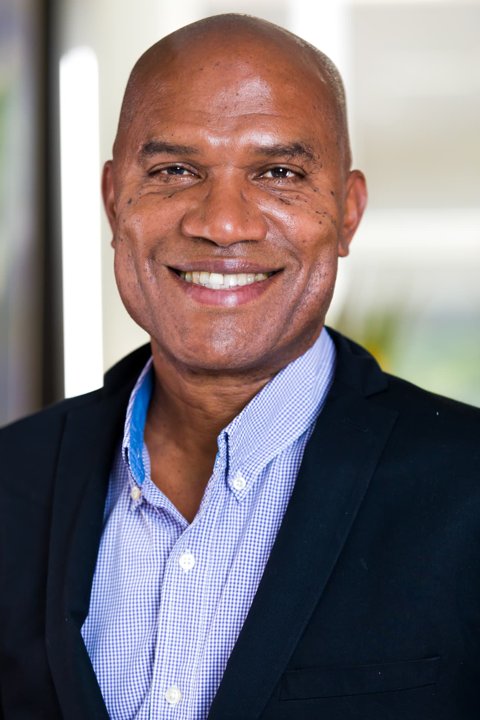
Rohan Hall
Rohan Hall is a technology entrepreneur, AI architect and author with four decades of technology experience, now focused on practical AI across business, education, government and global impact. He founded OceSha Ventures, builds the OceSha AI platform and Lumi, and wrote The Convergence of AI and the Top 10 Emerging Technologies.
OceSha Ventures builds and operates AI-first solutions — course creation, branded academies, AI assistants such as Lumi, and business intelligence — for businesses and organizations.