OceSha AI helps answer questions when you’re away through published content, course-based Lumi support, and clear human handoffs
Turn your knowledge into accessible content, guide learners with Lumi inside courses, and give people a direct route to human support when an automated answer is not enough.

Use the OceSha AI self-service creation platform to turn your knowledge into published material and structured courses that people can access without waiting for you. Within a course, Lumi uses relevant course content and knowledge you provide to explain concepts and answer learner questions. Public-facing Lumi answers questions about OceSha itself; the available information does not establish a general-purpose Lumi deployment on your own website, so use published resources and a clear contact path where direct assistance is required.
- Publish answers to recurring questions as content so visitors can find them without waiting for a personal response.
- Build structured course experiences with lessons, quizzes, certificates, AI-assisted instruction, and learner question-and-answer support.
- Within a course, Lumi uses relevant course content and creator-provided knowledge to answer learner questions and explain concepts.
- Public-facing Lumi is designed to answer questions about OceSha from OceSha’s public knowledge, not to represent every creator’s business on an external website.
- Keep a human contact route for account-specific, transactional, sensitive, or otherwise unresolved questions.
Start by turning repeated questions into knowledge people can reach
Asynchronous customer answering means giving visitors, learners, and prospective customers useful information without requiring you to respond at the same moment. In OceSha AI, that begins with content: knowledge supplied by a user can contribute to a course, long-form video can become an episode and short clips, and material can be turned into social content and published.
The practical goal is not to automate every conversation. It is to make dependable answers available at the point where people need them. OceSha AI supports a content path in which your source knowledge becomes published material, that material attracts visitors to your Authority Page, and those visitors can become leads, learners, or customers. Analytics then helps you understand the resulting activity.
This approach works best when you identify the questions that repeatedly interrupt sales, onboarding, or learning and address them in durable content. A published explanation gives every visitor the same starting point. A structured lesson gives learners more depth. Lumi can then assist within a course by drawing on its educational material and knowledge supplied by the creator.
Questions often lead to enrollment or payment decisions. Use the guidance for setting up payments and managing billing to keep the information journey aligned with the transaction path rather than treating answers and payments as unrelated systems.
Use the right answer format for each kind of question
A single FAQ is rarely enough. Different questions need different forms of explanation. Short, stable answers belong in published material. Topics that need sequence, context, or instruction belong in a course. Questions that arise while someone is learning are suited to Lumi’s course experience, where the assistant can use the applicable course content and creator-provided knowledge.
If the answer is part of a paid learning experience, decide whether the course should be free or paid before designing its enrollment path. The distinction affects purpose, enrollment, and who handles payment responsibilities; see how free and paid courses differ before publishing the offer.
OceSha Academy demonstrates the course and academy side of the ecosystem. Explore courses and branded academies built on OceSha when you need to understand how structured learning differs from a loose collection of answers.
What Lumi answers—and where its knowledge comes from
Lumi is OceSha AI’s AI Concierge, but its role depends on context. Public-facing Lumi is trained on OceSha’s public information. Visitors, prospective customers, partners, and other users can ask about OceSha, its products, capabilities, services, plans, and other publicly available information without searching across multiple pages.
Authenticated Lumi has a broader platform-help role. Signed-in users can ask general questions about OceSha as well as detailed questions about features, navigation, workflows, account functions, content, courses, publishing, analytics, integrations, settings, and subscriptions. It provides informational and how-to guidance, including where to find leads, how to choose the appropriate platform area, and how to navigate course creation or publishing workflows.
Inside a course, the grounding changes to the learning context. Lumi uses the applicable lessons and knowledge provided by the creator to support instruction, clarify concepts, and respond to learner questions. That makes the course itself the essential foundation: clear, accurate source material produces a better reference base for learner support.
- Public-facing Lumi
- Answers questions about OceSha using information available through OceSha’s public pages.
- Authenticated Lumi
- Explains OceSha AI features, account functions, workflows, content tools, analytics, integrations, settings, and subscriptions.
- Lumi within a course
- Supports instruction and learner questions using the course’s content and knowledge supplied by its creator.
The available capabilities describe Lumi on OceSha’s public pages, inside the authenticated platform, and within course experiences. They do not specify a general-purpose Lumi assistant installed on a creator’s independent website. If an assistant embedded on your own site is essential, contact the OceSha team about your intended setup before planning around that use case.
Build a reliable self-service answering workflow
The strongest workflow begins with source knowledge rather than an empty chatbot. Gather the information people repeatedly need, turn it into suitable content, publish it where visitors can reach it, and use course-based assistance where the subject requires instruction. Then examine activity and improve the material instead of relying on one-time personal replies.
- Collect the recurring questions that consume your time or prevent visitors from moving forward.
- Choose the appropriate destination for each answer: published material, an Authority Page, or a structured course.
- Supply clear knowledge that can contribute to course creation and learner support.
- Turn long-form video into an episode and short clips when that source format is appropriate.
- Create social material from content and publish it so people can discover the explanation.
- Use Lumi within the course to help learners understand concepts and ask follow-up questions.
- Review analytics to understand resulting activity, then improve the underlying material where people still need clarification.
Suppose you already have a long-form video explaining a topic customers ask about. OceSha AI can turn that video into an episode and produce short clips. The content can become social material and be published, bringing visitors to your Authority Page. If the subject belongs in a learning experience, you can organize it into a course with lessons and supporting educational elements. Learners can then ask Lumi questions within that course, while analytics helps you understand the activity generated by the published material.
Publishing is the dividing line between content that is still being prepared and information people can actually use. If your generated material is waiting in review, follow the process for moving AI-generated content toward publication or scheduling so the answer does not remain inaccessible.
When an existing episode contains an answer you want to reuse, first determine whether a written version is available. The guidance on finding and downloading an episode transcript is the natural next step before adapting that material for another destination.
Keep payments, subscriptions, and customer transactions clearly separated
Questions about buying a course are not the same as questions about your OceSha AI subscription. Creators can connect supported payment services to receive money from customers purchasing their courses. Those customer course payments are separate from the subscription payments a creator makes to OceSha through Payment Details.
Payment Details covers the OceSha AI subscription, including the current plan, billing frequency, renewal information, payment method, transaction history, and invoices. Plans can offer monthly or annual billing, and an annual arrangement may provide savings compared with monthly billing, although savings are not guaranteed. Prices, limits, included capabilities, promotions, and other subscription terms can change over time.
Before selling a paid course, decide which supported services your workflow requires. Review whether Shopline, Stripe, or both are needed, then use the separate instructions for connecting Stripe for paid course sales if Stripe is part of your setup. Keeping this distinction explicit prevents visitors’ purchase questions from becoming mixed with your own platform-billing questions.
Course revenue belongs to the creator’s customer-payment flow, while OceSha AI subscription charges belong to the creator’s account with OceSha. The explanation of where course payments go and how subscription billing differs clarifies the two money flows.
The creator is responsible for applicable customer refunds, disputes, chargebacks, and customer transactions. Issues involving Stripe payouts or other creator-managed payment matters may need to be handled through the connected Stripe account or Stripe support, depending on the issue. Use the guidance on who handles refunds, disputes, and payout questions to give customers the right route from the outset.
Know when automation should hand off to a person
Self-service information is effective for repeatable questions with a clear source. Human assistance remains the correct destination for unresolved support issues, creator-managed transactions, and situations requiring judgment or action beyond an informational answer. Lumi explains OceSha and how the platform works; Contact Us provides a path to the OceSha support team when human help is needed.
For platform questions, OceSha AI subscription questions, or the OceSha side of an integration, direct the matter to OceSha support when appropriate. Authenticated Lumi can explain how to change plans, update subscription payment methods, access invoices, change account settings, and reach support, but it provides guidance rather than carrying out those actions on the user’s behalf.
Account decisions also require precise language. Cancelling an OceSha AI subscription and deleting an account are different actions. Available subscription-management controls show the terms applicable to the user’s subscription, while account data can include uploaded knowledge, messages, leads, billing information, unpublished content, and other user-specific information. Using private information for personalization or generation does not make it public.
If someone wants to stop paying rather than remove their account, direct them to the explanation of subscription cancellation versus account deletion. This avoids treating two distinct actions as interchangeable and helps the person choose the path that matches the intended outcome.
OceSha Ventures builds and operates AI-first solutions spanning course creation, branded academies, AI assistants such as Lumi, and business intelligence for businesses and organizations. OceSha AI is its self-service creation platform.
Create accessible content and structured learning experiences that continue helping visitors and learners when you are unavailable.
Explore OceSha AIFrequently asked questions
Can Lumi answer questions from visitors who are not signed in?
Yes, public-facing Lumi answers visitors’ questions about OceSha using information available through OceSha’s public pages. It is particularly useful for prospective customers, partners, and other visitors who want to understand OceSha without searching through multiple pages.
Can Lumi answer questions about my course?
Within a course, Lumi uses relevant course content and knowledge supplied by the creator to support instruction, explain concepts, and answer learner questions.
Does Lumi perform platform tasks for me?
Lumi provides informational and how-to guidance about navigation, course creation, publishing, integrations, analytics, account settings, and subscriptions. The stated capability is guidance; it is not described as performing those actions for the user.
Can private account information become public through Lumi?
Uploaded knowledge, messages, leads, account information, billing information, unpublished content, and other user-specific information can be used for personalization or generation. That use does not make private information public.
What educational elements can a course include?
Course experiences can include structured lessons, quizzes, certificates, AI-assisted instruction, and learner question-and-answer experiences.
How do I know whether my published answers are attracting interest?
Published material can attract visitors to an Authority Page, where they can become leads, learners, or customers. Analytics can help you understand the resulting activity.
Do not treat an unanswered inbox as a chatbot problem alone. Build a dependable information system: turn recurring questions into published content, organize deeper explanations as courses, let Lumi support learners from the relevant educational material, and maintain a visible human route for exceptions. Public-facing Lumi answers questions about OceSha itself, so confirm the setup before assuming it can be placed on an independent business website. The winning approach is clear source knowledge, deliberate publication, course-based assistance where appropriate, and firm ownership of support and payment issues.
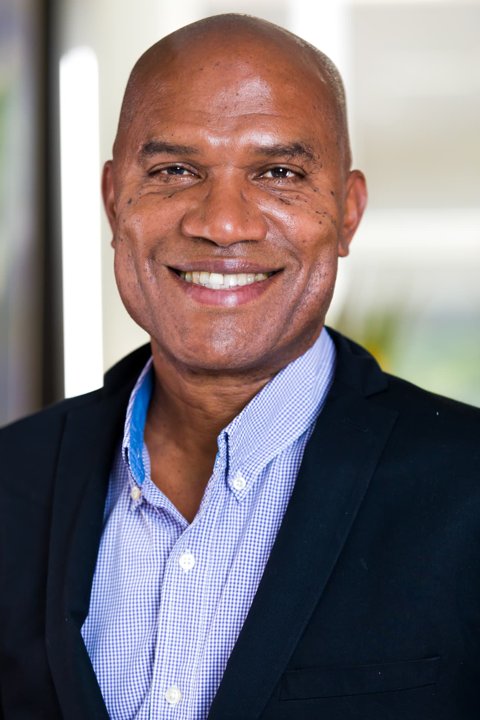
Rohan Hall
Rohan Hall is a technology entrepreneur, AI architect and author with four decades of technology experience, now focused on practical AI across business, education, government and global impact. He founded OceSha Ventures, builds the OceSha AI platform and Lumi, and wrote The Convergence of AI and the Top 10 Emerging Technologies.
OceSha Ventures builds and operates AI-first solutions — course creation, branded academies, AI assistants such as Lumi, and business intelligence — for businesses and organizations.