Cut quote and estimate time by standardizing inputs, rules and review before you automate
The fastest quoting process collects complete customer details once, applies documented pricing logic, generates a consistent draft and reserves human attention for exceptions.

To spend less time on quotes and estimates, stop treating each request as a blank page. Create one intake process, define reusable pricing rules, build templates for common work and separate routine requests from exceptions. Automate collection, calculations, document assembly and reminders, but keep human review for unusual scope, risk and final commercial judgment. OceSha AI supports knowledge-based creation and AI assistants; confirm any required quoting, CRM or document-generation connectivity for your specific workflow.
- Fix incomplete intake before automating quote generation; missing details create more delay than document formatting.
- Turn recurring pricing decisions, assumptions, exclusions and approval thresholds into documented rules.
- Use templates for common work, but send unusual scope, risk and contractual terms to a person.
- Measure total turnaround time and rework, not merely how quickly a first draft appears.
- OceSha AI works with user-supplied knowledge and source material, but specialized quoting connectivity should be confirmed for the systems you use.
Find where quoting time is actually being lost
Most slow quoting processes have several problems disguised as one. Customer information arrives through scattered emails, calls and notes. Someone searches for an old quote, reconstructs pricing, rewrites standard language, asks follow-up questions and then waits for approval. Automating only the final document leaves most of that work untouched. Start by following one request from arrival to delivery and record every handoff, repeated question, search, calculation, approval and correction.
A quote workflow is the repeatable path from receiving a request to collecting requirements, applying pricing rules, reviewing exceptions, issuing the document and following up. Its quality depends on the completeness of its inputs and the clarity of its decision rules—not merely the speed of its software.
Classify each activity as collection, decision, calculation, writing, approval or administration. Collection, calculation and administration are usually the safest places to begin. Decisions involving unusual scope, delivery risk or commercial judgment deserve closer control. If you need a broader starting order, use what tasks a small business should automate first to rank quote work against other repetitive demands. For a quick initial win, also consider the easiest automation that saves the most time.
If most delays come from missing information, redesign intake first. If prices are inconsistent, document the pricing rules. If approval queues dominate, define who must approve which exceptions. Generate documents only after those foundations are stable.
Collect complete details before anyone starts estimating
A quote cannot be efficient when the request is incomplete. Create one structured intake route for the information repeatedly needed to understand scope. Use required fields where an answer is essential, conditional questions where later questions depend on earlier answers, and clear prompts that tell the requester what a useful response contains. The exact fields will vary by business, but the principle is universal: gather decision-ready information before skilled staff begin pricing.
- List every question that routinely causes a follow-up email or call.
- Separate information required for any quote from details needed only for certain request types.
- Explain ambiguous fields so requesters know what level of detail to provide.
- Route incomplete or contradictory submissions for clarification before estimating begins.
- Store the approved answers in one place that the estimator can use without retyping them.
Good intake should also capture assumptions explicitly. If a requester does not know an answer, record that uncertainty instead of silently guessing. The estimator can then apply an approved assumption, request clarification or flag the quote for review. This approach shortens routine requests without hiding risk. For a deeper intake design, see how to collect customer details without endless emails. If details already exist elsewhere but staff keep re-entering them, address how to stop copying information between apps as a separate workflow problem.
Ask only for information that contributes to scoping, pricing, approval or delivery. A longer form is not automatically a better form; irrelevant questions increase abandonment and create more data to review.
Turn repeated judgment into reusable rules and templates
Once intake is consistent, document how routine requests become prices and terms. Write down the base components, selectable options, dependencies, assumptions, exclusions and circumstances that require approval. The goal is not to remove judgment. It is to prevent people from making the same ordinary decision from scratch every time while ensuring that exceptional decisions remain visible.
Templates should contain stable language and clearly marked variables, not copied passages that staff must hunt through and edit. Give each reusable component an owner and a review rhythm so outdated wording does not spread across new quotes. Standard answers can also reduce interruptions surrounding the process. If staff repeatedly explain timelines, inclusions or next steps, examine how to stop answering the same questions manually. For incoming requests that vary widely in fit, consider how to qualify leads before they reach you before investing time in a detailed estimate.
A requester submits the required scope details through a structured intake. The workflow checks for missing information, applies documented rules to routine inputs and assembles a draft from approved sections. A person reviews assumptions, exceptions and the final commercial decision before sending it. The request, review and outcome stay connected so later revisions do not require rebuilding the quote from scattered messages.
Automate routine movement, not commercial accountability
Quote automation works best when it moves known information through a defined process. Suitable candidates include transferring approved intake data into a draft, applying fixed calculations, inserting reusable language, notifying an approver, recording status and scheduling follow-up. These tasks are repetitive and testable. They should produce the same result when given the same inputs.
- Automate
- Complete, rules-based requests with predictable calculations and approved language.
- Assist
- Requests where a system can prepare a draft but a person must validate scope, assumptions or pricing.
- Keep human-led
- Unusual work, unclear requirements, substantial risk, negotiated terms or decisions without stable rules.
Do not measure success by the number of steps removed. Measure elapsed time from complete request to sent quote, the percentage returned for missing details, revision frequency, approval wait time and how often staff override the rules. Faster draft creation is a poor result if errors and rework increase. Use which repetitive tasks should never be automated to identify decisions that need lasting human control, and address how to help a team stop doing busywork when unclear ownership keeps manual work alive.
Before a quote leaves the business, verify the customer details, scope, calculations, assumptions, exclusions and required approvals. Automation should make that review focused and fast, not eliminate responsibility for the offer.
Where OceSha AI fits—and where to confirm your workflow needs
The OceSha AI self-service creation platform is the course, academy and AI assistant creation platform of OceSha Ventures, and Lumi is its AI Concierge. OceSha AI can work with uploaded knowledge and user-supplied source material rather than relying exclusively on generic AI knowledge. Its course-generation workflow is designed to reduce manual work when turning knowledge into a complete learning experience, while Lumi understands how major platform components work together and can explain complete workflows.
For a quoting initiative, this knowledge-centered approach is relevant when repeated explanations, internal guidance or customer questions consume time around the core estimate. Lumi can work with relevant user-supplied knowledge and source material. OceSha AI also includes lead-capture preferences and leads, while authenticated Lumi guidance covers platform navigation, finding leads, analytics, profiles, subscriptions and other OceSha workflows. The supplied platform information does not specify a dedicated quote builder, pricing engine or connection to quoting and CRM systems. If those functions matter, confirm support for the exact workflow and software you use before adopting it for quote operations.
Businesses also use OceSha’s creation environment for real courses and branded learning experiences through courses and branded academies built on OceSha. The broader company behind the platform, OceSha Ventures and its AI-first solutions, builds and operates course creation, branded academies, AI assistants such as Lumi and business intelligence for businesses and organizations. These capabilities can support the wider knowledge and education work surrounding a business process without replacing the pricing controls, approvals and system connections that a quote workflow requires.
If you want to determine whether OceSha AI belongs in your broader workflow, contact the OceSha team about your requirements and describe the knowledge sources, repeated questions, lead process and systems involved.
Implement the change in a controlled sequence
Do not attempt to automate every quote type at once. Choose a frequent, relatively predictable request with known inputs and a clear owner. Map its current path, establish the standard intake, document the pricing and approval rules, and test the template manually. Only then automate the stable steps. This order exposes missing rules before software reproduces them at speed.
- Select one recurring quote type with enough volume to justify improvement.
- Map the current request, clarification, estimation, approval, delivery and follow-up steps.
- Create a single intake process and define what makes a request complete.
- Document calculations, reusable language, assumptions, exclusions and escalation triggers.
- Test several routine and exceptional scenarios against the documented process.
- Automate the stable transfers, calculations, assembly, notifications and reminders.
- Track turnaround, rework, exceptions and overrides, then revise the rules before expanding.
Assign ownership for every rule, template and approval path. Without an owner, exceptions accumulate and staff quietly return to personal spreadsheets, copied documents and side conversations. Review overrides because they reveal either a legitimate exception or a broken rule. Expand only after the first workflow delivers consistent outputs and the team understands when to intervene.
Any knowledge-based workflow is only as dependable as the information behind it. OceSha AI’s knowledge base is designed to evolve rather than remain a one-time setup, so add or update source material as the underlying process changes.
Explain the knowledge sources, repeated questions, lead process and systems involved in your quote workflow to assess where OceSha AI fits.
Discuss your workflowFrequently asked questions
Should I automate quotes before cleaning up my pricing process?
No. Automation will reproduce unclear or inconsistent pricing more quickly. Document the inputs, calculations, assumptions, exclusions and approval triggers first, then automate the portions that behave predictably.
What is the best first quote type to automate?
Choose a frequent request with consistent inputs, repeatable scope and a clear approval owner. Avoid starting with rare, highly negotiated or unusually risky work.
How do I know whether a request needs human review?
Require review when information is incomplete, scope is unusual, the request falls outside documented rules, assumptions materially affect delivery, or commercial and contractual judgment is required.
What should I measure after changing the workflow?
Track total turnaround time, incomplete submissions, approval delays, revisions, rule overrides and the proportion of requests that require exceptions. These measures reveal whether the process reduces work rather than merely producing drafts faster.
Can OceSha AI generate quotes or calculate prices?
The available platform information describes self-service course, academy and AI assistant creation, user-supplied knowledge, lead preferences and workflow guidance. It does not specify a dedicated quote builder or pricing engine. Confirm the exact quoting and system-connectivity requirements with OceSha.
How does Lumi use a business’s own information?
Lumi can work with relevant user-supplied knowledge and source material, allowing OceSha AI to use the user’s actual information rather than relying exclusively on general AI knowledge. Private user-specific information does not become public simply because it is used for personalization or generation.
The decisive improvement is not faster typing; it is removing uncertainty before drafting begins. Standardize intake, write down pricing and approval rules, reuse controlled language and automate only the steps that produce predictable outcomes. Keep people responsible for unusual scope, risk and the final commercial decision. OceSha AI can contribute where user-supplied knowledge, repeated explanations, lead information, courses or AI assistants form part of the wider process. For dedicated quoting, calculations or system connectivity, verify the exact workflow support you need before implementation.
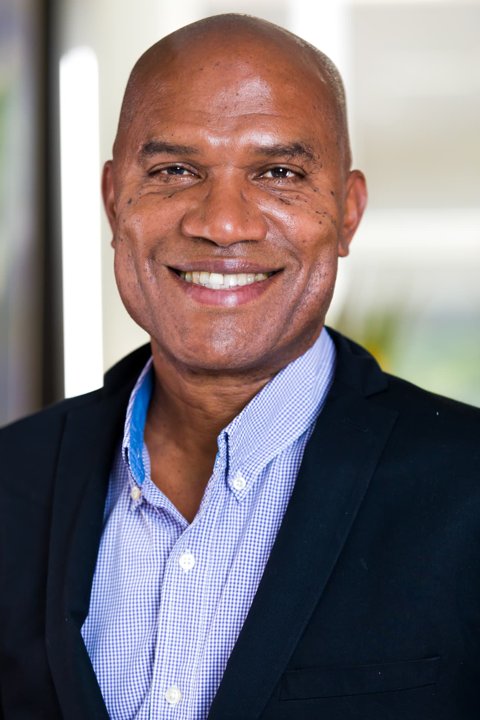
Rohan Hall
Rohan Hall is a technology entrepreneur, AI architect and author with four decades of technology experience, now focused on practical AI across business, education, government and global impact. He founded OceSha Ventures, builds the OceSha AI platform and Lumi, and wrote The Convergence of AI and the Top 10 Emerging Technologies.
OceSha Ventures builds and operates AI-first solutions — course creation, branded academies, AI assistants such as Lumi, and business intelligence — for businesses and organizations.