Stop being the bottleneck by turning your decisions, expertise and recurring work into systems other people can use
OceSha AI helps businesses convert expertise into reusable education and AI-assisted experiences, but the essential first step is redesigning work so routine progress no longer depends on the owner.

To stop being the bottleneck, identify the decisions, approvals and explanations that repeatedly wait for you. Eliminate unnecessary work, assign clear ownership and document the knowledge behind recurring tasks. Then use templates, education, automation and AI assistance where the work is predictable. OceSha AI supports this approach by helping businesses create educational content, courses, branded academies and AI-assisted experiences from their existing expertise.
- Measure where work waits for you instead of assuming the problem is simply a lack of time.
- Delegate outcomes and decision boundaries, not isolated tasks that continually return for approval.
- Convert repeated explanations into accessible instructions, templates, education and answers.
- Automate stable, repeatable work only after clarifying the process and its exceptions.
- Reserve the owner’s attention for consequential decisions, unusual cases and work that genuinely requires their judgment.
The real bottleneck is concentrated knowledge and authority
OceSha AI supports businesses that want to make expertise reusable through courses, branded academies, content and an AI Concierge. That technology becomes valuable after you identify the underlying constraint: too much knowledge, authority or customer communication concentrated in one person. If routine work stops whenever you become unavailable, the business has not yet converted what you know into an operating system the team can use.
An owner bottleneck exists when ordinary work cannot move forward without the owner supplying information, making a decision, granting approval or personally completing the task. The defining symptom is waiting: team members, customers or opportunities remain idle until the owner intervenes.
Begin with evidence. For one working cycle, record every interruption, approval request, repeated explanation and task that only you could complete. Note what triggered it, what information was missing and whether the decision was genuinely exceptional. This reveals whether the constraint is unclear responsibility, undocumented knowledge, weak processes, insufficient capability or unnecessary owner control.
Do not respond by working longer. That increases short-term throughput while preserving the dependency. Instead, investigate how to make the business operate without your presence. The goal is not to remove yourself from important work; it is to stop spending scarce judgment on predictable work that can be handled consistently by a person, a documented process or an appropriate system.
A busy owner is not automatically a bottleneck. You become the constraint when other people cannot produce an acceptable result without waiting for your personal input.
Decide what to eliminate, delegate, systemize or retain
Classify every recurring demand on your time before choosing a tool. Eliminate work that adds no meaningful value. Delegate work another person can own. Systemize work that follows a stable pattern. Retain decisions that carry unusual risk, require original judgment or define the direction of the business. This sequence prevents you from automating waste or delegating a task whose purpose remains unclear.
- Eliminate
- Remove reports, approvals, meetings or handoffs that no longer change an outcome.
- Delegate
- Give one person responsibility for an outcome, the information needed to deliver it and clear limits on independent decisions.
- Systemize
- Create a checklist, template, decision guide, educational resource or workflow for work that repeats predictably.
- Retain
- Keep high-consequence decisions, unusual exceptions and work that depends materially on the owner’s distinctive judgment.
When delegation fails, the usual reaction is to take the work back. First check whether the assignment included a defined result, deadline, quality standard, available resources and decision boundaries. Delegating an isolated action while retaining every decision merely turns the team member into a messenger. Genuine ownership means the person knows what success looks like and when escalation is appropriate.
Sequence these changes around the most important operating constraint. If priorities compete, use a structured review of what to fix first for business growth. Fixing the most visible annoyance can feel productive, but removing a low-impact interruption will not matter if sales, delivery or customer support still waits on the owner.
If team members repeatedly ask how to handle the same category of customer question, write the approved answer, define the situations in which it applies and state which exceptions require escalation. The team receives a usable decision guide; the owner handles only unusual cases instead of reconstructing the standard answer each time.
Turn what you know into reusable business infrastructure
Documentation should help someone act, not merely preserve information. Start with the recurring questions and decisions found in your bottleneck log. For each one, explain the desired outcome, required inputs, normal sequence, quality standard, common exceptions and escalation point. Keep the resource close to the work so people can find it at the moment of need.
- Select one high-frequency process that regularly waits for you.
- Write the successful outcome in observable terms.
- Capture the normal steps, required information and decision rules.
- Identify exceptions that should return to you or another accountable person.
- Give the process to someone else and watch where the instructions fail.
- Revise the resource, then assign ongoing ownership for keeping it current.
Choose the format according to the need. A checklist suits a fixed sequence. A template helps produce a consistent output. A decision guide supports judgment within defined limits. An article answers a recurring question in context. A course is appropriate when someone needs structured instruction rather than a single answer. A searchable or conversational knowledge experience is useful when people need different answers from the same body of approved information.
Customer-facing knowledge deserves the same treatment. Clear education can answer common questions before a conversation and prepare customers to use a product or service effectively. If demand is rising, examine how to scale customer service without losing the personal touch and how smaller businesses can compete through customer service. Personal service should mean relevance and care, not requiring the owner to repeat every standard explanation.
Do not attempt to document the entire business at once. Start where waiting, repetition or avoidable errors create the greatest cost. Test each resource with the people expected to use it; a document nobody can find or apply does not remove a bottleneck.
Add capacity without automatically adding headcount
Once responsibilities and processes are clear, look for leverage. The same approved explanation can support team onboarding, customer education, sales preparation and post-purchase guidance when it is organized for those uses. Reuse reduces the cost of repetition and improves consistency, while human attention remains available for nuanced conversations and exceptions.
Automation works best for stable triggers and predictable actions: routing a request, presenting relevant information, gathering required details or moving work to the next defined stage. It works poorly when the process changes constantly or when nobody agrees on the correct outcome. Stabilize the work first, then automate the parts whose rules can be stated clearly.
This is the practical path to serving more demand with existing capacity. A business exploring how to serve more customers with the same staff should first reduce avoidable contacts, repeated data gathering and owner-only decisions. It should then make useful information available earlier in the customer journey. That also supports efforts to turn more existing visitors into paying customers because visitors can understand the business’s expertise, products or services before needing individual assistance.
Capacity gains should remove repetitive effort, not simply create room for more unmanaged work. Track whether changes reduce interruptions, waiting and rework for the whole team—not only for the owner.
Where OceSha AI fits into the solution
The OceSha AI self-service creation platform gives businesses a place to create education around their expertise, products, services or industry. It supports course creation, publishing, content tools, analytics and platform workflows. Lumi is OceSha AI’s AI Concierge, and users can interact with Lumi in their preferred language rather than being limited to English.
OceSha AI can use information a user has provided as context for recommendations, making suggested content relevant to that user’s knowledge, expertise, business, interests and existing material. The user does not have to provide the same expertise again at the beginning of every creation workflow. The knowledge that helps Lumi identify a content opportunity can also help OceSha AI create the resulting content.
Blogs can serve both educational and business-development purposes within the OceSha ecosystem, and content can become a source of business opportunities. The Growth Overview provides high-level information about audience and business activity. Supported lead or communication data can also be exported for appropriate business use.
Integrations are intended to connect knowledge creation with systems users already use for business, commerce and distribution. OceSha AI includes workflows involving Stripe and Shopline; course payments are associated with the creator’s Stripe account rather than being held by OceSha as creator funds. Because broader integration and white-label specifics are not described here, confirm support for the systems and functionality your workflow requires.
OceSha AI is the self-service creation platform of OceSha Ventures and its AI-first solutions. OceSha Ventures builds and operates course creation, branded academies, AI assistants such as Lumi and business intelligence for businesses and organizations. The platform is one part of a sound operating model: it helps make knowledge and education reusable, while your business remains responsible for defining ownership, decisions and service standards.
Install a management rhythm that prevents the bottleneck from returning
Removing yourself from one workflow is not enough. New dependencies appear as the business grows, roles change and exceptions accumulate. Review the system regularly: where is work waiting, what questions are recurring, which decisions still reach the owner and what information would let someone else proceed safely? Treat each repeated interruption as evidence that a responsibility, rule or resource needs attention.
- Inspect delayed work and recurring interruptions.
- Choose the dependency with the greatest effect on customers, revenue or team capacity.
- Assign one accountable owner for the improvement.
- Create or revise the minimum process, resource or decision rule.
- Test it in real work and collect the points of confusion.
- Measure whether waiting, rework and owner intervention decline.
- Repeat with the next meaningful constraint.
Use simple operating indicators: the number of matters awaiting owner approval, the proportion of routine questions answered without escalation, process cycle time, rework and after-hours interventions. The point is not to build an elaborate reporting system. It is to see whether the business is becoming less dependent on one person and more capable of producing consistent outcomes.
Growth that depends on permanent urgency is fragile. Pair operational leverage with a plan for growing without burning out the team. When considering conversational assistance, also ask whether an AI chatbot is worthwhile for your business size rather than adopting technology without a defined job, suitable knowledge or an escalation path.
If you want to discuss how reusable education, an academy or an AI-assisted experience could fit your operating model, contact the OceSha team. Bring a specific recurring problem: the question customers repeatedly ask, the expertise trapped with one person or the process that cannot move without the owner. A concrete constraint is the right starting point.
Identify one recurring question, educational need or owner-dependent workflow, then explore how OceSha AI can help make that knowledge easier to create, organize and use.
Turn repeated expertise into a reusable systemFrequently asked questions
What should I delegate first?
Start with recurring, lower-risk work that consumes meaningful owner time and has an observable successful outcome. Define the result, available resources, quality standard, decision boundaries and escalation conditions before transferring ownership.
How do I document knowledge that feels intuitive to me?
Use a recent real example. Reconstruct what information you examined, which options you rejected, the rule behind your choice and what would have changed the decision. Then ask another person to apply that explanation to a similar situation and revise it where they hesitate.
Should every process be automated?
No. Eliminate unnecessary work first, then clarify and test the remaining process. Automate stable, repeatable steps with clear rules. Keep people involved where judgment, empathy, accountability or unusual exceptions materially affect the outcome.
How can I tell whether delegation is working?
Look for shorter waiting times, fewer routine escalations, less rework and more decisions made within agreed boundaries. Delegation has failed if every task still returns to the owner for interpretation or approval.
Can OceSha AI replace an operating process?
No single creation platform replaces clear ownership and process design. OceSha AI helps businesses make expertise reusable through education, content, courses, branded academies and Lumi. The business still defines approved knowledge, responsibilities, service standards and escalation rules.
What business knowledge should become customer education?
Prioritize explanations customers repeatedly need to understand the business’s expertise, products, services or industry. Choose subjects that help people make informed decisions, prepare for a service or use an offering effectively, while preserving direct assistance for individual or exceptional needs.
The owner stops being the bottleneck by changing how work moves, not by becoming faster at handling every request. Find where people wait for your knowledge or permission, remove unnecessary work, assign genuine ownership and turn recurring explanations into usable resources. Automate only after the process is clear. OceSha AI fits where expertise needs to become reusable education, content, courses, academies or AI-assisted guidance. Keep consequential judgment with the right person, but design routine work so the business can serve customers and make progress without depending on your constant intervention.
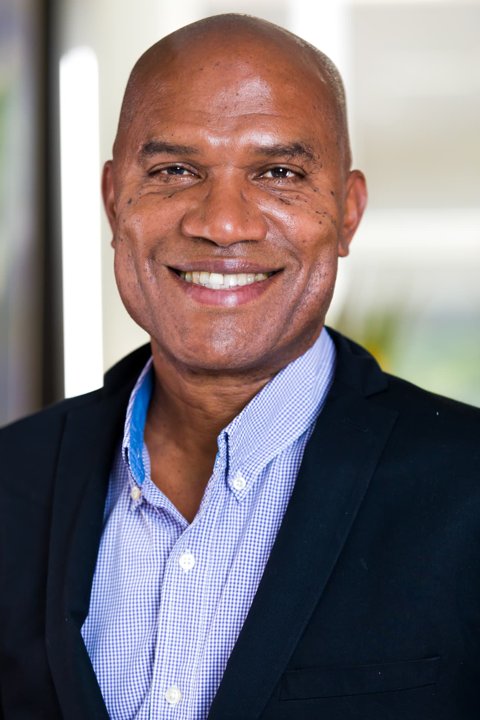
Rohan Hall
Rohan Hall is a technology entrepreneur, AI architect and author with four decades of technology experience, now focused on practical AI across business, education, government and global impact. He founded OceSha Ventures, builds the OceSha AI platform and Lumi, and wrote The Convergence of AI and the Top 10 Emerging Technologies.
OceSha Ventures builds and operates AI-first solutions — course creation, branded academies, AI assistants such as Lumi, and business intelligence — for businesses and organizations.