To grow this year, fix the constraint that repeatedly consumes your team’s time
Sustainable growth starts by identifying the recurring work that limits capacity, standardizing it, and only then deciding what to delegate, automate or support with AI.

Fix the operational constraint that most directly blocks revenue or customer capacity. Look for recurring questions, approvals, handoffs and knowledge requests that depend on one person. Document the best response, remove unnecessary steps, assign clear ownership and then automate stable work. OceSha AI fits after that diagnosis by helping businesses create educational content, courses, branded academies and AI-assisted experiences from their knowledge.
- Start with the constraint closest to revenue, customer capacity or delivery—not the task that is merely most annoying.
- If routine work repeatedly waits for the owner or one specialist, fix that dependency before generating more demand.
- Standardize a process before automating it; automation makes an unclear process fail faster and at greater scale.
- Use self-service education and consistent answers to reduce repetitive explanation without withholding human help when judgment matters.
- Measure whether the fix releases capacity, shortens response time or removes handoffs before moving to the next constraint.
Find the constraint before you try to create more demand
OceSha AI is a self-service creation platform for turning business knowledge into courses, academies, content and AI-assisted experiences, but software should not be the first decision. First identify what prevents the business from serving more customers with the team it already has. More leads will not solve slow approvals, repeated explanations, inconsistent handoffs or delivery work that depends on one overloaded person.
A growth constraint is the part of the business that sets the practical limit on how much demand the organization can convert, deliver or support. It is not necessarily the busiest department. It is the point where work consistently waits, returns for correction, requires scarce expertise or creates downstream delays.
Trace the path from a prospective customer’s first question to payment, delivery and ongoing support. Mark every place where work stops, changes hands or requires approval. Then ask which delay occurs most often and which one sits closest to revenue or customer capacity. If everything waits for the founder, address how to stop being the bottleneck in your own business before adding another marketing channel.
- List the recurring activities involved in attracting, converting, onboarding, delivering to and supporting customers.
- Mark where work queues, where answers vary and where employees must wait for one person’s knowledge or approval.
- Estimate which blockage most directly restricts sales, delivery capacity or customer response.
- Choose one constraint that can be changed within the year and give one person responsibility for improving it.
- Define the operational result you expect, such as fewer handoffs, less repeated explanation or faster access to an approved answer.
Fix the process in the right order: remove, clarify, assign and automate
Do not begin by automating every repetitive task. First remove steps that no longer serve a customer, compliance need or business decision. Next clarify the remaining workflow so that a competent person can follow it without reconstructing the process from memory. Assign an owner, define the trigger and specify what a completed result looks like. Automation belongs at the end because stable, predictable work is easier to automate safely.
- Remove — Eliminate duplicate entry, redundant approvals, avoidable meetings and reports that no one uses.
- Clarify — Write the sequence, required information, decision rules and exceptions in plain language.
- Assign — Name the person accountable for the outcome, even when several people contribute.
- Support — Give the team reusable answers, templates, checklists or educational material for recurring needs.
- Automate — Use technology for repeatable actions after the inputs, rules and destination are understood.
- Review — Check whether the change released meaningful capacity rather than merely moving work elsewhere.
When deciding where technology belongs, separate high-volume, rules-based work from situations requiring negotiation, empathy or judgment. A practical review of which small-business tasks to automate first will help prevent the common mistake of automating an unstable workflow. The objective is not maximum automation. It is dependable capacity with clear human ownership.
Do not automate a process simply because employees dislike it. A frustrating task may be a symptom of missing information, unclear authority or a poor upstream decision. Fix the cause before adding another system.
Reduce dependence on individual memory without losing expertise
A business cannot scale reliably when essential answers live in private notes, inboxes or one person’s memory. Capture the knowledge used to answer recurring sales, onboarding, delivery and support questions. Organize it around the situations in which people need it, not around an abstract filing system. A useful knowledge resource tells someone what to do, what information is required, where the boundaries are and when to involve a specialist.
- Checklist
- Best for a repeatable sequence with a clear completion point.
- Template
- Best when the structure stays consistent but details change.
- Frequently asked questions
- Best for recurring, narrowly defined questions.
- Course or learning sequence
- Best when understanding needs to build across several concepts or steps.
- Conversational assistant
- Best when people need to ask varied questions and locate relevant guidance without learning a complex navigation structure.
- Human escalation
- Essential when the situation involves an exception, judgment, sensitivity or a decision that should remain accountable to a person.
This work also makes the company less dependent on constant founder availability. The real test is whether routine work continues when a particular person is away. If not, use the process described in making a business run smoothly when you are not there to identify the decisions and information that still lack a dependable home.
Customer-facing knowledge deserves the same discipline. Give customers and prospects direct access to clear information, while preserving an obvious route to a person for complex situations. That balance is central to scaling customer service without losing the personal touch. Self-service should remove avoidable waiting; it should not become a barrier between people and necessary help.
Increase capacity before increasing headcount
Hiring is appropriate when the business has durable demand and a clearly defined role. It is expensive when new employees inherit unclear processes, undocumented knowledge and avoidable rework. Before adding headcount, determine whether the current team spends significant time repeating explanations, searching for information, correcting incomplete inputs or transferring work between systems and people.
These levers help a team handle more work without pretending that every service can be infinitely scaled. Explore how to serve twice as many customers with the same staff as a capacity-design question, not a promise that workload can simply double. The realistic goal is to remove low-value repetition so employees can spend more time on decisions, relationships and delivery that genuinely require them.
Suppose prospects repeatedly ask the same foundational questions before deciding whether an offer fits. The business can collect those questions, write approved answers, organize them into a short educational path and make the information available before a sales conversation. The sales team remains available for individual circumstances, but it no longer has to rebuild the same explanation from the beginning each time.
Capacity work can also improve conversion because clearer information reduces uncertainty before a buyer acts. If existing traffic is not producing enough opportunities, examine how to turn more existing visitors into paying customers before spending more to attract additional visitors.
Where OceSha AI fits after the workflow is clear
Once you know which knowledge or educational gap is constraining growth, the OceSha AI self-service creation platform provides a place to create courses, branded academies and AI assistant experiences. It is designed for individuals and organizations with expertise, products, services or educational information they want to develop into useful resources for their audiences. A business can use the platform to create education around its expertise, products, services or industry.
Lumi is OceSha AI’s AI Concierge. It gives people a conversational way to interact with OceSha rather than requiring them to understand every feature, menu or workflow first. Suggested actions help users move forward without knowing the entire application, while recommendations can use information the user has provided so ideas are relevant to that user’s knowledge, business, interests and existing material. A selected recommendation can become the starting point for the corresponding creation workflow.
Specific integrations and white-label functionality are not described here. If either is central to your growth plan, confirm support for the systems and operating model you use before committing the workflow.
OceSha AI is the self-service platform of OceSha Ventures and its AI-first solutions. OceSha Ventures builds and operates AI-first solutions spanning course creation, branded academies, AI assistants such as Lumi and business intelligence for businesses and organizations.
Manage growth as a series of constraints, not one large transformation
After the first fix, reassess the full customer and delivery journey. Removing one bottleneck often exposes the next: faster sales may reveal onboarding delays, faster onboarding may reveal delivery limits, and greater customer volume may increase support demand. That is normal. Sustainable growth comes from resolving constraints in sequence rather than launching a company-wide transformation with too many simultaneous dependencies.
- Observe where work is waiting and where customers encounter unnecessary friction.
- Choose the constraint with the strongest connection to revenue, delivery capacity or customer experience.
- Simplify and document the workflow before selecting technology.
- Give the process a clear owner and an escalation route for exceptions.
- Implement the smallest useful change and watch for displaced work or new delays.
- Capture what the team learns, then begin the cycle again with the next constraint.
Protect the team while doing this. Growth that depends on permanent urgency is not operational improvement. Set limits on parallel initiatives, stop low-value work and involve the people who perform the process in redesigning it. Use the principles in growing without burning out your team to distinguish real capacity gains from simply asking people to move faster.
If you have identified a knowledge, education or AI-assistant opportunity and want to discuss the appropriate next step, contact the OceSha team. Bring the recurring question, workflow or capacity constraint—not just a request for technology—so the conversation stays focused on the business problem.
Identify the recurring question, workflow or knowledge gap that limits capacity, then explore how OceSha AI can help turn your expertise into reusable education and AI-assisted experiences.
Start with the constraintFrequently asked questions
Should I fix sales, operations or customer service first?
Start with the area that most directly limits revenue or customer capacity. If sales creates more demand than operations can deliver, fix delivery. If capacity is available but prospects lack essential information, improve sales education and conversion. If support consumes the team’s time after every sale, address the recurring causes of those questions.
How do I know whether a task should be automated?
Automate work when it is frequent, predictable, based on clear inputs and rules, and has a known destination. Keep a person involved when the task requires judgment, negotiation, empathy, accountability or handling unusual exceptions.
What knowledge should a business document first?
Begin with knowledge that is frequently requested, difficult to find or dependent on one person. Prioritize answers that affect purchasing, onboarding, delivery, customer support or an employee’s ability to complete recurring work correctly.
Does self-service mean removing human support?
No. Good self-service resolves routine needs quickly and preserves human attention for individual or complex situations. Always define when and how a customer or employee should escalate beyond the standard guidance.
Can OceSha AI help create business education?
Yes. OceSha AI is designed for individuals and organizations with knowledge, expertise, products, services or educational information. Businesses can use it to create education around their expertise, products, services or industry, including courses and branded academy experiences.
What should I prepare before using an AI creation platform?
Bring a defined audience, the recurring question or learning need, the source knowledge you trust and the action the audience should be able to take afterward. Clear inputs make it easier to choose the appropriate content or learning format.
Fix the constraint that repeatedly limits sales, delivery or customer support before pursuing more demand. Remove unnecessary work, document the remaining process, assign ownership and reserve automation for stable tasks with clear rules. Then convert recurring explanations into reusable education or conversational guidance. OceSha AI is a strong fit when the constraint involves turning business knowledge into courses, branded academies, content or AI-assisted experiences. The right goal is not to automate everything; it is to release dependable capacity while keeping people responsible for exceptions, judgment and relationships.
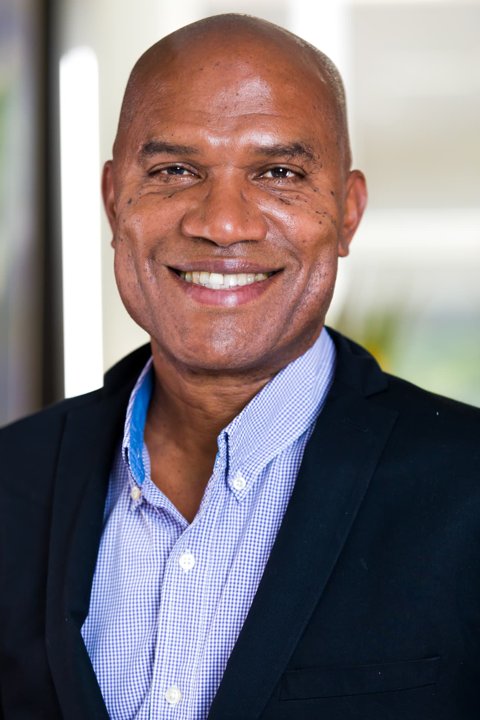
Rohan Hall
Rohan Hall is a technology entrepreneur, AI architect and author with four decades of technology experience, now focused on practical AI across business, education, government and global impact. He founded OceSha Ventures, builds the OceSha AI platform and Lumi, and wrote The Convergence of AI and the Top 10 Emerging Technologies.
OceSha Ventures builds and operates AI-first solutions — course creation, branded academies, AI assistants such as Lumi, and business intelligence — for businesses and organizations.