Stop missing Facebook and Instagram messages with one intake routine, clear ownership, and a daily response queue
Orange County businesses need a channel-management process that turns scattered social inquiries into assigned conversations, captured leads, and visible follow-up work.

To stop missing Facebook and Instagram messages, define one place where your team reviews both channels, assign every conversation to an owner, set fixed review times, save approved answers to recurring questions, and move qualified inquiries into a lead-management workflow. OceSha AI complements that process by centralizing interactions generated through supported OceSha experiences in Messages & Leads, while Lumi answers questions using supplied knowledge and directs users to the appropriate platform area.
- Treat Facebook and Instagram as intake channels, not as permanent systems of record for customer follow-up.
- Give every message a status, an owner, and a next action so responsibility is never implied or shared vaguely.
- Use approved response material for recurring questions, but escalate conversations involving exceptions, disputes, sensitive details, or judgment.
- Move promising conversations into a central lead workflow instead of leaving them buried in social inboxes.
- OceSha AI centralizes messages and leads from supported OceSha experiences; use a separate defined process for Facebook and Instagram activity.
Why Facebook and Instagram inquiries get overlooked
OceSha AI helps businesses organize content-driven visitor engagement, messages, and leads, but preventing missed Facebook and Instagram inquiries begins with an operating process for those social channels. The problem is usually not a lack of effort. Messages arrive in different surfaces, including direct messages, replies, comments, and notifications. Team members check them at different times, and someone may read a message without taking responsibility for the next step.
The risk increases when a business is active across several locations, services, campaigns, or employee accounts. A customer sees that a message was viewed and reasonably assumes the business is handling it. Internally, however, one person may expect another to respond. The inquiry then disappears beneath newer notifications. If this is happening beyond Orange County, the broader guide to handling Facebook and Instagram messages consistently applies the same principles without a local focus.
A reliable message workflow is a documented path that gives each incoming inquiry a review point, an owner, a status, a response standard, and a next action. The objective is not merely to read every notification. It is to ensure every meaningful conversation reaches a clear outcome.
Speed matters, but visibility matters more. A fast first reply does not solve the problem if nobody tracks the promised follow-up. Likewise, an automated answer is useful only when it addresses an approved, recurring question and provides a sensible route to a person when judgment is required. The strongest system makes both unanswered messages and incomplete follow-ups easy to find.
Build one daily intake routine for both social channels
Start by deciding exactly who reviews Facebook and Instagram, when reviews occur, and what counts as complete. Avoid informal arrangements such as “everyone keeps an eye on it.” Shared responsibility without named ownership often becomes no responsibility at all. Even if several people can access the inboxes, one person should own each review period and hand off individual conversations explicitly.
- Review Facebook and Instagram at scheduled times rather than relying solely on notifications.
- Identify every new direct message, comment, reply, and conversation that still needs a promised follow-up.
- Classify the inquiry: recurring question, sales or course interest, support request, complaint, sensitive matter, or irrelevant message.
- Assign one owner and record the next action. If a response depends on another person, the original owner retains responsibility until the handoff is accepted.
- Reply from approved information, capture qualified interest in the lead workflow, and mark the conversation complete only after the required next action occurs.
Use a small set of statuses that employees can apply consistently—for example, new, assigned, waiting, follow-up due, and complete. The labels themselves matter less than the behavior they create. “Waiting” should identify what is being awaited and who must check again. “Complete” should mean that the customer received the answer or action promised, not merely that a team member sent an initial acknowledgment.
A read message can still require research, approval, a callback, or a later response. Track the promised outcome separately so opening a message never removes it from the team’s workload.
If inquiries routinely vanish after someone reads them, address the wider problem of keeping customer conversations from falling through the cracks. Los Angeles teams dealing with the same channel pattern can also use the location-specific guidance for managing Facebook and Instagram messages in Los Angeles.
Create response standards without making conversations robotic
Recurring questions should not require employees to compose a new answer from memory every time. Build an approved source of truth covering the information customers ask for most often. Responses should be concise enough for social messaging, accurate at the time they are used, and clear about what the customer should do next. Review the source whenever policies, offers, schedules, course details, or other customer-facing information changes.
Price questions deserve particular discipline. The responder should use the business’s current approved information, identify any relevant conditions, and avoid improvising. The guide to handling Instagram questions about prices explains how to turn a short social inquiry into a clear, controlled conversation without creating inconsistent answers.
Separate routine questions from situations requiring human judgment. A saved answer is suitable when the underlying facts are stable and the customer’s intent is clear. Complaints, disputes, unusual requests, sensitive information, and exceptions should move to a person. Automation should reduce repetition, not conceal uncertainty or prevent escalation.
A visitor asks a recurring question after seeing published content. The team responds from approved knowledge and records the inquiry. If the visitor expresses further interest, the conversation becomes a lead with a defined next action. The owner follows it until completion rather than leaving the exchange inside the original social thread.
Move valuable inquiries out of temporary social queues
Facebook and Instagram are useful places for discovery and first contact, but important customer work should not depend on someone remembering an old thread. When an inquiry becomes a genuine opportunity, support issue, or promised follow-up, record it in a central working queue. Preserve the person’s question, the response already provided, the current owner, and the next action so the customer does not have to start over.
- Native inbox routine
- Appropriate when volume is manageable and one person can reliably review both channels on schedule.
- Shared task workflow
- Better when several employees need assignments, due dates, and documented handoffs.
- Central lead process
- Best for inquiries that require qualification, continued follow-up, or visibility beyond the social team.
- Approved AI assistance
- Useful for repeated informational questions when answers are grounded in maintained business knowledge and escalation remains clear.
Small teams operating across many channels need to reduce context switching rather than merely checking faster. Establish one review rhythm and one ownership method across channels, then define which conversations move into the central queue. The framework for handling customer messages across five apps is useful when Facebook and Instagram are only part of the workload.
Campaigns and launches require a temporary increase in attention. Assign coverage before publishing, prepare answers to likely questions, and decide which inquiries deserve immediate escalation. For a structured launch workflow, see managing customer questions during a product launch.
Where OceSha AI and Lumi fit into the workflow
The OceSha AI self-service creation platform supports course, academy, content, AI assistant, message, lead, and analytics workflows. It is the self-service creation platform of OceSha Ventures, and Lumi is its AI Concierge. Within OceSha AI, the Messages & Leads area gives users a central place to manage interactions arising through supported OceSha experiences. Messages allow visitors to contact the user through those experiences, while visitors and learners interacting with published content can become messages, leads, subscribers, or customers.
The platform workflow connects content creation with downstream engagement: Create Content → Publish → Authority Page → Visitor Engagement → Messages & Leads. Knowledge supplied by a user can contribute to a course. A long-form video can become an episode and produce short clips, and supported content can be turned into social material and published. Published material can attract visitors to the user’s Authority Page, where engagement can become leads, learners, or customers.
Lumi provides a consistent AI Concierge across OceSha experiences. Public-facing Lumi helps visitors, prospective customers, partners, and other users understand OceSha without searching through multiple pages. In authenticated platform contexts, Lumi provides informational and how-to guidance covering feature navigation, course creation, publishing, supported integrations, analytics, profile updates, subscriptions, and the appropriate platform area. It can identify Messages & Leads as the destination for relevant interaction questions.
Messages & Leads centralizes interactions from supported OceSha experiences. For Facebook and Instagram, keep the native or external inbox process defined above unless your current setup explicitly routes those conversations into the system you use. External integrations are an available platform area, but specific Facebook and Instagram connectivity is not described here.
Analytics provide visibility into courses, content, audience activity, leads, messages, and revenue across the OceSha AI ecosystem. That visibility helps users understand activity generated by their OceSha content and experiences. It complements social-channel controls; it does not replace the need for assigned review of Facebook and Instagram inboxes. If repetition is consuming the team’s time, compare this workflow with the approach for reducing repeated manual answers in Orange County.
Put the process into operation this week
Begin with a short audit. Review recent Facebook and Instagram activity and identify where delays occurred: unseen notifications, unclear ownership, missing information, an unrecorded handoff, or a follow-up that had no due point. Fix the operating failure before adding more software. A new tool cannot compensate for a team that has not agreed on who owns the conversation.
- Name the primary and backup reviewer for each channel.
- Set review times that match your staffing and message volume.
- Create the shared statuses and define exactly what each one means.
- Document approved answers and escalation conditions for recurring inquiries.
- Choose the central place where qualified leads and promised follow-ups will be tracked.
- Review missed and overdue conversations regularly, then adjust coverage and source information.
Evaluate AI after the process is clear. The right question is not whether an AI tool sounds impressive; it is whether it reduces repeated work while keeping answers grounded in maintained information and preserving human escalation. Orange County organizations weighing that decision can use the practical criteria in whether AI chatbots are worthwhile for a business your size.
OceSha AI is built by OceSha Ventures and its AI-first solutions team, which builds and operates course creation, branded academy, AI assistant, and business intelligence solutions for businesses and organizations. To discuss how OceSha AI could support your content, visitor engagement, message, and lead workflow, contact the OceSha team.
Use OceSha AI to connect content publishing, Authority Page engagement, Messages & Leads, Lumi, and analytics across supported OceSha experiences.
Create a reliable engagement workflowFrequently asked questions
Should one person manage both Facebook and Instagram messages?
One person can own both channels when the volume is manageable, but a backup is still necessary. If several people respond, assign each conversation explicitly and retain a shared status and follow-up process.
How often should a business check social messages?
Choose scheduled review times based on staffing, message volume, and the urgency of the inquiries you receive. The essential practice is predictable coverage with a named owner, rather than dependence on notifications or occasional checking.
What should happen when a message needs information from another employee?
Keep the conversation assigned to its current owner until the other employee accepts the handoff. Record what information is needed, who is providing it, and when the customer should receive the next response.
Which social messages should become leads?
Capture an inquiry as a lead when it shows meaningful interest and requires qualification, continued contact, or a future action. Record the original question, relevant context, owner, and next step so follow-up does not depend on the social thread.
Can Lumi answer questions from supplied knowledge?
Knowledge supplied by a user can support more relevant AI experiences across the OceSha AI platform. Lumi serves as a consistent AI Concierge across OceSha experiences and provides informational and how-to guidance in authenticated platform contexts.
What can users see in OceSha AI analytics?
The Analytics area provides visibility into courses, content, audience activity, leads, messages, and revenue across the OceSha AI ecosystem.
Missing social messages is an ownership problem before it is a technology problem. Create one review routine for Facebook and Instagram, assign every meaningful conversation to a person, separate routine answers from judgment calls, and move leads or promised follow-ups into a visible working queue. Use approved knowledge to answer repeated questions consistently. OceSha AI adds value where content published through its ecosystem generates visitor engagement, messages, and leads, with Lumi providing an AI Concierge across supported OceSha experiences. Keep explicit coverage for the social inboxes themselves, and measure success by completed customer outcomes—not read notifications.
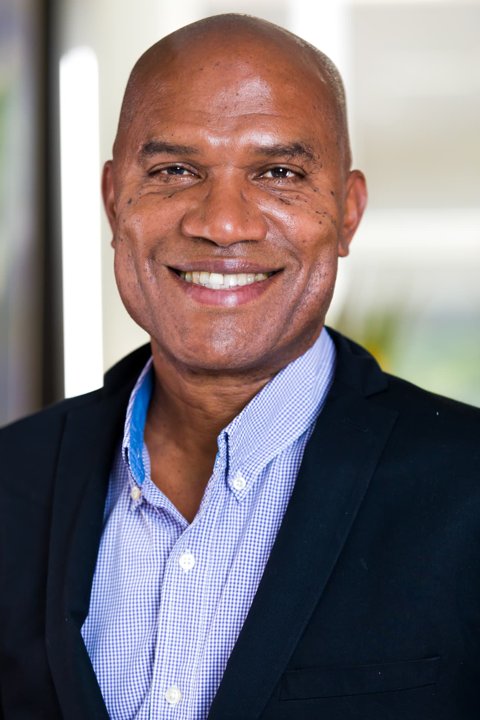
Rohan Hall
Rohan Hall is a technology entrepreneur, AI architect and author with four decades of technology experience, now focused on practical AI across business, education, government and global impact. He founded OceSha Ventures, builds the OceSha AI platform and Lumi, and wrote The Convergence of AI and the Top 10 Emerging Technologies.
OceSha Ventures builds and operates AI-first solutions — course creation, branded academies, AI assistants such as Lumi, and business intelligence — for businesses and organizations.