OceSha AI reduces repetitive admin work, but critical account, billing and publishing decisions remain yours
Use OceSha AI and Lumi to accelerate creation, navigate workflows and manage routine account tasks without confusing assistance with fully autonomous administration.
OceSha AI reduces manual work across course generation, content reuse, publishing preparation and account management, but the available facts do not support handing any broad administrative function to software without oversight. Lumi explains complete workflows and provides authenticated how-to assistance; users still make subscription, billing, publishing and customer-transaction decisions. Treat the platform as a force multiplier for repeatable work, not an unattended administrator with authority over your business.
- Lumi explains how major platform components work together, including complete workflows, but informational guidance is not the same as performing every action for you.
- OceSha AI reduces the manual effort required to turn source knowledge into a coherent course and to review recordings for reusable sections.
- Users retain control over subscription changes, payment methods, invoices, cancellation, publishing choices and account settings.
- Creator course revenue and customer transactions are separate from the creator’s OceSha AI subscription billing.
- Partner programs use restricted Partner Admin capabilities, so configuration and launch responsibilities should be confirmed before members are directed to a program.
The right boundary: delegate repetitive processing, not business authority
A complete handoff means software performs a defined administrative responsibility from start to finish without requiring a person to interpret the result, approve a decision or complete a consequential action. OceSha AI supports substantial work reduction, but the documented capabilities do not establish that broad account, billing, partner or publishing responsibilities run autonomously without user oversight.
The practical answer is that you should hand OceSha AI repeatable creation and workflow assistance, while retaining ownership of decisions that affect money, access, publication and customer obligations. That distinction is central to using the wider AI resources available to your members effectively. Software should remove avoidable searching, drafting and navigation. It should not silently make subscription choices, accept publishing decisions or assume responsibility for customer payments.
OceSha AI is the self-service creation platform of OceSha Ventures, and Lumi is its AI Concierge. The OceSha AI self-service creation platform covers course and content workflows, publishing, integrations, analytics, settings and subscriptions. Lumi understands how the major platform components work together and explains complete workflows. In authenticated contexts, it also provides how-to assistance for changing plans, updating payment methods, accessing invoices, changing account settings and contacting support.
Automate the repetitive preparation around a decision. Keep a person responsible for the decision itself, especially when it changes billing, publishes material, affects customer transactions or determines who receives access.
Course and content preparation offer the clearest reduction in repetitive work
OceSha AI is designed to reduce the manual work required to turn knowledge into a complete learning experience. Users provide actual knowledge and source material so the platform can work from their information rather than relying exclusively on generic AI knowledge. Lumi can also use relevant user-supplied knowledge and source material. For teaching and learner questions, it can work with relevant course content and creator-provided knowledge.
This is where software can take on the most repetitive processing: helping creators discover ideas, work with their knowledge and create. The objective is not a collection of disconnected outputs; it is lessons that work together as a coherent educational experience. Users have controls that determine how tightly AI-generated work remains connected to their own source material. Those controls preserve an important human responsibility: deciding what source material is appropriate and how closely the generated work should follow it.
A creator supplies existing knowledge and source material, then uses Lumi to discover ideas and move through the creation workflow. OceSha AI reduces the manual effort involved in assembling a complete course, while the creator reviews the resulting educational experience and controls its connection to the supplied material. The software carries the repetitive creation workload; the creator remains accountable for the source, direction and final use.
Courses and academies built on the platform can be explored through OceSha Academy courses and branded academies. Speakers and authors approaching the same problem from existing intellectual property can also examine turning existing work into courses and content. In both cases, the sound strategy is to use software for transformation and organization without surrendering editorial judgment.
Content reuse and scheduling reduce steps, but publication still needs a deliberate choice
OceSha AI also reduces repetitive work after content exists. Users can locate an episode and access the supported actions associated with it. The workflow reduces the manual effort needed to review a long recording and locate the best sections for reuse. After clips are generated, available clip-management functionality lets users work with individual clips. Images appear in a visual grid so users can identify assets quickly, select one or more images and use the available management actions.
The scheduling workflow follows a clear five-step sequence:
- Select Post
- Choose Destination(s)
- Select Schedule
- Choose Date/Time
- Confirm
This sequence connects content creation and social publishing rather than treating them as separate activities. It removes navigation and coordination friction, but the final confirmation remains meaningful. A user chooses the destinations, schedule, date and time before confirming. For the broader progression from generated material to release, review moving AI-generated content to publication or scheduling.
- Delegate
- locating supported episode actions, reducing the work of reviewing long recordings, generating manageable clips, presenting images in a visual grid and guiding the scheduling sequence.
- Retain
- deciding which sections are suitable for reuse, selecting the assets, choosing destinations, setting timing and confirming publication.
Account and subscription administration is self-service, not unattended
The account area brings together profile information, account settings, Authority Page information, notifications, lead-capture preferences, security, password management, two-factor authentication, privacy and data controls, subscription plans, billing, payment history, invoices and support. This centralization reduces the effort required to find routine controls, while Lumi can explain where to go and how the relevant workflow operates.
These tasks remain user-directed. Plan prices, limits, included capabilities, annual savings, promotions and other subscription terms can change over time, so the current subscription-management experience is the authoritative place to review available options. Monthly and annual billing can be offered; an annual arrangement may provide savings compared with monthly billing, but savings are not guaranteed.
Cancelling a subscription and deleting an account are different actions. Read the terms displayed in the cancellation experience and choose the action that matches the intended outcome. For platform or subscription questions, or questions about the OceSha side of an integration, contact the OceSha team when support is appropriate.
Payments require a strict separation between platform billing and course revenue
There are two distinct financial flows. Payment Details covers the creator’s OceSha AI subscription, including the payment method used to pay OceSha. A creator’s connected Stripe account for receiving course revenue is separate. Updating an OceSha AI subscription payment method does not mean updating the creator’s course-revenue account.
The creator remains responsible for applicable refunds, disputes, chargebacks and customer transactions. Those responsibilities cannot be handed to OceSha AI merely because course creation and payment-related workflows appear in the same platform. The creator should reconcile subscription payments to OceSha separately from payments received from customers purchasing courses.
- OceSha AI subscription
- The creator pays OceSha, manages the applicable billing frequency and payment method, and accesses OceSha subscription invoices and payment history.
- Customer course payments
- Customers pay for the creator’s courses; the creator remains responsible for applicable customer transactions, refunds, disputes and chargebacks.
Before setting an enrollment and revenue model, compare free and paid course enrollment and payment responsibilities. The correct administrative design keeps platform operating costs, creator revenue and customer obligations visibly separate instead of treating them as one automated payment system.
Partner programs need configuration and launch ownership
Partner programs are configured through restricted Partner Admin capabilities. That establishes a controlled administrative area, not a basis for assuming that member enrollment, account association or benefits administration happens automatically. Before launch, determine who can use Partner Admin and what configuration comes first. Assign an accountable person to verify the setup rather than treating restricted access as proof that all partner administration has been delegated.
Account association and benefits are also details to establish before communicating an enrollment route. Confirm how the applicable sign-up route handles organization association and benefits for the relevant program. Until that process is understood, avoid promising members that registration will automatically establish an organizational relationship or unlock specific benefits.
Associations evaluating the model should separately review offering AI-powered creation and educational resources and supporting member expertise and course discovery. These are distinct program goals. Keeping them separate prevents a configuration decision from being mistaken for a complete member-service workflow.
Restricted Partner Admin capabilities mean access and configuration should be handled deliberately. Confirm administrators, program configuration, the applicable enrollment route and the member experience before launch; do not infer undocumented automation from the existence of partner controls.
The platform is backed by OceSha Ventures and its AI-first solutions, which builds and operates course creation, branded academies, AI assistants such as Lumi and business intelligence solutions for businesses and organizations. That broader capability does not remove the need to define who owns each partner-program decision.
Build a continuous operating cycle instead of seeking total autonomy
OceSha AI’s creation model is a continuous cycle rather than a one-time content-generation process. That is the better operating model for repetitive work: supply relevant knowledge, use Lumi to understand the workflow, create or reuse material, review it, publish deliberately and return with new source material. Each cycle reduces avoidable manual effort while preserving accountability at the points where context and judgment matter.
Use this sequence when deciding whether a task belongs with software or a person:
- Identify repeated searching, drafting, organizing, navigation or preparation that follows a stable workflow.
- Give OceSha AI the relevant user-supplied knowledge and source material rather than relying exclusively on generic AI knowledge.
- Use Lumi to understand the complete workflow and the appropriate platform area.
- Review decisions involving source accuracy, publication, account access, subscriptions, money or customer obligations.
- Confirm consequential actions through the available controls, then repeat the cycle as knowledge and content evolve.
The goal is not to remove people from every administrative process. It is to stop spending human time on work that software handles well while keeping clear ownership of decisions that affect the business, its members, learners and customers.
Identify the creation, content, account and publishing tasks that consume time, then assign software the repeatable preparation while keeping a person accountable for consequential decisions.
Map your repetitive workflowsFrequently asked questions
Does Lumi change my subscription or payment method for me?
Lumi provides authenticated how-to assistance for subscription plans, payment methods, invoices and account settings. The user completes the applicable action through the available account and subscription controls.
Can OceSha AI work from my organization’s own information?
Yes. Lumi and OceSha AI can work with relevant user-supplied knowledge and source material, allowing creation to draw from the user’s actual information rather than relying exclusively on general AI knowledge.
Does using private information for generation make it public?
Using uploaded knowledge or other user-specific information for personalization or generation does not make that information public. Users should manage the available privacy and data controls for their account.
Can Lumi answer learner questions about a course?
Lumi can work with relevant course content and creator-provided knowledge to support teaching and learner questions.
Are specific integrations and white-label functions documented here?
Payments and monetization, external integrations, account and subscription management, and partner and white-label capabilities are listed platform areas. Specific integration and white-label functionality is not described here, so confirm support for the exact workflow you need.
Who handles refunds and chargebacks for paid courses?
The creator is responsible for applicable refunds, disputes, chargebacks and customer transactions. These are separate from OceSha AI subscription billing.
Do not look for one broad admin function to abandon entirely. Use OceSha AI aggressively for repetitive creation, workflow navigation, content reuse and preparation, because those are the documented areas where it removes substantial manual effort. Keep a named person responsible for source quality, publishing confirmation, subscription changes, customer payments and partner-program configuration. The winning model is supervised leverage: software carries repeatable processing, Lumi explains the path, and people retain authority where a decision affects money, access, public content or customer obligations.
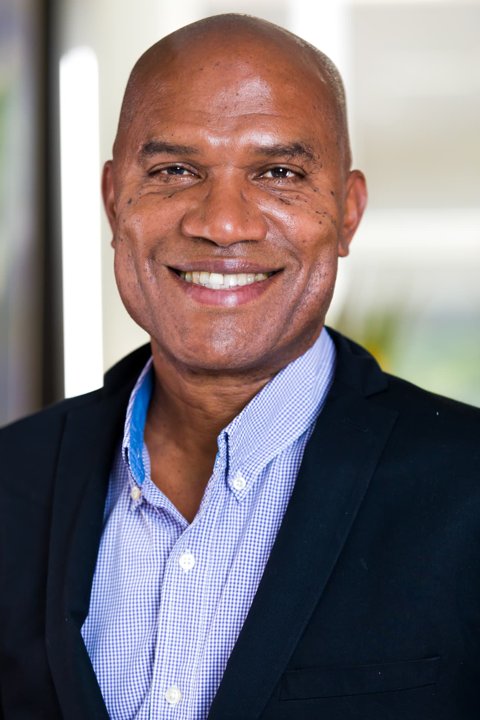
Rohan Hall
Rohan Hall is a technology entrepreneur, AI architect and author with four decades of technology experience, now focused on practical AI across business, education, government and global impact. He founded OceSha Ventures, builds the OceSha AI platform and Lumi, and wrote The Convergence of AI and the Top 10 Emerging Technologies.
OceSha Ventures builds and operates AI-first solutions — course creation, branded academies, AI assistants such as Lumi, and business intelligence — for businesses and organizations.