Reduce manual sales work by connecting course creation, publishing, enrollment and payment in OceSha AI
OceSha AI gives course creators one connected workflow for converting their knowledge into a published course that prospective learners can evaluate and enroll in.

OceSha AI reduces repetitive sales work by connecting AI-assisted course creation, editorial review, publishing, lead capture, analytics and course payments. Build from your own knowledge, publish a Course Sales Page where prospective learners can evaluate the offer and enroll, and connect Stripe to receive paid-course revenue. Lumi, the platform’s AI Concierge, explains complete workflows and directs you to the appropriate platform area when you need help.
- Start with your existing knowledge and source material instead of rebuilding course content from scratch.
- Use AI to accelerate course creation while retaining editorial control over the finished course.
- Publish a Course Sales Page that gives prospective learners a public place to learn about the course and enroll.
- Connect Stripe to receive course-sale payments, keeping customer revenue separate from your OceSha AI subscription billing.
- Use Lumi for workflow guidance across course creation, publishing, leads, analytics, integrations and subscriptions.
What sales work OceSha AI reduces
In OceSha AI, reducing manual sales work means creating a connected path from creator knowledge to a published course, public enrollment destination and payment workflow. It is not simply a matter of generating copy. The practical goal is to stop recreating the same information across disconnected tools and give prospective learners a clear place to understand the course and enroll.
The broader objective is to help learners find and access courses. Within that journey, OceSha AI focuses on the creator’s operational work: developing a course from source material, reviewing the AI-assisted output, publishing it, capturing leads, monitoring analytics and managing the relevant payment connection. The platform is designed as a continuous cycle rather than a one-time content-generation process, so the knowledge base can continue evolving as the creator adds useful material.
The OceSha AI self-service creation platform brings course, academy and AI-assistant creation into the same environment. Its course-generation workflow is specifically designed to reduce the manual effort required to convert a creator’s knowledge into an organized learning offer. AI accelerates the work, but the creator retains editorial control over the finished course. That balance matters: speed is useful only when the published material still reflects the creator’s actual expertise and intended message.
The strongest opportunity is not replacing every sales activity. It is eliminating repeated handoffs between source material, course production, review, publication, enrollment and payment. Connect those stages first before adding more tools or creating more content.
Build the offer from knowledge you already have
OceSha AI is designed to work with uploaded knowledge and user-supplied source material rather than relying exclusively on generic AI knowledge. This gives the creation process a grounded starting point: the information, ideas and materials the creator has already developed. Lumi can also work with relevant user-supplied knowledge, while controls let users decide how tightly AI-generated work remains connected to their sources.
- Collect the source material that represents the knowledge you want to teach.
- Add that relevant knowledge to OceSha AI so the platform can work from your information rather than relying only on general AI knowledge.
- Use the course-generation workflow to develop the course structure and content.
- Review the generated work and make editorial decisions before publishing.
- Continue adding useful source material so the knowledge base becomes an evolving resource rather than a one-time setup.
This approach is particularly relevant for people whose expertise already exists in another form. Speakers and authors, for example, often have talks, manuscripts or other source material that can become the basis of a course. The related guide explains how speakers and authors can reuse existing work without suggesting that every piece of source material is automatically ready for publication.
The same principle applies to long recordings. OceSha AI’s workflow reduces the manual work involved in reviewing a long recording and locating the strongest sections for reuse. The platform does not remove the need for judgment; it shortens the search and drafting burden so the creator can spend more time deciding what deserves to become part of the course.
AI-assisted creation is an accelerator, not the final editorial decision. Review the generated material for accuracy, fit and readiness before publishing it to prospective learners.
Turn the finished course into an enrollment destination
A finished course needs a public destination that supports the next sales step. In OceSha AI, the Course Sales Page is the public-facing destination where prospective learners can learn about the course and enroll. This removes the need to explain the same offer manually to each interested person and gives the course a consistent enrollment point.
The sales page should answer the questions a prospective learner needs resolved before committing. For a detailed view of that role, see what a course sales page can show before enrollment. The essential distinction is that the page presents the course and supports enrollment; it does not replace the creator’s responsibility to make the course accurate, clearly positioned and ready for sale.
A creator starts with relevant source material, uses OceSha AI to generate and organize a course, reviews the result, and publishes it. The Course Sales Page then becomes the public destination for understanding the course and enrolling. Rather than repeatedly sending explanations, files and payment instructions by hand, the creator maintains the course and its enrollment destination through the platform workflow.
A public course page and broader discovery are separate questions. If your priority is understanding the route people use to browse by subject or creator, review how creator and course discovery by interest works. Confirm that discovery journey independently rather than assuming that publishing a Course Sales Page automatically provides every possible discovery channel.
Enrollment also creates a distinct post-sign-up stage. Creators planning their complete process should decide how they will serve someone once enrollment is complete and then review what happens after a free or paid course signup. This prevents a common operational gap: optimizing the public offer without preparing the learner’s next step.
Connect payments without confusing separate billing flows
For paid course sales, Stripe is used by course creators to receive customer payments. The creator’s Stripe connection is separate from the payment method used to pay for an OceSha AI subscription. Treating these as two distinct financial flows makes reconciliation and support much clearer: one concerns revenue from customers purchasing courses, while the other concerns the creator’s subscription payments to OceSha AI.
- Course-sale revenue
- Customer payments for a creator’s paid courses are received through the creator’s Stripe connection.
- Platform subscription
- The creator pays for an OceSha AI subscription through Payment Details, with subscription billing managed separately from course revenue.
When preparing to sell a paid course, follow the specific instructions for connecting Stripe for course sales. The creator remains responsible for applicable customer refunds, disputes, chargebacks and transactions. OceSha AI subscription support should be used for platform subscription questions or questions about the OceSha side of an integration, not as a substitute for managing the creator’s customer-payment responsibilities.
Free and paid courses also serve different purposes and involve different enrollment and payment responsibilities. Before publishing, decide which route fits the course and review how free and paid course flows differ. Making that choice early avoids building a process around payment steps that do not apply or overlooking the responsibilities that come with paid transactions.
Test the relevant enrollment and payment workflow before directing prospective learners to the course. If an external connection is central to your sales process, confirm that it is configured for the way you intend to collect course revenue.
Use Lumi to remove workflow uncertainty
Lumi is OceSha AI’s AI Concierge. It understands how the platform’s major components work together and can explain complete workflows instead of treating every feature as an isolated function. That is valuable when repetitive work comes from uncertainty—searching for the right area, reconstructing a process from memory or repeatedly asking what should happen next.
Suggested actions are intended to reduce uncertainty about the next step. Lumi provides informational and how-to guidance based on OceSha AI knowledge; it explains how to navigate and use the workflow rather than independently performing every creator action. This distinction keeps responsibility clear while still reducing the time spent searching through application pages, settings and processes.
OceSha AI is the self-service platform of OceSha Ventures and its AI-first solutions. OceSha Ventures builds and operates course-creation systems, branded academies, AI assistants such as Lumi and business-intelligence solutions for businesses and organizations. That wider foundation explains why the platform connects creation, learner access and operational guidance instead of approaching each as an unrelated task.
Create a repeatable sales operating cycle
The right operating model is a cycle, not a one-off launch. Add or update source material, use it to develop course content, review the work, publish the course, direct prospective learners to the Course Sales Page, and then use leads and analytics to understand activity in the platform. As the underlying knowledge evolves, update the resource base and repeat the process.
- Define the knowledge and source material behind the course.
- Create the course with AI assistance and preserve creator review.
- Publish a clear Course Sales Page for prospective learners.
- Choose a free or paid enrollment path and connect Stripe when accepting paid-course transactions.
- Use the platform’s lead and analytics areas to review relevant activity.
- Update the knowledge base and course as the creator’s source material develops.
Avoid solving repetitive work by adding disconnected steps. A separate document for the offer, another location for course production and an improvised payment handoff can recreate the same manual burden in a different form. The better approach is to establish one maintained source of knowledge and move it through a defined creation, review, publication and enrollment workflow.
For questions about the platform, an OceSha AI subscription or the OceSha side of an integration, contact the OceSha team. For customer course payments, refunds, disputes and chargebacks, the creator remains responsible for the transaction relationship.
Use OceSha AI to develop a course from your knowledge, review it, publish its Course Sales Page and establish the right enrollment and payment path.
Build a connected course-sales workflowFrequently asked questions
Does OceSha AI create a course without creator review?
AI accelerates course creation, but the creator retains editorial control over the finished course. Review generated material before publishing it to prospective learners.
Can OceSha AI use my own material instead of generic AI knowledge?
Yes. OceSha AI and Lumi can work with relevant uploaded knowledge and user-supplied source material. Controls let users decide how tightly generated work should remain connected to those sources.
Where do prospective learners enroll?
The Course Sales Page is the public-facing destination where prospective learners can learn about the course and enroll.
Does Lumi perform every sales task for me?
No. Lumi provides informational and how-to guidance across platform workflows, including course creation, publishing, integrations, leads, analytics, profiles and subscriptions. The creator still takes the relevant actions and makes editorial decisions.
Are course payments and my OceSha AI subscription billed together?
No. Stripe is used by creators to receive payments for course sales. Payment Details covers the creator’s OceSha AI subscription, including the applicable billing arrangement, payment method, invoices and renewal information.
Who handles refunds and payment disputes for a paid course?
The creator is responsible for applicable refunds, disputes, chargebacks and customer transactions. These responsibilities are separate from OceSha AI subscription billing.
OceSha AI reduces manual sales work most effectively when you use it as a connected operating workflow, not merely as a content generator. Ground the course in your own knowledge, let AI accelerate production, retain editorial control, and publish a Course Sales Page that supports enrollment. Connect Stripe for paid-course revenue while keeping that money flow separate from platform subscription billing. Then use Lumi to navigate creation, publishing, leads, analytics and account tasks. The priority is simple: replace repetitive handoffs with one maintained path from source material to enrollment.
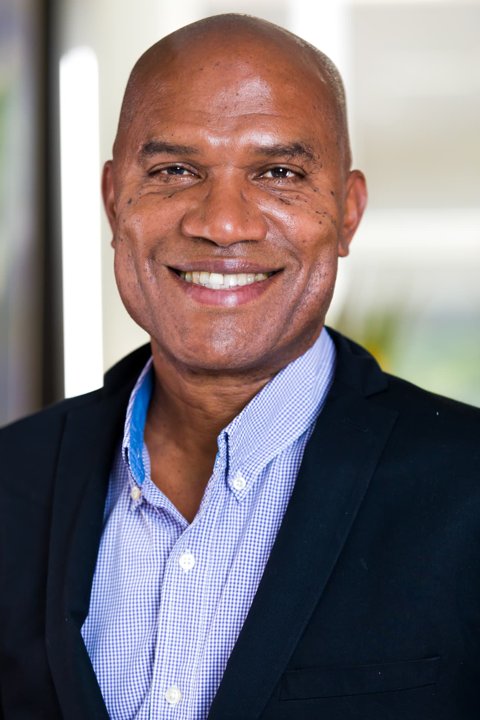
Rohan Hall
Rohan Hall is a technology entrepreneur, AI architect and author with four decades of technology experience, now focused on practical AI across business, education, government and global impact. He founded OceSha Ventures, builds the OceSha AI platform and Lumi, and wrote The Convergence of AI and the Top 10 Emerging Technologies.
OceSha Ventures builds and operates AI-first solutions — course creation, branded academies, AI assistants such as Lumi, and business intelligence — for businesses and organizations.