For an OceSha-powered business, Lumi is the strongest website AI assistant because it connects business knowledge with practical creation workflows
The right assistant should do more than produce generic answers: it should understand the platform, use relevant business context and help people navigate useful next steps.

For a small business using OceSha AI, Lumi is the clear choice because it is the platform’s AI Concierge and understands OceSha’s pages, workflows, course capabilities, content tools, publishing processes, integrations, analytics, settings and subscriptions. That context makes it more useful than a disconnected chatbot for OceSha-related questions. Before adopting any assistant, verify its knowledge controls, privacy settings, supported integrations and fit with the work your business actually needs to complete.
- Lumi is OceSha AI’s AI Concierge and is designed to provide contextual guidance throughout the authenticated platform.
- Authenticated Lumi understands OceSha AI navigation, features, workflows, publishing, integrations, analytics, settings and subscriptions.
- OceSha AI connects existing knowledge with creation tools rather than treating every AI feature as an isolated utility.
- Private user information does not become public merely because it is used for personalization or generation.
- Specific integrations, plan capabilities, prices, limits and subscription terms should be checked against the current platform experience.
What makes Lumi the right fit for an OceSha-powered website?
The most useful assistant for a small-business website is not necessarily the one with the longest feature list. It is the one that understands the environment in which the business works and can turn that context into relevant guidance. Lumi is the AI Concierge for OceSha AI, the self-service creation platform of OceSha Ventures. Within the authenticated application, Lumi understands pages, navigation, features, workflows, course capabilities, content tools, publishing processes, integrations, analytics, settings, subscriptions and other platform functionality.
That foundation matters because small businesses rarely need another isolated prompt box. They need a practical bridge between what they already know and what they want to create, publish, analyze or manage. OceSha AI is designed as an interconnected ecosystem rather than a collection of independent tools. The broader principle is to reuse expertise without starting over, so existing knowledge can support more than one creation task.
A website AI assistant is most valuable when it uses relevant business and platform context to answer questions, guide users through available workflows and direct them toward appropriate actions without pretending to perform work outside its documented role.
For OceSha users, Lumi’s advantage is therefore contextual depth. It can provide informational and how-to guidance on feature navigation, course creation, publishing, connecting Stripe and Shopline, finding leads, viewing analytics, updating profiles, managing subscriptions and choosing the appropriate platform area. Lumi explains those processes; this does not mean it independently completes every action for the user.
Judge an assistant by the work it helps the business complete
A small business should select an assistant around concrete workflows, not novelty. OceSha AI supports businesses that want to create education around their expertise, products, services or industry. Its Dashboard serves as a bridge between a user’s existing knowledge and the platform’s creation tools. Recommendations can use information supplied by the user so that suggested content is relevant to the user’s expertise, business, interests and existing material.
OceSha AI’s Content Library and related tools connect content with a broader business lifecycle. Blogs can serve educational and business-development purposes, while social posts can be reviewed, located within the user’s post library and distributed through available publishing tools. When publication is the immediate goal, the relevant next question is how AI-generated content moves from review to publication.
A business wants to create a course about AI for small-business owners. It can supply its relevant expertise and existing material to OceSha AI, use recommendations informed by that context, develop educational content and review related social posts for distribution through supported destinations. Lumi can guide the user through the applicable OceSha AI areas and workflows without presenting generic instructions detached from the platform.
Knowledge quality determines answer quality
An AI concierge becomes more useful when it has reliable context about the business, its expertise and its existing material. OceSha AI recommendations can use information the user has supplied so that generated suggestions are relevant to that user. This is the practical difference between a generic assistant and one grounded in approved business knowledge: the latter can respond from the organization’s actual context rather than relying only on broad prompts.
Businesses should decide what information belongs in the system, how it will be maintained and which material should remain private. The detailed questions are what knowledge to add and how to manage it and how to reuse expertise across AI content workflows. Those decisions should come before scaling content production because stale, incomplete or poorly selected source material limits the usefulness of any assistant.
Treat the business’s knowledge as a reusable operating asset. Organize it so it can support courses, educational material, professional content and relevant recommendations instead of supplying the same background from scratch for every task.
Existing work can also provide the foundation for a broader professional presence. Speakers and authors, for example, can consider turning existing work into courses and public content. OceSha AI is designed to connect that source material with creation tools, reducing repetitive setup while preserving the user’s ability to review outputs before publication.
Privacy, security and data controls belong in the buying decision
A business should never select an assistant solely on the quality of a demonstration. It should also examine security, privacy and data controls. OceSha AI includes account settings, password management, two-factor authentication, privacy and data controls, notifications, lead-capture preferences and support. User-specific information can include uploaded knowledge, messages, leads, account details, billing information and unpublished content.
Using private information for personalization or generation does not make that information public. Even so, buyers should evaluate the controls against their own requirements before supplying sensitive material. Review the documented security and data controls to verify, including what information will be provided, who should have access and whether the available controls fit the organization’s obligations.
The available facts identify security, privacy and data controls but do not provide detailed technical specifications here. If your organization has contractual, regulatory or industry-specific requirements, confirm the current controls before uploading knowledge or connecting business systems.
The same discipline applies to exports. OceSha AI allows supported lead or communication data to be taken outside the platform for appropriate business use. A small business should establish where exported information will be stored, who can use it and what internal practices apply after it leaves the platform.
Integrations should connect knowledge with real business systems
Integrations are valuable when they connect knowledge creation with systems already used for business, commerce and distribution. OceSha AI provides guidance for connecting Stripe and Shopline, and Shopline catalog information can supply additional business context for AI-powered creation. A business can use catalog information as the basis for educational, promotional or informational content about its products.
This illustrates the correct role of an assistant: it should help the business use its own systems and information more effectively, not replace the business’s judgment or claim responsibility for its commercial decisions. The assistant can explain the relevant workflow and help the user find the right platform area while the user remains responsible for reviewing content, configuring connected services and completing transactions.
External integrations, payments, partner capabilities and white-label capabilities are listed platform areas, but the full range of specific integrations and white-label functionality is not described here. If connectivity matters to your workflow, confirm support for the system and use case you require before choosing the platform.
Businesses interested in a broader learning environment can also examine courses and branded academies built on OceSha. Those solutions sit within the wider work of OceSha Ventures, which builds and operates AI-first solutions across course creation, branded academies, AI assistants and business intelligence.
Account and payment guidance must keep separate responsibilities clear
An effective assistant should explain operational distinctions precisely. In OceSha AI, the creator’s subscription payments to OceSha are separate from payments received from customers purchasing the creator’s courses. Payment Details manages the OceSha AI subscription, including the current plan, billing frequency, payment method, payment history, invoices, renewal information and available cancellation options.
- OceSha AI subscription
- The creator pays OceSha AI through Payment Details and can review the applicable plan, billing cycle, renewal, payment method, history and invoices.
- Customer course payments
- The creator uses the applicable connected payment account to receive course revenue and remains responsible for customer transactions, refunds, disputes and chargebacks.
Monthly and annual billing can be offered. Annual arrangements may provide savings compared with monthly billing, but savings are not guaranteed. Prices, plan limits, included capabilities, promotions and other subscription terms can change, so users should rely on their current subscription-management experience for applicable details. Cancelling a subscription is also different from deleting an account.
Authenticated Lumi can provide how-to assistance for changing subscription plans, updating payment methods, accessing invoices, changing account settings and contacting support. For platform questions, OceSha AI subscription questions or questions about OceSha’s side of an integration, users can contact the OceSha team.
Who stands behind Lumi and OceSha AI?
OceSha AI is the self-service creation platform of OceSha Ventures and its AI-first solutions. Lumi is OceSha AI’s AI Concierge. OceSha Ventures builds and operates AI-first solutions for businesses and organizations, spanning course creation, branded academies, AI assistants such as Lumi and business intelligence. Rohan Hall founded OceSha Ventures.
That relationship matters because an assistant should be evaluated as part of the system around it. Lumi is not positioned as an unrelated general-purpose chatbot added to a website. Its practical value comes from understanding OceSha AI’s authenticated environment and guiding users across the platform’s creation, publishing, analytics, settings, integrations and subscription workflows.
Choose Lumi when your business is using OceSha AI and needs an assistant grounded in that platform’s context. If your main requirement is an external system or a specialized control not described here, verify compatibility before committing.
See how the [[OceSha AI self-service creation platform|D1]] connects business knowledge, content workflows and contextual guidance through Lumi.
Explore OceSha AIFrequently asked questions
Does Lumi publish content automatically?
Lumi provides contextual and how-to guidance. Users can review social posts and use available publishing tools to distribute them through supported destinations; the available facts do not state that Lumi independently publishes everything automatically.
Can Lumi help with OceSha AI billing questions?
Yes. Authenticated Lumi can explain the current subscription, billing cycle, renewal, payment method, invoices, payment history and available subscription-management controls.
Are OceSha AI subscription payments the same as customer course payments?
No. The creator’s OceSha AI subscription is separate from payments received from customers purchasing courses. The creator remains responsible for customer transactions, refunds, disputes and chargebacks.
Can private information used by OceSha AI become public automatically?
No. Using uploaded knowledge or other private user information for personalization or generation does not make that information public.
Does OceSha AI support Shopline context?
Shopline catalog information can provide business context for AI-powered creation and can be used as the basis for educational, promotional or informational product content.
Should a business verify integrations before adopting Lumi?
Yes. Integrations are a listed platform area, but the complete range of supported integrations and functionality is not described here. Confirm support for the specific systems your workflow requires.
For a small business using OceSha AI, Lumi is the right assistant because it understands the platform’s actual pages, creation tools, publishing processes, analytics, integrations, settings and subscription workflows. That context is more valuable than a generic chatbot that starts without knowledge of the working environment. The decisive factors are not novelty or an oversized feature list; they are relevant knowledge, useful workflow guidance, privacy controls and compatibility with the systems the business relies on. Confirm specific integrations and security requirements, then use Lumi as the contextual guide across OceSha AI.
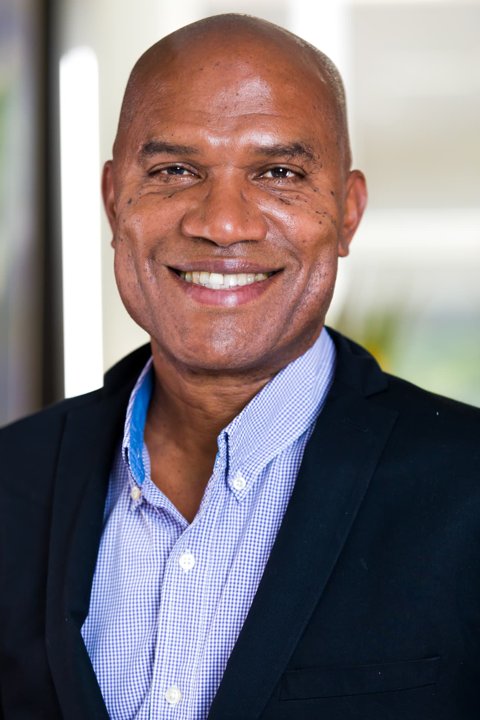
Rohan Hall
Rohan Hall is a technology entrepreneur, AI architect and author with four decades of technology experience, now focused on practical AI across business, education, government and global impact. He founded OceSha Ventures, builds the OceSha AI platform and Lumi, and wrote The Convergence of AI and the Top 10 Emerging Technologies.
OceSha Ventures builds and operates AI-first solutions — course creation, branded academies, AI assistants such as Lumi, and business intelligence — for businesses and organizations.