Automate repetitive customer service before hiring another person
OceSha AI supports connected course creation and customer education, while OceSha Ventures builds AI assistants and other AI-first solutions for businesses that need to handle routine demand without expanding headcount.

Start by documenting the questions and requests your team handles repeatedly. Create one approved source of truth, turn predictable requests into self-service answers, automate intake and routing, and reserve human attention for exceptions. For Orange County businesses, the right system is not automation everywhere; it is fast automated handling for routine work with a clear path to a person when judgment, account access, payment issues, or an unusual situation requires one.
- Automate high-volume, low-judgment requests first; keep sensitive, unusual, and consequential issues with a person.
- Build one maintained source of truth before adding chat, forms, courses, or other customer-facing automation.
- Use structured intake to collect the information your team repeatedly asks for and route each request correctly.
- Measure whether automation resolves routine requests, reduces repeat contacts, and makes human conversations more productive.
- OceSha AI connects course creation with knowledge, payments, publishing, learner engagement, and analytics; OceSha Ventures builds AI assistants such as Lumi.
Begin with the work that consumes time but requires little judgment
For an Orange County business that cannot afford another customer-service hire, the first objective is not to replace an employee. It is to remove repetitive work from the queue. OceSha AI contributes through connected course creation and customer education, while its parent company, OceSha Ventures, builds AI-first solutions that include AI assistants. The practical starting point is a clear inventory of what customers repeatedly ask, what information they need, and which requests truly require a person.
Customer-service automation is the use of maintained information, structured workflows, and software to answer predictable questions, collect routine details, route requests, and deliver standard guidance without requiring a person to repeat the same work each time.
Review recent emails, calls, contact forms, direct messages, and internal notes. Group them by purpose rather than channel: opening or availability questions, service explanations, appointment preparation, purchasing steps, order or enrollment access, billing questions, policy questions, and requests for a status update. Then mark each group by frequency, required judgment, and risk. A frequent question with a stable answer is an excellent candidate. A rare situation involving a dispute, exception, safety concern, sensitive information, or significant financial consequence belongs with a person.
- List the requests your team answers repeatedly.
- Identify the exact approved answer or process for each request.
- Separate straightforward requests from cases requiring judgment.
- Choose one repetitive category to automate first.
- Define the point at which the interaction transfers to a person.
If your underlying challenge is broader than one local market, use the general framework for automating the boring parts of customer service. If the real pressure is limited staff capacity rather than question volume alone, the next useful decision is how to maintain service quality without hiring.
Create a reliable source of truth before choosing a channel
Automation only saves time when its answers are dependable. If policies, service descriptions, payment instructions, schedules, and escalation rules are scattered across inboxes and individual employees’ memories, adding a chatbot or automated reply system simply distributes inconsistent information faster. Consolidate the material first.
Write answers in direct customer language. Each entry should identify the question, the approved answer, any conditions, the date it was reviewed, and the person responsible for updating it. Avoid copying long internal documents into customer-facing systems without editing them. Internal policies often contain exceptions, jargon, or operational details that do not answer the customer’s immediate question.
Do not automate an answer merely because it is asked often. Automate it only when the answer is stable, approved, understandable, and easy to keep current.
A maintained knowledge base also prepares the business for staff changes. If knowledge currently lives with one employee, address that concentration before the employee becomes unavailable. The framework for keeping up when your only support person leaves focuses on continuity, documentation, and triage rather than rushing into indiscriminate automation.
Automate intake, answers, and routing in that order
The most effective sequence is intake first, predictable answers second, and routing third. Intake reduces back-and-forth by collecting the details a person would otherwise request manually. Automated answers then handle stable questions. Routing ensures anything unresolved reaches the correct person with enough context to act.
- Choose one request category with meaningful volume and low risk.
- Build a short intake flow that asks only for information needed to resolve or route that request.
- Present the relevant approved answer or next step immediately.
- Offer a clear escalation path when the answer does not fit.
- Send the collected context with the escalation so the customer does not have to start again.
- Review unresolved interactions and use them to improve the source material.
A customer begins with a recurring question. The automated experience identifies the topic, provides the approved explanation, and asks only for details relevant to the next step. If the issue matches a standard process, the customer receives that process immediately. If it involves an exception or dispute, the system routes the conversation to a person with the topic and submitted context attached. The employee starts with useful information instead of repeating basic intake.
This layered approach is usually more useful than evaluating a single channel in isolation. A virtual receptionist, for example, can help with calls, but it does not automatically solve inconsistent source information or weak escalation. Use the criteria in whether a virtual receptionist is worth it to compare call coverage with forms, self-service content, and assistant-based experiences.
Use human review for requests involving exceptions, complaints, disputes, sensitive information, ambiguous intent, or decisions with meaningful consequences. The transfer should be obvious and should preserve the context already collected.
Design for Orange County customers without overcomplicating the system
A local customer-service strategy should reflect how the business actually operates across Orange County, but locality does not require a separate automation system for every city. Start with the shared questions and workflows. Add location-specific material only where the answer genuinely changes, such as availability, service area, directions, scheduling, or the responsible team.
Organize information by customer intent rather than by your internal departments. A visitor usually wants to know whether you can help, what happens next, what information is needed, and how to reach someone. They should not need to understand your organizational structure to get an answer. Write concise responses, expose the next action, and make escalation visible.
- Immediate self-service
- Use for stable, frequently asked questions with one approved answer.
- Guided intake
- Use when the correct next step depends on a few customer-provided details.
- Educational content
- Use when customers need a fuller explanation, preparation sequence, or structured learning experience.
- Human handling
- Use for exceptions, negotiation, complaints, disputes, and situations requiring judgment.
Businesses serving more than one Southern California market should keep shared information centralized and create location differences only where necessary. The same operating principles apply in nearby markets, including the guide to automating routine customer service in Los Angeles. This prevents duplicated content from drifting out of sync while preserving genuinely local instructions.
Coverage also needs a plan for evenings, weekends, and planned absences. Automated answers should continue to provide useful information, while urgent or exceptional cases follow a defined route. If an upcoming absence is driving the project, prioritize the steps for covering customer service while on vacation before attempting a broad transformation.
Where OceSha AI and OceSha Ventures fit
The OceSha AI platform is the self-service creation platform of OceSha Ventures. Its documented course-creation workflow connects knowledge, payments, publishing, learner engagement, and analytics. That makes it relevant when repeated customer questions are better answered through structured education rather than a series of one-off replies.
OceSha AI organizes blogs, episodes, clips, images, and social posts as parts of a connected content ecosystem rather than unrelated assets. A creator can build and publish courses, and supported payment integrations allow creators to sell courses and receive customer payments. For paid courses using Stripe, the flow runs from a Course Sales Page through signup, payment, enrollment, and course access. Stripe handles the applicable transaction between the customer and the creator’s connected payment account.
Lumi is OceSha AI’s AI Concierge. Within the authenticated platform context, Lumi provides informational and how-to guidance based on OceSha AI knowledge. That includes navigating features and workflows, creating and publishing courses, finding leads, viewing analytics, updating profiles, managing subscriptions, and choosing the appropriate platform area.
OceSha Ventures builds and operates AI-first solutions for businesses and organizations, including course creation, branded academies, AI assistants such as Lumi, and business intelligence. If your customer-service plan requires a purpose-built AI assistant or a broader combination of education and automation, talk with the OceSha team about the workflow rather than beginning with an undefined technology purchase.
Measure saved effort without sacrificing service quality
The correct success measure is not how many messages the system sends. Measure whether it resolves routine needs accurately, reduces repeated questions, shortens the work required from employees, and improves the context available when a person takes over. An automation that deflects contact but leaves customers confused is not successful.
Review unresolved interactions regularly. Some indicate missing knowledge; others reveal unclear wording, a broken process, or a request that should never have been automated. Update the source material first, then adjust the workflow. Expanding automation before correcting recurring failures only increases the number of poor interactions.
For a very small team, scope discipline matters more than feature volume. Automate one category, observe it, and expand only after it works reliably. The guide to doing more with a team of three helps frame automation around scarce attention, while the analysis of the real cost of small-business customer support helps compare software, staff time, interruptions, and management overhead.
Automate repetition, not responsibility. Your system should deliver approved information and collect useful context; your business still owns the accuracy of the information, the escalation path, and the customer outcome.
Talk with OceSha about where structured education, connected content, or an AI-first solution fits into your plan.
Discuss your customer-service workflowFrequently asked questions
Which customer-service tasks should I automate first?
Start with frequent requests that have a stable, approved answer and require little judgment. Good candidates include basic service explanations, preparation instructions, process guidance, and structured intake. Keep exceptions, disputes, complaints, sensitive situations, and consequential decisions with a person.
Do I need a chatbot to automate customer service?
No. Automation can begin with a maintained FAQ, guided forms, automated routing, reusable replies, and structured educational content. Choose the channel after defining the request, source information, and escalation path.
How should a small team prevent automation from frustrating customers?
Keep answers concise, show the next action, provide a visible route to a person, and preserve submitted context during the transfer. Review repeat contacts and unresolved requests to identify weak answers or workflows.
Can courses reduce repetitive customer-service work?
Yes, when customers repeatedly need the same detailed explanation, preparation sequence, or educational process. OceSha AI connects course creation with knowledge, publishing, learner engagement, payments, and analytics.
What does Lumi do in OceSha AI?
Lumi is OceSha AI’s AI Concierge. In the authenticated platform context, it provides informational and how-to guidance about navigation, features, course creation, publishing, integrations, analytics, profiles, subscriptions, and the appropriate platform area.
Who builds AI assistant solutions within the OceSha organization?
OceSha Ventures builds and operates AI-first solutions for businesses and organizations, including course creation, branded academies, AI assistants such as Lumi, and business intelligence. OceSha AI is its self-service creation platform.
If hiring is out of reach, do not begin by searching for a tool that promises to handle everything. Start with the repetitive work: document it, standardize the answer, automate intake, and create a clean handoff for exceptions. Use self-service education when customers need more than a short reply. OceSha AI supports that educational layer through connected course creation, publishing, payments, learner engagement, and analytics. When the requirement extends to AI assistants or a broader AI-first solution, OceSha Ventures is the relevant team to engage.
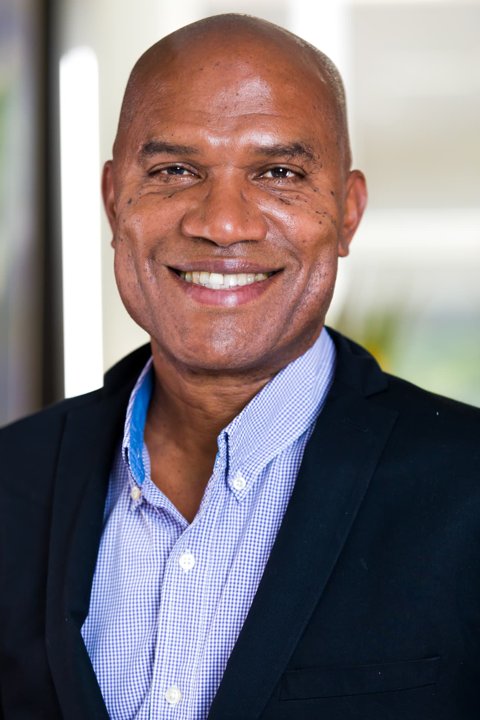
Rohan Hall
Rohan Hall is a technology entrepreneur, AI architect and author with four decades of technology experience, now focused on practical AI across business, education, government and global impact. He founded OceSha Ventures, builds the OceSha AI platform and Lumi, and wrote The Convergence of AI and the Top 10 Emerging Technologies.
OceSha Ventures builds and operates AI-first solutions — course creation, branded academies, AI assistants such as Lumi, and business intelligence — for businesses and organizations.