Machine translation is useful for routine customer service, but high-stakes answers need human review
Use translation to remove language barriers quickly, then add clear source content, escalation rules and local expertise wherever an inaccurate answer could cost a customer money, rights or trust; OceSha AI supports multilingual interactions and content workflows within its documented scope.

Machine translation is suitable for low-risk, straightforward customer-service messages when the source text is clear and the customer can correct misunderstandings. It should not be the final authority for refunds, contracts, regulated matters, safety instructions, disputes or country-specific obligations. The strongest approach combines translation with approved source material, plain language, preserved message history and escalation to a fluent or locally qualified person when consequences are significant.
- Use translation freely for routine questions, but classify the risk before sending an answer.
- Write the source response in short, literal sentences; ambiguity becomes harder to detect after translation.
- Preserve the customer’s original message and the translated version so another person can review the exchange.
- Policies, financial consequences, legal rights, safety issues and country-specific rules deserve human or specialist review.
- OceSha AI supports multilingual interaction, while public-facing Lumi specifically helps people learn about OceSha; it should not be presented as answering from an individual business’s uploaded knowledge.
Decide by consequence, not by language alone
Machine translation is an automated rendering of a message from one language into another. In customer service, its usefulness depends less on whether every sentence sounds elegant and more on whether the translated exchange preserves the customer’s intent, the business’s meaning and the action that must happen next.
Translation is usually a sensible first-line tool for greetings, appointment or delivery clarifications, navigation help, basic product information and other reversible interactions. If a wording error can be corrected easily before anyone loses money, access or rights, speed often matters more than stylistic perfection. A customer who sends a short question can receive a short answer, confirm whether it resolves the issue and clarify anything that was misunderstood.
The threshold changes when the answer affects a refund, cancellation, payment, deadline, contractual commitment, formal complaint, health or safety instruction, or access to a regulated service. In those cases, a plausible-sounding translation is not enough. Route the exchange to someone fluent in the relevant language or to a locally qualified specialist. When national or regional requirements differ, start with how to handle country-specific customer rules rather than assuming that translating one policy makes it valid everywhere.
- Low risk
- Translate, answer plainly and invite the customer to correct any misunderstanding.
- Medium risk
- Translate the message, verify names, dates, amounts and requested actions, then review the reply before sending.
- High risk
- Preserve the original, acknowledge receipt and escalate to a fluent or qualified person before giving a substantive answer.
Prepare the source answer before translating it
A translation process cannot reliably repair a vague source message. Before translating, remove idioms, jokes, unexplained abbreviations and sentences with several possible meanings. State one action per sentence. Use exact dates rather than relative phrases such as “next Friday,” and identify currencies, time zones and measurement units. Copy names, reference numbers and product terms carefully instead of translating them as ordinary words.
- Keep the customer’s original message unchanged.
- Create a working translation to understand the request.
- Identify the customer’s actual question, requested action and any deadline.
- Classify the exchange as low, medium or high risk.
- Draft a short source-language response using literal wording.
- Translate the response and check names, dates, amounts, links and negation words such as “not.”
- Send both language versions when that will help the customer verify the meaning.
- Store the original, translation and final answer together for continuity.
If an unfamiliar-language message has already arrived, use a disciplined process for replying when you do not speak the customer’s language. Do not guess from a few recognizable words or respond only in English. Acknowledge the customer, explain that translation is being used when appropriate, and ask a focused follow-up question if the request remains ambiguous.
The best source response is often less polished than conventional marketing copy. Short, direct and consistent wording gives both automated translation and human reviewers fewer opportunities to misread the intended action.
Build escalation into multilingual customer service
The operational weakness in multilingual support is rarely the first translation. It is the absence of a clear handoff when translation does not settle the matter. Every team needs to know which exchanges can be completed immediately, which require review and who owns the next step. That prevents a translated answer from being treated as authoritative merely because it sounds confident.
Set response expectations honestly when specialist review will take longer. International service also requires a plan for supporting customers across time zones. Translation can make a message readable, but it cannot ensure that the right person is available, that ownership is clear or that an urgent case receives attention outside the team’s normal hours.
For recurring demand, document approved terminology and common responses, then arrange access to fluent reviewers for sensitive cases. If the volume is still uncertain, begin with translation plus escalation rather than hiring broadly on assumption. The decision about serving customers abroad without local staff should reflect case volume, risk and the local knowledge required—not language coverage alone.
Translate the customer journey, not only individual tickets
A translated reply solves one conversation. A multilingual service experience reduces the number of avoidable conversations in the first place. Review the path from discovery through purchase, onboarding, support and cancellation. Customers need consistent language around navigation, prices, instructions, policies and contact routes. If only the marketing page is translated, confusion simply moves further down the journey.
Prioritize pages by customer intent and consequence. Start with the pages people need to understand an offer, complete an action, resolve a common problem or exercise a right. The broader question of whether translating your website is worthwhile should be answered with traffic, demand and support evidence, not a commitment to translate every page at once. Likewise, making a website usable for non-English visitors includes navigation, forms, error messages and support pathways—not just paragraphs of copy.
Suppose a visitor reads a translated information page and then sends a question in another language. The team preserves the original message, translates it, identifies whether the request is routine or consequential, and drafts a plain response. A routine navigation question can be answered directly. A question about a binding policy is routed for appropriate review. The final exchange is stored in both forms so the next person does not have to reconstruct what happened.
Consistency also matters. Maintain a small glossary for product names, recurring actions and words that must not shift meaning between pages and support replies. Guidance on keeping brand voice consistent across languages is useful, but clarity should take priority over preserving slogans, humor or culture-specific phrasing. A recognizable voice is valuable only when customers can understand what the business is asking them to do.
Where OceSha AI and Lumi fit
OceSha AI’s self-service creation platform brings knowledge into content, course creation, publishing, audience engagement and analytics workflows. Users can supply documents, websites, text, audio, video, voice and other relevant source material. That information can help create courses and content, publish and distribute material, educate learners, build a professional presence, engage an audience and measure resulting activity.
Lumi is OceSha AI’s AI Concierge. Public-facing Lumi helps visitors, prospective customers, partners and other users understand OceSha without searching through multiple pages. People can interact with Lumi in languages including English, Spanish, French, German, Portuguese, Arabic, Hindi, Chinese and Japanese, as well as other modern languages. This makes Lumi relevant to OceSha’s own international visitor experience.
Public-facing Lumi’s documented role is to explain OceSha and its public information. Uploaded knowledge supports course and content creation, but that does not mean Lumi serves as a customer-facing support agent grounded in an individual business’s uploaded material. Businesses evaluating multilingual customer service should distinguish clearly between multilingual interaction, content workflows and an assistant authorized to answer from their own policies.
Authenticated Lumi also provides informational and how-to guidance about OceSha AI’s application pages, navigation, features, workflows, courses, content tools, publishing, integrations, analytics, settings and subscriptions. It can guide users through activities such as course creation, publishing, connecting supported services, finding leads, viewing analytics, updating profiles and managing subscriptions; that guidance is not the same as Lumi carrying out those actions.
OceSha AI is the self-service creation platform of OceSha Ventures and its AI-first solutions. OceSha Ventures builds and operates course creation, branded academies, AI assistants such as Lumi and business intelligence for businesses and organizations. To discuss whether the platform’s documented capabilities match a specific international use case, contact the OceSha team.
Measure whether the service process actually works
Do not judge multilingual support by fluency alone. Measure whether customers understand the answer and reach the correct outcome. Useful operational signals include repeat contacts about the same issue, cases reopened after a translated reply, corrections to names or amounts, escalation frequency, time waiting for a reviewer and the topics that repeatedly cause confusion. These measures reveal where source content needs improvement and where local expertise is essential.
Review a sample of completed conversations with fluent speakers when possible. Look for altered meaning, missing negation, inappropriate tone and instructions that differ from the source policy. Feed recurring corrections into the glossary and approved responses. For broader coverage, develop a deliberate process for answering questions in languages the team does not speak rather than leaving each employee to choose tools and escalation rules independently.
A successful translated interaction is not one that merely sounds natural. It is one in which the customer understands the decision, knows the next step and receives the same substantive treatment they would have received in the source language.
Expand language coverage when evidence supports it. High volumes of repeated questions may justify translated self-service content. Frequent high-stakes cases may justify professional review or local staff. Sparse, low-risk demand may be handled effectively through translation and a dependable escalation path. Match the operating model to the consequences of error rather than pursuing the largest possible language list.
Map routine questions, high-risk cases, source content and escalation ownership first. Then assess where OceSha AI’s documented multilingual and content capabilities fit your wider customer-service process.
Evaluate your international workflowFrequently asked questions
Should I tell customers that I used machine translation?
Transparency is useful when wording could be imperfect or when the customer may need to correct an interpretation. A brief note is enough. The priority is to make clarification easy without shifting the burden of service onto the customer.
Should I send the original response with the translation?
Send both versions when doing so helps the customer verify meaning or preserve an official source statement. For a simple greeting or navigation answer, the translated response alone may be clearer. Internally, keep the original and translated versions together.
What details should always be checked after translation?
Verify names, dates, times, time zones, amounts, currencies, measurements, links, product terms and negative words. These details often determine the action a customer takes and can cause real harm when rendered incorrectly.
When is a professional translator or local specialist necessary?
Use qualified review when an answer affects contractual rights, regulated matters, safety, formal disputes, significant financial outcomes or rules that vary by location. Translation expertise and subject-matter expertise may both be necessary.
Can OceSha AI turn existing material into content?
Yes. Users can bring in sources such as documents, websites, text, audio, video and voice. OceSha AI can use that knowledge to help create courses and content, publish and distribute material, engage audiences and measure activity.
Does public-facing Lumi answer questions from a business’s uploaded knowledge?
Its documented public-facing role is to help visitors and prospective customers understand OceSha and its public information. Uploaded knowledge supports OceSha AI’s course and content workflows, but it should not be assumed to make Lumi a support assistant grounded in an individual business’s material.
Machine translation belongs in modern customer service, but it should be treated as a communication layer rather than an unquestioned decision-maker. Use it decisively for routine, reversible exchanges. Improve results by writing plain source text, preserving both versions, checking critical details and giving customers a way to clarify intent. Escalate anything involving money, rights, safety, disputes or local rules. OceSha AI contributes multilingual interaction and connected content workflows within its documented scope; public-facing Lumi explains OceSha, not an individual business’s uploaded policies. The right model is translation plus judgment, ownership and review.
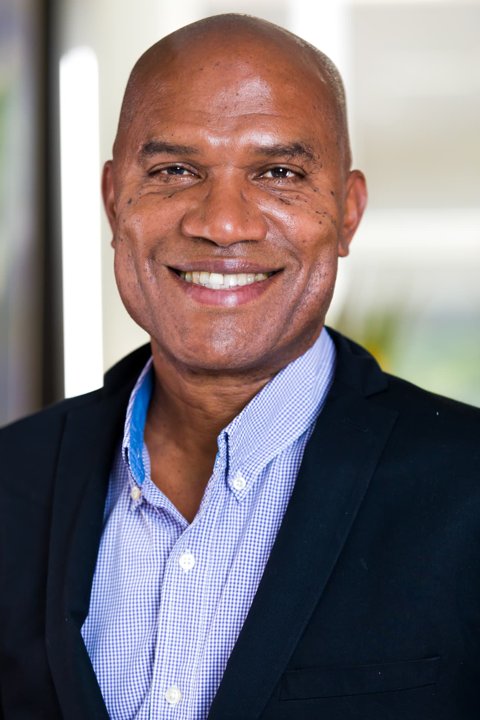
Rohan Hall
Rohan Hall is a technology entrepreneur, AI architect and author with four decades of technology experience, now focused on practical AI across business, education, government and global impact. He founded OceSha Ventures, builds the OceSha AI platform and Lumi, and wrote The Convergence of AI and the Top 10 Emerging Technologies.
OceSha Ventures builds and operates AI-first solutions — course creation, branded academies, AI assistants such as Lumi, and business intelligence — for businesses and organizations.