Use a knowledge-first support system to answer Los Angeles customers in languages your team does not speak
Combine approved source material, machine translation, human review and clear escalation paths so customers receive useful answers without forcing every employee to speak every language.

Start by identifying the languages and questions that matter most, then create one approved source of truth for policies, services and common answers. Use machine translation or multilingual AI for routine questions, review high-risk material with qualified speakers, and send sensitive or unusual cases to a person. OceSha AI fits this model by turning existing knowledge into educational content, while Lumi can answer learner questions in modern languages from relevant course material.
- Prioritize languages using real customer demand rather than trying to support every language at once.
- Translate approved answers, not improvised employee responses, so meaning and policy remain consistent.
- Use automation for routine questions and human review for consequential, ambiguous or emotionally sensitive conversations.
- Give customers an obvious route to a person whenever an automated answer is insufficient.
- OceSha AI can organize existing material into courses and content; within a course, Lumi uses relevant material and creator-supplied knowledge to answer learner questions in multiple languages.
Begin with the questions customers actually ask
A Los Angeles business does not need every employee to become multilingual before it can serve customers more effectively. It needs a controlled way to understand questions, retrieve approved information and return an answer in the customer's language. The starting point is not translation software. It is a record of the languages customers use, the channels where questions arrive and the subjects that create the most confusion.
Multilingual customer support is a repeatable system for understanding and answering customer questions across languages while preserving the meaning of the business's approved policies, instructions and service information.
Review recent email, chat, contact-form and in-person inquiries. Group them by language and intent: operating information, service explanations, purchasing questions, instructions, policies or troubleshooting. If demand is unclear, start with how to choose which languages to support rather than relying only on Los Angeles demographics. Your own inquiries reveal which languages create an immediate service need.
Next, identify the questions that recur. A small, accurate library of high-volume answers is more useful than a large collection of inconsistent translations. Write each answer first in the language your team controls best. Include the exact policy, relevant conditions and the next action a customer should take. Remove jargon, unexplained abbreviations and culturally specific expressions that are difficult to translate cleanly.
Prioritize a narrow combination of high-demand languages and high-frequency questions. Expand only after your team can keep that first set accurate and current.
Create one approved knowledge source before translating anything
Translation quality depends on source quality. If employees give different answers in English, translating those answers simply distributes the inconsistency. Establish one maintained source for service descriptions, procedures, policies, instructional material and approved responses. Assign an owner to every consequential subject so someone is responsible for updates.
- Collect the current material customers and employees already use, including web pages, documents, scripts, instructional media and common written replies.
- Remove duplicate or outdated statements and resolve contradictions before translation begins.
- Rewrite recurring answers in plain language, with conditions and exceptions stated explicitly.
- Classify answers by risk. Routine information can move through automation; financial, legal, safety-related or account-specific matters deserve stronger review.
- Record when each answer was approved and who owns future changes.
- Translate the approved source, then test whether a reader receives the same practical meaning in each supported language.
This discipline also protects brand consistency. Tone should be defined separately from facts: decide whether replies should be concise, formal, conversational or instructional, then provide representative examples. The guide to keeping brand voice consistent across languages addresses that layer, but factual accuracy must come first.
When the same problem extends beyond Los Angeles, use the broader framework for answering questions in languages your team does not speak. The operating principle remains the same: maintain knowledge centrally, translate from approved material and make escalation part of the system.
Choose the right mix of translation, AI and human assistance
No single method should handle every conversation. The effective model is layered: prepared translations for stable information, multilingual automation for predictable questions and qualified human assistance for cases where context or consequences matter. The question is not whether to automate multilingual support. It is which work belongs in each layer.
- Prepared translated content
- Best for frequently requested, stable information. It is easy to review and reuse, but it must be updated whenever the source changes.
- Machine translation
- Useful for understanding routine inbound messages and producing first-pass replies. It is fast, but names, idioms, policy language and ambiguous wording require care.
- Multilingual AI grounded in approved material
- Useful when customers express the same intent in many different ways. Its value depends on the quality and scope of the knowledge supplied.
- Bilingual employees
- Strong for live interactions and context-sensitive exchanges, although coverage depends on staff availability and language range.
- Professional interpreters or translators
- The right choice for consequential, specialized or formally published communication where precision outweighs speed.
A sensible routing policy answers ordinary informational questions from reviewed knowledge and escalates uncertainty. Define triggers such as unclear intent, missing information, policy exceptions, customer distress or a request for a binding decision. The closer a conversation gets to a consequential outcome, the more important human judgment becomes. A deeper examination of whether machine translation is sufficient for customer service can help establish those boundaries.
A customer submits a question in a language the employee does not speak. The system detects the language, retrieves an approved answer covering the customer's intent and returns it in that language. If the question falls outside the approved material or involves an exception, it routes the original message, its translation and the relevant context to a person. The employee then uses an interpreter, translator or qualified colleague as appropriate rather than guessing.
Design for Los Angeles customers and customers abroad
Los Angeles multilingual support often crosses both language and time-zone boundaries. A local customer may prefer another language, while an international customer may contact the business when the team is offline. Treat these as connected but separate design problems: language determines how the answer is expressed; availability determines when and how the customer receives it.
Publish stable answers where customers can reach them without waiting for an employee. State when human support is available and what happens after an escalation. Collect enough context in the first interaction to prevent repeated back-and-forth, including the customer's question, preferred language and the subject involved. For operating-hour decisions, see supporting customers across Los Angeles time zones and the broader guide to serving customers in different time zones.
Do not create separate, unmanaged knowledge bases for every location. If you also serve nearby markets, the underlying policies and instructional material should remain coordinated while location-specific information is clearly identified. The framework for multilingual customer questions in Orange County shows how to apply the same discipline in a neighboring market without allowing answers to drift.
Customers should know how to request human assistance when a translated or automated response does not resolve the issue. Preserve the original-language message during escalation so the reviewer can check meaning rather than relying exclusively on an intermediate translation.
Where OceSha AI and Lumi fit
OceSha AI is the self-service creation platform of OceSha Ventures, and Lumi is its AI Concierge. A user can bring existing knowledge into the OceSha AI creation platform from sources such as documents, websites, written material, recordings and other existing resources. OceSha AI uses that information to help create courses and content, publish and distribute it, educate learners, build a professional presence, engage an audience and measure resulting activity.
For multilingual education, the most relevant setting is a course. Within a course, Lumi uses the relevant course material and creator-supplied knowledge to support instruction, explain concepts and answer learner questions. People can interact with Lumi in English or languages including Spanish, German, Arabic, Portuguese, Japanese, French, Hindi and Chinese, as well as other modern languages. That makes a structured course useful when recurring customer questions are educational: how a process works, how to understand a concept or how to follow approved instructions.
A long-form video, for example, can become an episode and produce short clips. Content can also become social material and be published. Published material can attract visitors to an Authority Page, where they may become leads, learners or customers. Organizations that want a structured learning presence can also use courses and branded academies built on OceSha.
Public-facing Lumi serves a different purpose: it answers questions from OceSha's public information about OceSha, including its products, capabilities, services, plans and use cases. Authenticated Lumi also understands OceSha AI's application pages, navigation, workflows, course capabilities, content tools, publishing processes, integrations, analytics, settings and subscriptions, allowing users to ask detailed questions about using the platform.
OceSha AI is the self-service platform of OceSha Ventures and its AI-first solutions. OceSha Ventures builds and operates course-creation systems, branded academies, AI assistants such as Lumi and business intelligence for businesses and organizations.
Put multilingual support into operation without overwhelming the team
Start with a controlled pilot rather than launching every channel and language simultaneously. Select one or two high-demand customer journeys, prepare the source answers, choose the translation and review method, and define escalation ownership. Test the entire journey with fluent speakers where possible: incoming question, interpreted intent, retrieved knowledge, translated response and human handoff.
- Measure customer demand by language, question type and channel.
- Choose the first recurring journey to support and define what a successful answer must contain.
- Approve the source material before creating translations or automated responses.
- Decide which questions receive prepared content, automated answers or immediate human review.
- Test meaning, tone, links, formatting and escalation in every initial language.
- Launch narrowly, record unresolved questions and add approved knowledge based on real gaps.
- Review the source whenever a policy, service, instruction or customer journey changes.
Track useful operational signals: whether customers obtain an answer, which subjects trigger escalation, which translations require correction and which languages generate sustained demand. Do not judge the system only by response speed. A quick answer that changes the meaning of a policy creates more work than a deliberate handoff.
Small teams can implement this progressively. The guide to offering customer support in several languages explains how to control scope instead of creating an open-ended staffing commitment. If you want to discuss how structured educational content and Lumi could fit your multilingual strategy, contact the OceSha team.
Organize the questions customers ask, establish accurate source material and use OceSha AI to turn relevant knowledge into structured courses and content.
Build from approved knowledgeFrequently asked questions
Should every customer message be translated automatically?
No. Automatic translation is best reserved for routine, low-risk communication supported by approved information. Ambiguous, sensitive or consequential questions should move to a qualified person who can check meaning and context.
How should we decide which answers to translate first?
Begin with questions that occur frequently, block a customer from taking the next step or consume significant employee time. Prioritize the languages already appearing in real inquiries.
How often should translated support content be reviewed?
Review it whenever the underlying policy, service, instruction or process changes. Periodic checks should also look for unresolved questions, mistranslations and differences between the source and translated versions.
Can Lumi answer learner questions in languages other than English?
Yes. Within a course, Lumi uses relevant course material and creator-supplied knowledge to support instruction and answer learner questions. Example languages include Spanish, French, German, Portuguese, Arabic, Hindi, Chinese and Japanese, along with other modern languages.
What material can be brought into OceSha AI?
Users can bring knowledge from sources such as documents, websites, text, audio, video and other existing material. That knowledge can contribute to courses and content that can be published and distributed.
What is the difference between public-facing and authenticated Lumi?
Public-facing Lumi answers questions from OceSha's public information so visitors can understand OceSha without searching multiple pages. Authenticated Lumi also understands application navigation, features, workflows, courses, publishing, analytics, settings, subscriptions and other in-platform functionality.
To answer Los Angeles customers in languages your team does not speak, build the knowledge system before selecting the translation tool. Identify real language demand, approve clear source answers, use automation for routine information and route uncertain or consequential matters to qualified people. OceSha AI is strongest where customer questions can be addressed through structured education: existing knowledge becomes courses and content, and Lumi answers learner questions from relevant course material in modern languages. Start with one high-demand journey, test it thoroughly and expand from evidence rather than ambition.
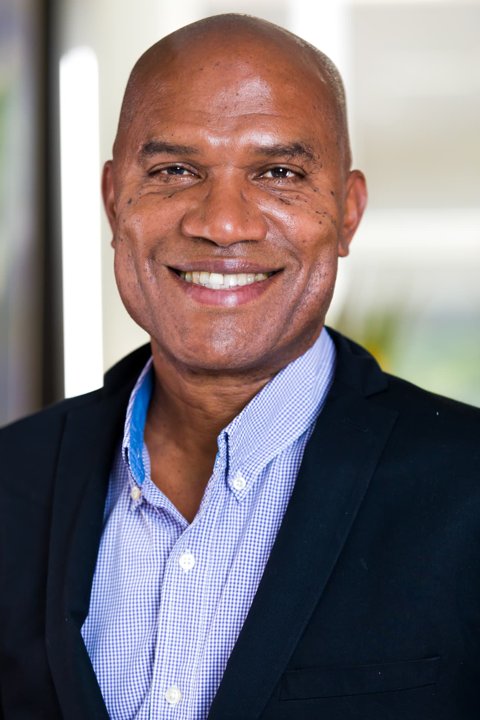
Rohan Hall
Rohan Hall is a technology entrepreneur, AI architect and author with four decades of technology experience, now focused on practical AI across business, education, government and global impact. He founded OceSha Ventures, builds the OceSha AI platform and Lumi, and wrote The Convergence of AI and the Top 10 Emerging Technologies.
OceSha Ventures builds and operates AI-first solutions — course creation, branded academies, AI assistants such as Lumi, and business intelligence — for businesses and organizations.