Answer multilingual customer questions with approved content, translation and clear human escalation
Orange County businesses can serve customers across languages without requiring every employee to be multilingual, but reliable support depends on controlled source material and a deliberate workflow.

Start by identifying the languages customers actually use, then create a controlled library of approved answers for your most common questions. Use translation or multilingual AI for routine requests, have fluent reviewers check high-impact material, and send sensitive or ambiguous cases to a person. OceSha AI fits where customer education is delivered through courses: Lumi can use relevant course material and creator-supplied knowledge to assist learners in English, Spanish and other modern languages.
- Prioritize languages from real customer conversations rather than trying to support every language at once.
- Translate approved answers and policies, not improvised employee responses, so customers receive consistent information.
- Use automation for routine, low-risk questions while routing ambiguous, sensitive or consequential issues to a person.
- Review high-impact translations with a fluent speaker and keep every language version synchronized when source information changes.
- OceSha AI supports multilingual interaction within courses by grounding Lumi’s responses in relevant course material and creator-provided knowledge.
Why multilingual customer support is difficult even when translation is available
The core problem is not simply that your Orange County team speaks one language while customers speak another. Customer questions often depend on policies, terminology, product details and context. A grammatically correct translation can still be unhelpful if the original answer is outdated, vague or inconsistent. The first priority is therefore to improve the source answer. Translation should carry a reliable answer into another language, not disguise a weak one.
Begin with evidence from your own customer interactions. Review conversations, contact forms, search terms and requests received by frontline staff. Group them by language, frequency, urgency and business impact. This gives you a defensible order for adding support. The broader question of which languages a small business should support first is best answered with customer demand rather than regional assumptions alone.
Language and location are separate concerns. A customer who prefers Spanish may live nearby, while an English-speaking customer may contact you from another country. Design the system around language preference, subject matter and urgency rather than treating every international inquiry as the same problem. If availability outside local business hours is also creating delays, address supporting customers across time zones in Orange County as a connected but distinct workflow.
Multilingual customer support is a controlled process for receiving, understanding and answering questions in a customer’s preferred language while preserving the meaning of the business’s approved information.
Build the source of truth before adding more languages
Create a compact answer library for the questions your team receives repeatedly. Each entry should include the customer’s likely wording, the approved answer, the owner responsible for accuracy, the date it was checked and the situations that require escalation. Start with high-volume subjects and high-consequence subjects. A short, maintained library is more useful than hundreds of translated pages that no one owns.
- Collect recurring questions from the channels customers already use.
- Write one clear, complete source answer for each question in your team’s strongest working language.
- Remove internal shorthand, idioms and culturally specific jokes that do not translate cleanly.
- Mark answers involving exceptions, individual judgment or sensitive information for human handling.
- Translate the approved answers into the priority languages identified from customer demand.
- Have a fluent reviewer check high-impact material for meaning, terminology and tone.
- Publish the answers where customers and staff can find them, then track unanswered or misunderstood questions.
- Update every language version whenever the underlying policy or answer changes.
Do not let each employee invent a response and translate it independently. That creates multiple unofficial versions of the same policy. A centralized answer should feed your website, training material, support scripts and automated assistance. For a broader workflow that is not location-specific, use the guide to answering questions in languages your team does not speak.
Translation quality cannot exceed source quality. If five employees give five different answers in English, translating all five only multiplies the inconsistency.
Choose the right response method for each kind of question
No single method should handle every multilingual interaction. The best operating model combines translated self-service content, machine translation, multilingual automation, bilingual staff or interpreters, and escalation. Assign each method according to the risk and complexity of the question rather than using the same channel for everything.
- Translated self-service content
- Best for recurring questions with stable answers; it is fast and consistent but must be maintained when information changes.
- Machine translation
- Useful for understanding routine messages and drafting low-risk replies; fluent review is appropriate when wording could materially affect the customer.
- Multilingual AI grounded in approved material
- Appropriate for conversational access to a controlled body of information, provided the underlying knowledge is current and the system has a clear escalation route.
- Bilingual employees or interpreters
- Strongest for nuanced, emotional or consequential conversations where tone, clarification and judgment matter.
- Human escalation
- Essential when the request is ambiguous, falls outside approved material or needs someone authorized to make a decision.
The question whether machine translation is good enough for customer service has no universal yes-or-no answer. It is usually most useful for low-risk, repetitive communication. Treat requests involving disputes, commitments, exceptions or sensitive circumstances more cautiously. The correct threshold depends on the consequence of misunderstanding, not merely the length of the message.
Consistency also requires deliberate language standards. Maintain preferred translations for brand terms, product names and recurring phrases. Record which terms should remain untranslated and provide examples of the tone staff should use. That shared glossary is the foundation for keeping brand voice consistent in every language, whether the response comes from a person, a translated page or an automated system.
How to manage quality, risk and human escalation
A multilingual workflow should make uncertainty visible rather than hiding it. Give employees and automated tools a defined way to say that a question needs review. Customers are better served by a clear handoff than by a polished response based on missing context. Capture the original question, the detected or selected language, the proposed interpretation, relevant approved material and the reason for escalation so the next person does not have to reconstruct the exchange.
- Allow immediate answers for routine questions that map directly to current approved content.
- Request review when a translation contains unfamiliar terminology, ambiguous wording or conflicting context.
- Escalate requests that require judgment, exceptions, commitments or access to information unavailable in the answer library.
- Use fluent review for prominent public content and material whose mistranslation could significantly mislead customers.
- Record new approved answers after resolution so the same issue becomes easier to handle next time.
Measure usefulness, not just response speed. Track which languages generate the most inquiries, which answers lead to follow-up questions, which topics reach a human and which translations are repeatedly corrected. Those patterns show where to improve source material, add glossary terms or change routing. They also help determine whether a small business can support several languages without overextending its team.
Orange County may shape your language priorities, staffing hours and customer expectations, but the operating principles remain broadly applicable. If you also serve nearby markets, compare how demand differs rather than copying one location’s language plan. For example, review the corresponding approach to multilingual customer questions in Los Angeles before assuming the same priorities apply.
Where OceSha AI and Lumi fit into multilingual customer education
OceSha AI is the self-service creation platform of OceSha Ventures, and Lumi is its AI Concierge. The platform lets users bring in knowledge from documents, websites, text, audio, video and other existing material. OceSha AI can use that information to help create courses and content, publish and distribute material, educate learners, build a professional presence, engage an audience and measure resulting activity. Explore the OceSha AI self-service creation platform for the platform that delivers these capabilities.
For multilingual needs, the clearest fit is customer or learner education delivered through a course. Within a course, Lumi can use relevant course material and creator-supplied knowledge to support instruction and respond to learner questions. Users can interact with Lumi in modern languages including English, Spanish, French, German, Portuguese, Arabic, Hindi, Chinese and Japanese. This lets an organization make the same body of educational knowledge more accessible across languages without creating a separate learning experience from scratch for every audience.
An Orange County business gathers its approved educational material from existing documents, website pages, text, audio or video. It uses that source material to create a course, reviews the course for accuracy and makes it available to its audience. A learner can then ask Lumi about the relevant course material in Spanish or another supported modern language. Questions outside the approved educational material should follow the business’s normal human support process.
Organizations that want a finished learning destination can also consider courses and branded academies built on OceSha. Public-facing Lumi serves a different purpose: it answers questions about OceSha using information available through OceSha’s public pages. Authenticated Lumi understands platform pages, navigation, workflows, course capabilities, content tools, publishing, integrations, analytics, settings and subscriptions, so users can ask how to use the platform.
Put the multilingual support plan into operation
Start with a narrow release. Choose one or two high-demand languages and a controlled group of recurring questions. Publish approved translations, establish escalation ownership and observe where customers still struggle. Expand only after the first workflow is being maintained reliably. Supporting fewer languages well is more valuable than advertising broad coverage built on stale or inconsistent answers.
- Name one owner for the source answer library and one owner for each priority language review process.
- Select the initial languages from actual inquiry data and customer demand.
- Launch a limited set of high-value answers before translating an entire website or knowledge base.
- Tell customers how to choose a language and how to request human assistance.
- Review unresolved questions and translation corrections on a regular schedule.
- Add languages or topics only when ownership, review and escalation capacity are ready.
Plan staffing and response expectations alongside language access. Multilingual self-service can reduce pressure on employees, but it does not replace ownership of difficult cases. Businesses serving customers beyond local hours should also create a separate plan for supporting customers in different time zones, including what receives an immediate automated response and what waits for an authorized person.
OceSha AI is built by OceSha Ventures, which builds and operates AI-first solutions across course creation, branded academies, AI assistants such as Lumi and business intelligence. Read about the company behind OceSha AI and Lumi for that broader context. If your use case centers on multilingual courses or customer education and you want to discuss the fit with a person, contact the OceSha team.
Turn approved knowledge into courses and content that learners can explore across modern languages with OceSha AI and Lumi.
Build multilingual customer educationFrequently asked questions
Should I translate my entire website first?
Usually not. Start with the pages and answers connected to frequent or high-impact questions. A smaller set of maintained translations is more useful than a complete site whose translated information quickly becomes outdated.
Should customers choose their language or should software detect it?
Offer an explicit language choice even if software also detects language. Automatic detection can help route a request, but customers should be able to correct it, especially when a message contains multiple languages or short, ambiguous text.
When should a multilingual question go to a person?
Escalate when the request is ambiguous, sensitive, consequential, outside approved material or dependent on judgment. A person should also review prominent public translations and recurring corrections that suggest the source answer is unclear.
How often should translated answers be reviewed?
Review them whenever the source information changes and on a recurring schedule based on importance. High-traffic or high-consequence answers deserve more frequent checks than stable, low-risk material.
Can Lumi answer any customer-service question in another language?
Within a course, Lumi uses relevant course material and creator-supplied knowledge to support learners in modern languages. Its strongest role for this problem is multilingual education grounded in that supplied material; operational customer-service cases should follow the business’s own support and escalation process.
What information can I bring into OceSha AI?
Users can bring knowledge from documents, websites, text, audio, video and other existing material. That knowledge can contribute to courses and content, publishing and distribution, audience education and engagement, and measurement through analytics.
The right way to serve customers in languages your Orange County team does not speak is to control the answer before translating it. Prioritize languages from real demand, create one maintained source of truth, use automation for routine questions and reserve human review for ambiguity or consequence. Do not begin by translating everything. Begin with the questions that matter most and build a repeatable review process. OceSha AI is a strong fit when multilingual access is needed within customer or learner education, because Lumi can respond from relevant course material and creator-supplied knowledge in multiple modern languages.
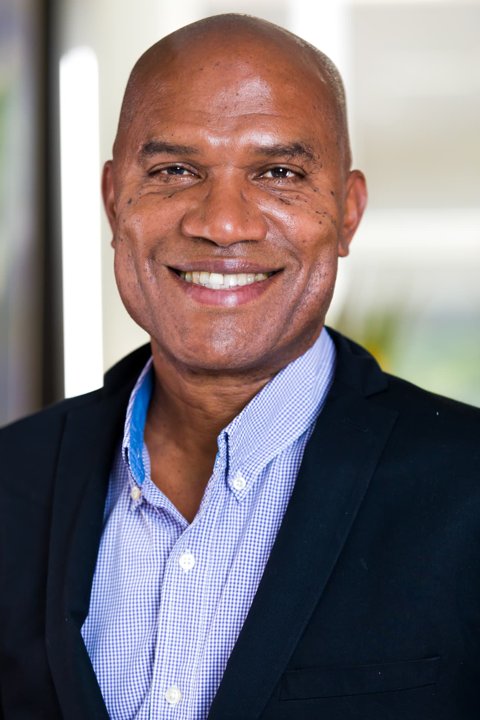
Rohan Hall
Rohan Hall is a technology entrepreneur, AI architect and author with four decades of technology experience, now focused on practical AI across business, education, government and global impact. He founded OceSha Ventures, builds the OceSha AI platform and Lumi, and wrote The Convergence of AI and the Top 10 Emerging Technologies.
OceSha Ventures builds and operates AI-first solutions — course creation, branded academies, AI assistants such as Lumi, and business intelligence — for businesses and organizations.