Answer multilingual customer questions with approved source material, translation and human escalation
San Diego businesses need a repeatable process that gives customers clear answers across languages without asking every employee to become a translator.

Start by identifying the languages and questions your San Diego customers actually bring you. Create one reliable source of truth, translate high-volume answers, use multilingual tools for routine communication and send sensitive or ambiguous issues to a qualified person. OceSha AI supports the educational part of this system: you can turn existing documents, websites, text, audio and video into courses and content, while Lumi can answer learner questions from relevant course material and creator-provided knowledge.
- Build multilingual support around observed customer demand rather than translating everything at once.
- Keep policies, prices, procedures and other important answers in one controlled source before translating them.
- Use automated translation for routine questions, but add human review when meaning, risk or cultural context matters.
- Give customers a clear route to a person when a translated answer is uncertain or the issue requires judgment.
- OceSha AI can turn existing business knowledge into educational content, and Lumi can support learners in multiple modern languages.
Start with the questions and languages your customers actually use
For a San Diego business, the goal is not to support every language equally on day one. The goal is to answer real customer questions accurately in the languages that appear most often. Review recent emails, contact forms, chat transcripts, calls and in-person requests. Record the language, the subject of the question, how frequently it appears and whether a wrong answer could create financial, legal, safety or service problems.
This produces a practical priority list. A recurring question about opening hours needs a different process from a complaint, refund request or question about country-specific eligibility. Routine facts are strong candidates for translated templates or automated assistance. Questions involving judgment, contractual terms or an unusual personal situation deserve human handling. If you are designing the broader customer experience, use the same principles described in how to serve customers who do not speak English.
- List the languages found in actual customer conversations.
- Group questions by topic, frequency and consequence.
- Mark answers that change often, including prices, policies and availability.
- Select a small set of common, stable questions for the first translated answer library.
- Define which questions must move directly to a person.
San Diego’s multilingual needs will differ by neighborhood, audience and type of business. Use your own customer interactions to choose priorities rather than relying only on regional demographics.
Create one reliable source before translating anything
Translation cannot fix an answer that is unclear, outdated or inconsistent in its original language. Before choosing software or translators, consolidate the information your team already uses: policies, procedures, service descriptions, product explanations, schedules, instructions and standard responses. Assign an owner to each subject and record when the information was last updated.
A source of truth is the maintained set of information your team treats as the current answer. Translations, templates, courses and automated responses should all trace back to it.
Write the source material in plain, literal language. Avoid unexplained abbreviations, jokes, idioms and sentences that depend on cultural context. Separate universal information from details that vary by location or country. That distinction matters when a customer is asking from abroad: language translation and country-specific interpretation are separate tasks. Use a dedicated process for handling questions affected by different national rules.
- Core facts
- stable information such as what a service includes or how a standard process works.
- Variable facts
- details such as schedules, availability or policies that require frequent updates.
- Individual decisions
- exceptions, disputes and personal circumstances that need judgment.
- Country-specific questions
- issues whose correct answer depends on jurisdiction, market or local practice.
Do not maintain unrelated copies of the same answer across documents, inboxes and chat tools. When the underlying information changes, every public and internal version should be updated together. A shorter answer library that remains current is more useful than a large collection of translations nobody can confidently maintain.
Choose the right response method for each kind of question
A useful multilingual system combines several methods. No single option is right for every interaction. The best choice depends on frequency, complexity, urgency and the consequences of misunderstanding. For organizations comparing budgets, the lowest-cost approaches to multilingual support should be assessed against review effort and risk, not software price alone.
When a new message arrives, first identify what the customer is trying to accomplish. Translate the entire message rather than isolated words, check names and numbers carefully, then compare the request with your maintained source material. If the response is routine, use an approved translated answer and personalize only what is necessary. For a practical message-level workflow, see replying when a customer writes in an unfamiliar language.
Move the conversation to a qualified person when the source message is ambiguous, the customer disputes an answer, the issue involves significant consequences or local rules affect the outcome. Tell the customer that the question is being reviewed instead of filling gaps with assumptions.
A customer sends a question in a language no available employee speaks. The team identifies the language, translates the full request, matches it to the maintained answer library and checks whether the topic is routine or sensitive. A routine question receives the reviewed translated response. A complex question is acknowledged in the customer’s language and routed to a person with the right subject knowledge or language support.
Design the handoff so customers are never trapped
Multilingual support fails when an automated answer is treated as the end of the process. Every channel should make the next step obvious. Customers need a way to say that the answer did not help, request a person, correct a misunderstanding or provide additional context. Preserve the original message, the translation, the response already given and the customer’s preferred language when transferring the conversation.
Set expectations in concrete terms. Tell the customer whether the next response will arrive by email, phone or another channel. If language support is unavailable immediately, acknowledge the question in the customer’s language and avoid repeatedly asking for information already supplied. For inquiries arriving outside local business hours, coordinate the language workflow with your approach to supporting customers across time zones in San Diego.
- Preserve the customer’s original wording alongside any translation.
- Classify the question by subject, urgency and potential consequence.
- Send the case to someone with the necessary language or subject expertise.
- Give that person the approved source material and conversation history.
- Record the final answer so recurring questions can improve the answer library.
Measure whether the system works by looking for repeat contacts, escalations caused by unclear wording, corrections to translated answers and topics that repeatedly require manual help. These signals reveal where a better source answer, reviewed translation or educational resource would reduce friction.
How OceSha AI fits into multilingual customer education
The OceSha AI self-service creation platform helps users bring in knowledge from documents, websites, text, audio, video and other existing material. That information can support the creation of courses and content, publishing and distribution, learner education, audience engagement and measurement. This makes the platform relevant when repeated customer questions are better addressed through structured education rather than a succession of one-off replies.
Within a course, Lumi can use relevant course material and creator-supplied knowledge to explain concepts and answer learner questions. Users can interact with Lumi in modern languages including English, Spanish, Japanese, Arabic, Hindi, Portuguese, Chinese, German and French, among others. The quality of the experience still starts with the material supplied by the creator, so organize and update that knowledge before using it for instruction.
A business has recurring questions that require more than a short translated reply. It gathers its existing documents, web material, text, audio or video and uses OceSha AI to create structured course content. Learners can then ask Lumi questions within that course, with responses grounded in the relevant course content and creator-provided knowledge.
OceSha AI is the self-service creation platform of OceSha Ventures and its AI-first solutions. OceSha Ventures builds and operates course creation, branded academies, AI assistants such as Lumi and business intelligence solutions for businesses and organizations. When human assistance about OceSha is required, businesses can contact the OceSha team.
Put the system into operation in San Diego
Begin with a focused implementation rather than a broad translation project. Select one customer channel, a limited group of recurring questions and the languages most visible in your own conversations. Clean the source answers, have important translations reviewed and train employees on the escalation rules. Then expand based on customer demand and the issues that still cause repeat contact.
- Audit recent questions and identify the languages already reaching your team.
- Create and approve the source answers in clear language.
- Choose templates, automated translation, human support or self-service education for each question type.
- Publish the first reviewed answers in the channels customers already use.
- Train employees to recognize ambiguity and escalate consequential questions.
- Track corrections and repeat questions, then update the source material.
- Add further languages only when demand and maintenance capacity justify them.
The operating principles apply beyond San Diego. For a location-neutral version, see answering questions in languages your team does not speak. Businesses serving nearby markets can also compare the workflow for multilingual customer questions in Los Angeles and language support in Orange County. The essential discipline remains the same: one maintained source, proportionate translation methods and a visible human path.
Do not launch a large collection of translated answers without deciding who will update them. Stale multilingual content creates false confidence and can be harder for customers to detect than an explicit handoff to a person.
Use OceSha AI to turn existing documents, websites, text, audio and video into structured courses and content that help audiences understand your business knowledge.
Create multilingual educational contentFrequently asked questions
Should every customer message be translated automatically?
No. Automation is useful for routine communication, but ambiguous, sensitive or consequential questions should receive human review. Classify the question before choosing the response method.
How should a team maintain translated answers when policies change?
Keep translations connected to one maintained source. Assign an owner to the underlying information, track updates and revise every affected language when the source changes.
Is multilingual support the same as support for customers in other countries?
No. Translation addresses language. Questions involving another country may also depend on local rules, market conditions or cultural expectations and should be handled separately.
What material can a user bring into OceSha AI?
Users can bring knowledge from documents, websites, text, audio, video and other existing material. OceSha AI can use it to help create courses and content, publish and distribute content, educate learners, engage an audience and measure results.
Can Lumi answer questions inside a course?
Yes. Within a course, Lumi can use relevant course material and creator-supplied knowledge to support instruction, explain concepts and answer learner questions in modern languages.
When should a business use a course instead of translated templates?
Use templates for short, recurring questions with stable answers. Consider structured course content when customers need explanations, instruction or related information that would be difficult to communicate accurately in one reply.
The strongest multilingual support system is not the one that translates the most words. It is the one that preserves meaning, uses a maintained source and sends consequential questions to the right person. San Diego businesses should start with their actual customer conversations, translate common stable answers and expand deliberately. When repeated questions require deeper explanation, OceSha AI provides a practical route from existing documents, websites, text, audio and video to structured educational content, with Lumi supporting learner questions from relevant course material and creator-provided knowledge.
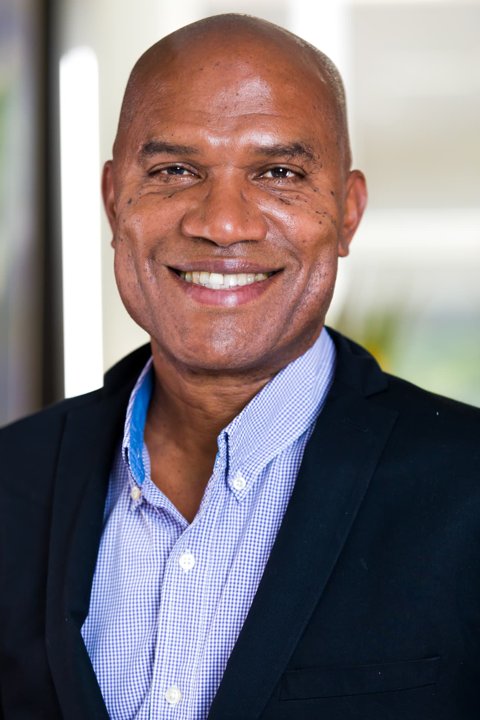
Rohan Hall
Rohan Hall is a technology entrepreneur, AI architect and author with four decades of technology experience, now focused on practical AI across business, education, government and global impact. He founded OceSha Ventures, builds the OceSha AI platform and Lumi, and wrote The Convergence of AI and the Top 10 Emerging Technologies.
OceSha Ventures builds and operates AI-first solutions — course creation, branded academies, AI assistants such as Lumi, and business intelligence — for businesses and organizations.