Lumi answers learner questions in languages your team doesn’t speak
Bring your knowledge into OceSha AI, use it in a course, and Lumi can explain the relevant material and answer learner questions across modern languages.

To support learners in languages your team does not speak, bring your documents, websites, text, audio, video, or other existing material into OceSha AI and use that knowledge in a course. Within the course, Lumi uses the relevant course content and creator-supplied knowledge to explain concepts and answer questions. Learners can interact in languages including English, Spanish, Arabic, Hindi, Chinese, Japanese, and other modern languages.
- Lumi can interact with learners in English, Spanish, French, German, Portuguese, Arabic, Hindi, Chinese, Japanese, and other modern languages.
- Within a course, answers draw on the relevant course material and knowledge supplied by the creator.
- You can bring source knowledge into OceSha AI through documents, websites, text, audio, video, and other existing material.
- Public-facing Lumi answers questions about OceSha from OceSha’s public information; it is not presented as a general-purpose representative for every business.
- Human assistance remains appropriate when a question falls outside the available knowledge or requires account-specific action.
How multilingual question answering works in OceSha AI
Multilingual learner support in OceSha AI means that a learner can interact with Lumi in a modern language while Lumi uses the relevant course content and creator-provided knowledge to explain concepts and answer questions. The source material establishes what Lumi has to work with; the learner’s language determines how the interaction takes place.
The practical starting point is the OceSha AI self-service creation platform. A creator brings existing knowledge into the platform through documents, websites, text, audio, video, or other material. That information can contribute to a course and its supporting content. Once it is relevant to the course, Lumi can use it to support instruction, clarify concepts, and respond to learner questions.
Language access does not require every person on your team to speak every learner’s language. Learners can interact with Lumi in examples including English, Spanish, French, German, Portuguese, Arabic, Hindi, Chinese, and Japanese, as well as other modern languages. This gives organizations a direct way to make established course knowledge more accessible to audiences across languages and countries.
This capability belongs within a broader content and audience workflow. Knowledge can contribute to courses and content, content can be published and distributed, and published material can attract visitors to an Authority Page. Those visitors can become leads, learners, or customers, while analytics help the creator understand resulting activity. Billing is a separate operational area covered in the payments and billing topic hub.
What knowledge Lumi uses when answering a learner
Inside a course, Lumi uses the relevant course material and creator-supplied knowledge. That distinction matters: strong multilingual support begins with useful source material. The platform can work with multiple kinds of existing information, but language coverage does not replace the need to provide the concepts, instructions, or educational material that learners should receive.
- Collect the existing material that should inform the course, such as documents, website content, text, audio, or video.
- Bring that knowledge into OceSha AI and use it to create the course and related content.
- Publish and distribute the content so learners can access the relevant material.
- Let learners ask Lumi questions in their preferred modern language within the course.
- Use analytics to understand the activity generated by the published material.
Suppose an organization has a long-form video containing material it wants to teach. In OceSha AI, the video can become an episode and produce short clips. The underlying knowledge can contribute to a course, and the resulting social material can be published. When learners enter the course, they can ask Lumi questions in different modern languages. Lumi then uses the relevant course material and creator-provided knowledge to explain concepts and answer those questions.
If the content needs further review before it reaches an audience, consider the workflow for moving AI-generated content toward publication or scheduling. The core principle is simple: prepare the knowledge first, then make multilingual interaction available around material you are ready to teach.
Where Lumi answers questions—and where the context differs
- Within a course
- Lumi uses relevant course material and creator-supplied knowledge to support instruction, explain concepts, and answer learner questions.
- On OceSha’s public pages
- Lumi answers questions from OceSha’s public information, including its products, services, capabilities, plans, and use cases.
- Inside the authenticated platform
- Lumi understands application pages, navigation, features, workflows, courses, content tools, publishing, integrations, analytics, settings, and subscriptions.
These contexts should not be treated as interchangeable. Public-facing Lumi is particularly useful to visitors and prospective customers who want to understand OceSha before signing in. It helps visitors, prospective customers, partners, and other users find information without searching through multiple pages. Authenticated Lumi goes further by answering both general OceSha questions and detailed questions about using the platform.
For questions about your own educational material, place the relevant knowledge in a course so Lumi can use it there. Public-facing Lumi is trained on OceSha’s public information, so use that experience for questions about OceSha rather than assuming it represents every organization’s private policies, products, or customer matters.
When a customer issue concerns payments rather than educational content, route it through the appropriate operational process. For example, it is useful to understand where course payments go and how they differ from an OceSha AI subscription instead of treating a payment question as a multilingual course-content question.
How to serve audiences in other countries responsibly
Serving an audience in another country involves more than displaying translated text. The useful goal is to let people ask questions about the actual material and receive explanations grounded in the relevant course content. Lumi supports that model by combining multilingual interaction with creator-supplied knowledge inside the course.
Organizations can use OceSha capabilities for members, employees, customers, communities, or other defined audiences. A public OceSha presence can be shared through a copyable link, giving customers, learners, professional contacts, and other audiences access to the published presence. For a fuller delivery environment, see how courses and branded academies are built on OceSha.
Course access and payment responsibilities also need to remain clear when the audience spans countries. The distinction between free and paid courses, their enrollment flows, and payment responsibilities is separate from the language in which a learner asks Lumi a question. Design the educational experience and the commercial flow as related but distinct parts of the customer journey.
When a person should take over from Lumi
Lumi is the right starting point for questions covered by the available OceSha information, authenticated platform context, or relevant course material. A person should take over when the issue requires human assistance, involves a creator-managed transaction, or calls for action outside the informational and instructional context available to Lumi.
OceSha support can address platform questions, OceSha AI subscription questions, and questions about the OceSha side of an integration. Creators remain responsible for customer refunds, disputes, chargebacks, and customer transactions related to their courses. Depending on the issue, Stripe payout or transaction questions may need to be handled through the creator’s Stripe account or Stripe support.
This separation prevents a multilingual answer from sending a customer to the wrong party. Review who handles refunds, disputes, payout questions, and OceSha support issues before defining your escalation path. For paid courses, the creator’s Stripe account is distinct from the payment method used for the creator’s OceSha AI subscription; the process for connecting Stripe for paid course sales addresses that course-revenue side.
If a learner or creator needs help that available information does not resolve, contact the OceSha team. Lumi can explain how OceSha works, while Contact Us provides the path to human support when it is required.
Who provides the platform and what happens next
OceSha AI is the self-service creation platform of OceSha Ventures and its AI-first solutions, and Lumi is its AI Concierge. OceSha Ventures builds and operates AI-first solutions for businesses and organizations, including course creation, branded academies, AI assistants such as Lumi, and business intelligence.
The recommended next step is to identify the knowledge your international audience needs, gather it from the supported source types, and build it into a course. Then publish and distribute the content, give learners access, and let them interact with Lumi in their preferred modern language. Keep a clear handoff for questions involving support, transactions, or information outside the course material.
Treat multilingual interaction as an access layer around reliable knowledge, not as a substitute for that knowledge. The platform gives you a way to bring information in, turn it into courses and content, educate learners, engage an audience, and measure activity. Lumi makes that information easier to explore across languages when it is placed in the appropriate context.
Gather the documents, websites, text, audio, video, or other material your learners need, then use OceSha AI to turn that knowledge into a course where Lumi can answer questions across modern languages.
Prepare your knowledge for multilingual learnersFrequently asked questions
Which languages can learners use with Lumi?
Examples include English, Spanish, French, German, Portuguese, Arabic, Hindi, Chinese, and Japanese, along with other modern languages.
Can Lumi answer questions from my existing materials?
Within a course, Lumi can use relevant course content and creator-supplied knowledge. Knowledge can be brought into OceSha AI from documents, websites, text, audio, video, and other existing material.
Does public-facing Lumi answer questions about my organization?
Public-facing Lumi is trained on OceSha’s public information and answers questions about OceSha, including its products, services, capabilities, plans, and use cases. For creator-provided educational knowledge, use Lumi within the relevant course.
Can Lumi help signed-in users navigate OceSha AI?
Yes. Authenticated Lumi understands application pages, navigation, features, workflows, course capabilities, content tools, publishing, integrations, analytics, settings, subscriptions, and other authenticated functionality.
Who handles a learner’s refund or payment dispute?
The creator is responsible for applicable refunds, disputes, chargebacks, and customer transactions. Questions involving Stripe payouts or creator-managed transactions may need to go through the creator’s Stripe account or Stripe support, depending on the issue.
Can I share my OceSha presence with an international audience?
Yes. Users can copy and distribute the public link so customers, learners, professional contacts, and other audiences can access their public OceSha presence.
Use Lumi to make established course knowledge accessible across languages rather than requiring your team to answer every learner manually in every language. Bring documents, websites, text, audio, video, or other material into OceSha AI; use that knowledge in a course; and let Lumi explain relevant concepts to learners in modern languages. Keep the boundaries clear: public-facing Lumi answers questions about OceSha, course Lumi uses relevant course knowledge, and human support or the creator handles account-specific and transaction-related issues.
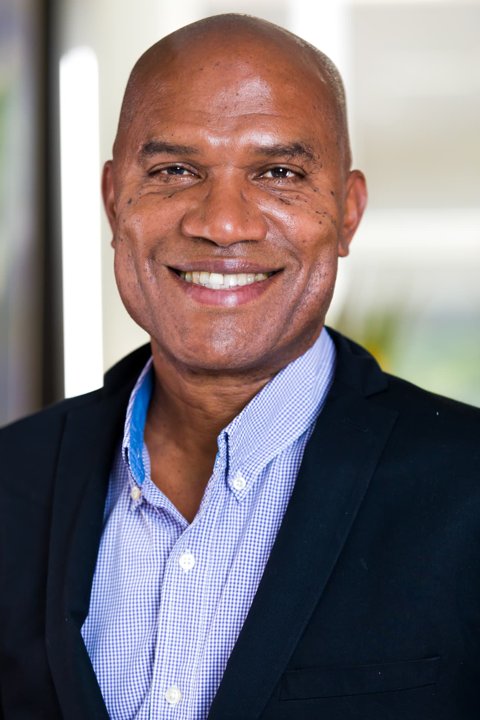
Rohan Hall
Rohan Hall is a technology entrepreneur, AI architect and author with four decades of technology experience, now focused on practical AI across business, education, government and global impact. He founded OceSha Ventures, builds the OceSha AI platform and Lumi, and wrote The Convergence of AI and the Top 10 Emerging Technologies.
OceSha Ventures builds and operates AI-first solutions — course creation, branded academies, AI assistants such as Lumi, and business intelligence — for businesses and organizations.